Reading Instruction and Literacy Support: A Complete Guide for Teachers
Struggling readers don’t all struggle for the same reason — and that’s exactly what makes reading support so tricky to get right. Some students are stuck on decoding. Some can sound out every word but can’t tell you what a passage means. Some have the comprehension skills but fall apart when the text gets long. And some just need a teacher who knows how to look past the surface and find the actual gap.

This page is the hub for everything on this site related to reading instruction and literacy support — from the foundational components of effective reading instruction to practical strategies for your most struggling readers. Whether you’re looking for better comprehension tools, ways to differentiate, or resources you can use tomorrow, you’ll find it here.
The Foundation: What Effective Reading Instruction Actually Looks Like
Before layering in strategies and tools, it helps to understand what the research says actually works. Effective reading instruction isn’t about worksheets or leveled readers — it’s about intentional, structured teaching of specific skills. If you want to understand the framework behind everything else on this page, start here.
→ The 5 Key Components of Effective Reading Instruction
Comprehension: Building Thinking, Not Just Answering Questions
Comprehension isn’t something students either have or don’t — it’s a set of skills that can be explicitly taught. The tools you use matter a lot. The right question stems push students toward deeper thinking instead of plot retelling.
Graphic organizers, when used intentionally, make invisible thinking visible and give struggling readers a scaffold for organizing what they understand before they have to write about it. Both are worth using regularly, not just as assessments.
For a structured written-response framework, the RACE strategy and the CER format both offer struggling readers a repeatable process for answering comprehension questions in writing, so they know exactly what to include and in what order.
- 125+ Reading Comprehension Question Stems for Any Text
- Graphic Organizers for Reading: How to Build Thinking, Not Busywork
Fluency: Why It Matters and How to Build It
Fluency is the bridge between decoding and comprehension. When struggling readers read haltingly, so much cognitive energy goes to sounding out words that there’s nothing left for meaning — which means fluency problems often look like comprehension problems.
Choral reading is one of the most underused and most effective fluency strategies available to classroom teachers because it lets students practice at an instructional level without the anxiety of reading aloud alone.
Supporting Struggling Readers: Differentiation and Accommodations
Struggling readers don’t all struggle for the same reasons. Some have decoding gaps. Some have vocabulary deficits. Some have processing or working memory challenges.
Effective differentiation starts with identifying the actual barrier — and then choosing supports that address it without removing the thinking. Reading anchor charts are one of the most practical tools for making reading strategies visible and accessible during independent work — especially for students who need a visual reference to stay on track.
For practice texts at multiple levels, these free reading passages for test prep are ready to use in small-group instruction, independent practice, or targeted intervention.
The Reading Rockets differentiated instruction resource library is a strong external reference for research-backed strategies if you want to go deeper on the science behind these approaches.
- Differentiation for Struggling Readers: Here’s What You Need to Know
- Accommodations for Struggling Readers
- Universal Reading Screeners: Using Data to Drive Decisions
Apps, Websites, and Digital Tools for Readers
The right digital tool can remove a barrier, give a student independent practice, or make fluency work possible at home. The wrong one is just screen time with a reading label. These pages cut through the noise to the tools that actually move the needle for struggling and developing readers.
Novel Studies: Reading Instruction in Context
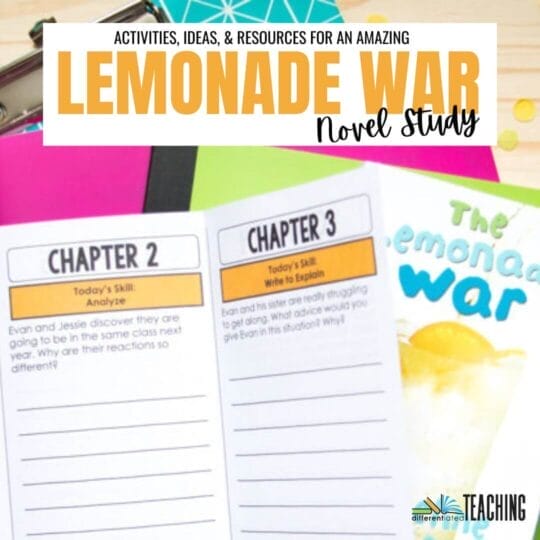
Novel studies aren’t separate from reading instruction — they’re where all of it comes together. Comprehension skills, vocabulary, fluency, discussion, and differentiation all live inside a well-structured novel study. If you’re looking for how to connect these strategies to real books, the novel studies hub is the next stop.
→ How to Plan a Novel Study: The Complete Guide
Part of the Differentiated Teaching resource library. See our complete guide: Differentiated Teaching Strategies — covering reading, math, novel studies, sub plans, classroom management, and community.
Writing and reading go hand in hand. See our complete guide to Writing Instruction Strategies for RACE strategy, personal narrative, grammar, and reluctant writers.
Build stronger retention with review routines. See our complete guide: Spiral Review and Assessment Strategies — daily routines, formative assessment, and MTSS data strategies.
Browse all ELA resources in one place. The Teaching Language Arts hub organizes everything on this site by topic — reading, writing, vocabulary, and novel studies — so you can find what you need quickly.
For readers who struggle with decoding, teaching comprehension through photographs removes the word barrier entirely — letting students practice inference, main idea, and close reading skills without the anxiety of print.
More resources for building comprehension: a simple week of text structure activities gives students a repeatable framework for understanding how texts are organized, and 7 ways to extend learning with picture-based ELA bell ringers shows how to use visual prompts to build skills before print gets in the way. For independent reading, replacing the reading log with a response notebook is a more meaningful way to support student accountability.