The Best Chapter Books for 3rd Graders: A Teacher’s Picks for Every Reader
Third grade is one of my favorite times to be a reading teacher. Kids have enough decoding automaticity that reading is starting to feel like less work, their stamina is growing, and they’re finally ready for books with real depth – complex characters, longer plots, problems that don’t resolve neatly in three pages.
But finding the right book for a third grader is still a project. Too easy and they’re bored. Too hard and they shut down. Too slow and they’re done before chapter two.
I’ve taught 3rd graders, coached teachers who do, and spent years thinking about which books actually work in the classroom – not just which ones have great reviews. This list reflects that. Every book here is one I’d actually put in a 3rd grader’s hands, organized by reading level so you can match the book to the reader, not just the grade.
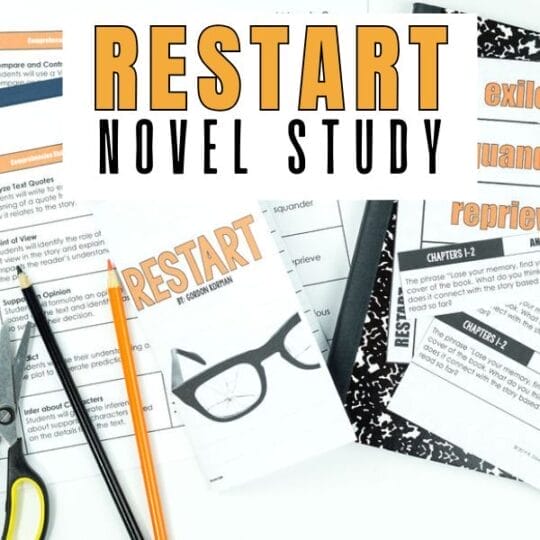
You’ll also find links to novel study resources for the titles I have them for, because finding a great book is only half the battle.
What makes a great 3rd grade chapter book?
Third graders (typically ages 8-9) are in a pivotal reading window. Most have crossed the bridge from learning to read into reading to learn, but the range in a typical 3rd grade classroom is enormous. You might have a student reading at a 1st grade level and another reading chapter books independently at a 5th grade level.
The best chapter books for this age:
- Have enough chapter length to build real stamina without losing the pacing
- Feature characters who are roughly the same age as the reader, facing recognizable problems
- Offer series potential – once a 3rd grader finds a book they love, they want more
- Work at multiple levels: as independent reads, literature circle books, and class read-alouds
- Have genuine literary merit worth teaching into, not just entertainment value
I’ve organized this list by reading level to help you find the right fit fast. Within each section, books are loosely ordered from most accessible to most challenging.
Below-Level and Early Chapter Books for 3rd Graders
These titles work well for students reading below grade level, new chapter book readers still building stamina, or any 3rd grader who needs a confidence boost. They also make excellent read-alouds for the whole class.
Differentiation tip: Students reading below grade level in 3rd grade often struggle most with stamina, not comprehension. Short chapters with clear stopping points help them experience the satisfaction of finishing something, which builds motivation. Pair these with vocabulary pre-teaching and brief picture walks to maximize access.
1. Freckle Juice by Judy Blume
Andrew wants freckles so badly he’ll drink anything to get them – including a disgusting “recipe” sold to him by a classmate for fifty cents. The results are exactly as bad as you’d expect.

This is one of Judy Blume’s shortest books and one of the most reliably engaging for reluctant 3rd grade readers. The premise is immediately funny, the chapters are short, and the character voice is completely authentic. Perfect for readers who are still skeptical that chapter books are worth their time.
Reading Level:
- DRA: 24
- Guided Reading: M
- Lexile: 470L
Novel Study: Freckle Juice Novel Study
2. Magic Tree House #1: Dinosaurs Before Dark by Mary Pope Osborne
Jack and Annie discover a magic tree house in the woods behind their house, and before they know what’s happening, they’re transported back to the time of dinosaurs. Short chapters, fast pacing, and cross-curricular connections to science make this one of the most useful series in any elementary classroom.
The “Facts” companion books that pair with each Magic Tree House title are also worth keeping nearby – kids who get hooked often want to know what’s real and what’s fiction, which is a great reading habit to encourage.
Reading Level:
- DRA: 28
- Guided Reading: M
- Lexile: 580L
Novel Study: Dinosaurs Before Dark Novel Study
3. Dyamonde Daniel series by Nikki Grimes
Dyamonde is a spunky 3rd grader who is absolutely convinced that being mean is the most uncool thing in the universe. These short, punchy books follow her as she navigates jealousy, friendship, and standing up for what’s right – with a new kid named Free complicating everything.
This series is a strong start-of-year pick for 3rd grade literature circles. The themes are immediate and relatable, the diverse cast of characters feels authentic, and the books are short enough that even hesitant readers can finish one in a week. A genuinely underused gem.
Reading Level:
- DRA: 24
- Guided Reading: L
- Lexile: 530L
4. Geronimo Stilton #1: Lost Treasure of the Emerald Eye by Elisabetta Dami
Geronimo Stilton is a mouse, a newspaper editor, and a reluctant adventurer. When his sister Thea drags him into a hunt for buried treasure, things go sideways immediately and hilariously.
The visual formatting of these books – different fonts, sound effects embedded in the text, bold words for emphasis – acts as scaffolding for struggling readers while also making the text feel energetic and fun. If you have a 3rd grader who is convinced they hate reading, start here.
Reading Level:
- DRA: 24
- Guided Reading: M
- Lexile: 600L
On-Level Chapter Books for 3rd Graders
These titles hit the grade-level sweet spot for most 3rd graders. They work well for whole-class novel studies, book clubs, and independent reading for students reading at benchmark.
5. Third Grade Angels by Jerry Spinelli
Every student in Mr. Sylvester’s class wants to be Star of the Week – a behavior award that comes with real perks. George “Suds” Petreski is determined to win it, but he quickly discovers that being good all the time is a lot more complicated than he thought.
This is one of the most classroom-ready books on this list. The realistic school setting, the relatable internal conflict, and the humor make it an instant hit – and the character development arc gives you so much to teach into. I particularly love it for cause-and-effect and character change discussions.
Reading Level:
- DRA: 30
- Guided Reading: N
- Lexile: 600L
Novel Study: Third Grade Angels Novel Study
6. Ramona Quimby, Age 8 by Beverly Cleary
Ramona is eight, newly riding the bus to school, dealing with a little sister, a dad who went back to college, and a classmate who says “Yaaaaay, Ramona!” in a way that sounds anything but nice. She’s also one of the most fully realized characters in children’s literature.
This book is endlessly useful in the classroom. Text-to-self connections practically write themselves. The family dynamics open up rich discussions about empathy and perspective. And Beverly Cleary’s writing is a masterclass in showing rather than telling. A genuine 3rd grade essential.
Reading Level:
- DRA: 34
- Guided Reading: O
- Lexile: 860L
Novel Study: Ramona Quimby, Age 8 Novel Study
7. How to Eat Fried Worms by Thomas Rockwell
Billy takes a bet: eat fifteen worms in fifteen days and he wins fifty dollars. His friends will do everything they can to make him fail. Billy will do everything he can to win. What follows is one of the funniest problem-solution stories in middle-grade literature.

This is the go-to recommendation for 3rd grade boys who insist they don’t like reading. The gross factor is perfectly calibrated, the competitive tension keeps pages turning, and the chapter structure makes it easy to use for literature circles. Every 3rd grader should read this one.
Reading Level:
- DRA: 34
- Guided Reading: O
- Lexile: 630L
Learn more: How to Eat Fried Worms Novel Study
8. Fudge-a-mania by Judy Blume
Peter Hatcher’s summer plans evaporate when his family ends up vacationing next door to his archenemy Sheila Tubman. His little brother Fudge makes everything worse. And then Fudge announces he’s going to marry Sheila’s little sister.

The humor is sharp, the sibling dynamics are painfully relatable, and the conflict between Peter and Sheila is a great vehicle for teaching how characters’ perspectives shape the same events differently. This one works beautifully for protagonist vs. antagonist discussions.
Reading Level:
- DRA: 34
- Guided Reading: O
- Lexile: 670L
Novel Study: Fudge-a-mania Novel Study
9. The Chocolate Touch by Patrick Skene Catling
John Midas finds a mysterious coin and uses it to buy a box of chocolates. The next morning, everything he puts in his mouth turns to chocolate – and it’s wonderful, until it really isn’t. A clever twist on the Midas myth that kids find genuinely surprising, even when they already know the original story.
Cause and effect, predictions, and character change are all naturally embedded in this plot. Short, fun, and endlessly readable. A great choice for readers who are moving into more complex chapter books but still benefit from a familiar story structure.
Reading Level:
- DRA: 30
- Guided Reading: N
- Lexile: 680L
Novel Study: The Chocolate Touch Novel Study
10. Sideways Stories from Wayside School by Louis Sachar
Wayside School was supposed to be built one story tall with thirty classrooms. Instead, the builder made it thirty stories tall with one classroom on each floor. And somehow, the school that resulted is exactly as strange as you’d expect.
These interconnected short stories work beautifully as a start-of-year read aloud or as an independent reading choice for 3rd graders who love humor and aren’t ready for a longer sustained novel. I’ve started the year with this one many times and it always gets the whole class laughing together, which is exactly what you want in September.
Reading Level:
- DRA: 34
- Guided Reading: O
- Lexile: 690L
Novel Study: Sideways Stories from Wayside School Novel Study
11. The Best School Year Ever by Barbara Robinson
If you’ve never read The Best Christmas Pageant Ever, the Herdman kids are the worst-behaved children in the entire history of the world, and everyone knows it. In this companion novel, the same classmates are forced to say something genuinely nice about each Herdman – which turns out to be harder and more interesting than anyone expected.
The humor is sharp enough for sophisticated 3rd grade readers, and the underlying message about seeing past reputation to find the real person is one of the best in this genre. Perfect for character development and finding the good in others.
Reading Level:
- DRA: 34
- Guided Reading: O
- Lexile: 750L
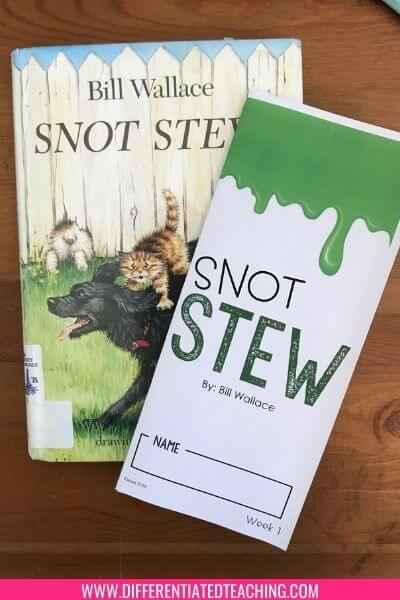
12. Snot Stew by Bill Wallace
Two kittens – Kikki and Toby – are adopted into a new home and have to figure out the strange world of humans from the ground up. The title is their name for the thing humans serve from a can (tomato soup, for the record). The entire story is told from the cats’ limited but earnest perspective.
This is one of the best books for teaching point of view in 3rd grade. Because the cats misunderstand everything, students have to infer what’s actually happening alongside what the narrator describes – and that gap is the whole lesson. Warm, funny, and a genuinely clever piece of craft.
Reading Level:
- DRA: 30
- Guided Reading: N
- Lexile: 580L
Novel Study: Snot Stew Novel Study
13. Flora & Ulysses by Kate DiCamillo
Flora is a self-described natural-born cynic who loves comic books. Ulysses is a squirrel who gets sucked into a vacuum cleaner and comes out with superpowers. Together they are exactly as chaotic and wonderful as that sounds.
The novel-within-a-novel format, with actual comic panels woven throughout, gives this book an energy that hooks even the most reluctant 3rd grade readers. It’s also one of the most consistently funny books for this age group, with the kind of humor that works on multiple levels. A Newbery Medal winner – and it earns it.
Reading Level:
- DRA: 34
- Guided Reading: P
- Lexile: 520L
Novel Study: Flora & Ulysses Novel Study
14. Stella & Marigold by Annie Barrows, illustrated by Sophie Blackall
From the author of Ivy & Bean comes this gentle, funny series about sisters living in a duplex. Stella narrates stories about her little sister Marigold’s very big feelings and the very ordinary family moments that somehow become adventures.
This is a beautiful start-of-year book for 3rd graders, especially those who are transitioning up from 2nd grade. The characters feel completely real, the sibling dynamics are spot-on, and Sophie Blackall’s illustrations add warmth throughout. Strong for descriptive language and character discussion.
Reading Level:
- DRA: 24
- Guided Reading: M
- Lexile: 540L
15. Beatrice Zinker, Upside Down Thinker by Shelley Johannes
Beatrice sees the world differently – literally. She does her best thinking upside down, hanging from things. Third grade was perfect last year, but this year her best friend has new friends and Beatrice isn’t sure where she fits.
Strong for discussions about individuality, self-confidence, and what it means to be a good friend when friendships change. The illustrated format and accessible writing make it a great fit for 3rd graders who want something a bit different from the typical realistic fiction offering.
Reading Level:
- DRA: 28
- Guided Reading: N
- Lexile: 570L
Advanced Chapter Books for 3rd Graders
These titles work best for students reading above grade level in 3rd grade, or as whole-class read-alouds where you want to stretch everyone’s thinking. They feature more complex plots, richer vocabulary, and deeper themes.
16. The Wild Robot by Peter Brown
Roz is a robot who washes up on a wild island and has to learn how to survive in a world she was never designed for. She adopts a gosling named Brightbill. She makes enemies and eventually allies. And she asks questions about what it means to be alive that will stay with your students long after the last page.
This book has taken over 3rd and 4th grade classrooms for good reason. The writing is beautiful, the themes are substantive without being heavy-handed, and the emotional arc is genuinely moving. It’s one of the best read-aloud novels for upper elementary, and the sequel and movie adaptation give you plenty to extend the unit with.
Reading Level:
- DRA: 40
- Guided Reading: Q
- Lexile: 680L
Novel Study: The Wild Robot Novel Study
17. My Father’s Dragon by Ruth Styles Gannett
Elmer runs away to Wild Island to rescue a baby dragon, armed only with the contents of his backpack. What he finds is a series of dangerous animals blocking his path, each of which he has to outmaneuver using only everyday objects. The problem-solving is delightful, the adventure is genuinely suspenseful, and the illustrations make it accessible even at the higher reading level.

Excellent for sequencing, character traits, and discussing how creativity and resourcefulness can solve problems that brute force can’t. A book that sticks with readers for years.
Reading Level:
- DRA: 30
- Guided Reading: N
- Lexile: 590L
Novel Study: My Father’s Dragon Novel Study
18. The Littles by John Peterson
The Littles are a family of six-inch-tall people living inside the walls of the Bigg family’s house, using borrowed scraps to build a life. The series has been hooking readers for decades, and the first book’s clear problem-solution structure makes it a strong classroom choice.
I love this one for teaching critical comprehension skills, especially how characters solve problems with limited resources. And once a student reads the first book, there are 15 more. Series potential is always a win.
Reading Level:
- DRA: 30
- Guided Reading: M
- Lexile: 640L
Novel Study: The Littles Novel Study
19. Stone Fox by John Reynolds Gardiner
Little Willy’s grandfather has given up on living. The only way to save him – and the farm – is to win the National Dogsled Race. But his competitor is Stone Fox, a Shoshone man who has never lost a race and who is racing for his own deeply important reason.

Fair warning: keep tissues nearby. This is one of the most emotionally powerful short novels for 3rd grade, and the ending is not gentle. But the conversations it sparks about courage, sacrifice, and what we do for the people we love are worth every tear. One of those books teachers remember reading to their students years later.
Reading Level:
- DRA: 34
- Guided Reading: O
- Lexile: 550L
Novel Study + STEM Extension: Stone Fox Novel Study | Stone Fox STEM Challenges
20. Boxcar Children by Gertrude Chandler Warner
Four orphaned siblings – Henry, Jessie, Violet, and Benny – make a home for themselves in an abandoned boxcar in the woods, doing everything on their own while avoiding being found by the grandfather they’ve never met. The competence of these children, how capable and resourceful they are, is what hooks 3rd grade readers immediately.

A classic for good reason. The vocabulary is strong, the plot is genuinely suspenseful for this age, and the series is long enough to occupy a whole year of independent reading. A must-have for your classroom library.
Reading Level:
- DRA: 34
- Guided Reading: O
- Lexile: 670L
Novel Study: Boxcar Children Novel Study
21. Little House in the Big Woods by Laura Ingalls Wilder
Laura Ingalls Wilder’s first novel follows five-year-old Laura through a year of pioneer life in the Wisconsin woods: making maple syrup, preparing for winter, Pa playing fiddle by the fire, the rhythms of a life completely unlike anything your students have experienced. The rich sensory detail is a gift for teaching visualization.
This is one of those books that transports readers. It’s slower-paced than many modern books, which means it works best as a class read-aloud where you can set the pace – but for advanced independent readers who can settle into a different rhythm, it’s wonderful.
Reading Level:
- DRA: 38
- Guided Reading: P
- Lexile: 930L
Novel Study: Little House in the Big Woods Novel Study
22. The Indian in the Cupboard by Lynne Reid Banks
Omri gets a small plastic figure of a Native American warrior for his birthday, puts it in an old cupboard, and turns the key. The next morning, Little Bear is alive. Omri is suddenly responsible for a real human being from a different time – and when a plastic cowboy comes to life too, things get complicated fast.
This one is excellent for compare-and-contrast between characters and for visualizing. I’d recommend reading alongside some complementary nonfiction about the Haudenosaunee people so students can better understand Little Bear’s perspective and context.
Reading Level:
- DRA: 38
- Guided Reading: P
- Lexile: 780L
Novel Study: The Indian in the Cupboard Novel Study
23. Stuart Little by E.B. White
Stuart is a mouse born into a human family in New York City, and he navigates his oversized world with enormous dignity and determination. His friendship with a bird named Margalo and his adventures around Manhattan are gentle and episodic, with a wistful quality that distinguishes E.B. White from nearly every other children’s author.
Strong for vocabulary, context clues, and comparing text to the movie adaptation. The book and film differ enough to make the comparison genuinely interesting for students.
Reading Level:
- DRA: 38
- Guided Reading: P
- Lexile: 920L
Novel Study: Stuart Little Novel Study
Illustrated & Graphic Novel-Style Picks for 3rd Grade
These titles are especially valuable for visual learners, reluctant readers, and students who are building confidence and stamina.
24. Bunnicula by Deborah & James Howe
The Monroe family brings home a rabbit they found at a movie theater showing a Dracula film. Harold the dog narrates his suspicions that the rabbit might be a vampire. Chester the cat becomes obsessed with proving it. Vegetables are turning white overnight.
The gothic humor is perfectly pitched for 3rd graders who love silly-scary stories. The unreliable narrator structure – Harold isn’t sure what’s real either – is a sophisticated literary element that introduces students to the idea that narrators have limits. Genuinely fun and endlessly discussable.
Reading Level:
- DRA: 34
- Guided Reading: O
- Lexile: 700L
25. Esio Trot by Roald Dahl
Mr. Hoppy is in love with his downstairs neighbor, Mrs. Silver. Mrs. Silver is in love with her tortoise, Alfie, and wishes he would grow bigger. Mr. Hoppy hatches a plan that is equal parts sweet and absurd.
This is the shortest Roald Dahl novel and the most purely wholesome. The trick at the center of the story delights students, and the gentle humor makes it a wonderful whole-class read aloud. Also a strong choice for teaching how details support inferences – students can figure out what Mr. Hoppy is doing slightly before it’s revealed.
Reading Level:
- DRA: 30
- Guided Reading: N
- Lexile: 760L
Novel Study: Esio Trot Novel Study
Quick-Reference: 3rd Grade Books by Purpose
For building classroom community (back to school)
- Sideways Stories from Wayside School (Louis Sachar)
- Third Grade Angels (Jerry Spinelli)
- Dyamonde Daniel series (Nikki Grimes)
- Stella & Marigold (Annie Barrows)
For more back-to-school community reads, see Classroom Community Books: My 26 Favorites.
For hooking reluctant readers
- How to Eat Fried Worms (Thomas Rockwell)
- Geronimo Stilton series (Elisabetta Dami)
- Freckle Juice (Judy Blume)
- Flora & Ulysses (Kate DiCamillo)
For animal lovers
- Snot Stew (Bill Wallace)
- Stuart Little (E.B. White)
- Bunnicula (Deborah & James Howe)
- The Wild Robot (Peter Brown)
For mystery and adventure fans
- Boxcar Children (Gertrude Chandler Warner)
- Stone Fox (John Reynolds Gardiner)
- Magic Tree House series (Mary Pope Osborne)
- The Indian in the Cupboard (Lynne Reid Banks)
For diverse characters and perspectives
- Dyamonde Daniel series (Nikki Grimes)
- Beatrice Zinker, Upside Down Thinker (Shelley Johannes)
- Third Grade Angels (Jerry Spinelli)
For read-alouds that spark big conversations
- The Wild Robot (Peter Brown)
- Stone Fox (John Reynolds Gardiner)
- Little House in the Big Woods (Laura Ingalls Wilder)
- My Father’s Dragon (Ruth Styles Gannett)
For more read-aloud recommendations, see Why You Should Read Aloud in the Classroom Every Day.
Ready to plan your 3rd grade novel study?
Once you’ve got your book, the next step is planning a unit worth teaching. How to Plan a Novel Study walks you through the whole process from selecting discussion questions to building a reading schedule that works for your class.
And if you’re doing a literature circle or book club format, Easy Novel Study Organization Ideas for Classroom Book Clubs has practical systems for managing multiple books at once.
For more on building a classroom library your students will actually use, How to Get Cheap Books to Build Your Classroom Library is worth a read.
More book lists by grade level
If you have a wide range of readers or are looking for books for other grades:
- Best Chapter Books for 2nd Graders
- Best Books for 4th Graders
- Best Books for 5th Graders
- Best Books for 6th Graders
I