Charlotte’s Web Novel Study Unit with Printable Activities
If you’re planning a Charlotte’s Web novel study, you already know why generations of students connect with E.B. White’s beloved classic. It’s also a wonderful choice for an independent novel study — the manageable length and predictable pacing make it ideal for students building reading stamina on their own.
At first glance, the story feels simple.
A runt pig.
A loyal spider.
A quiet farm filled with everyday moments.
But as readers move deeper into the novel, they begin to notice something more powerful… themes of friendship, sacrifice, perspective, and growing up that resonate long after the final chapter. If you’re still working out how to structure your unit, my complete guide to planning a novel study walks through the whole process step by step.
That combination makes Charlotte’s Web an exceptional choice for upper elementary classrooms, read-alouds, literature circles, or homeschool novel studies.
Students aren’t just following a story.
They are learning how empathy shapes understanding.
In this guide, you’ll find classroom ideas, instructional strategies, and a closer look at how to structure a Charlotte’s Web novel study that builds lasting comprehension skills without overwhelming readers.
Why Teach Charlotte’s Web in Upper Elementary?
Some novels capture attention through fast pacing or dramatic action.
Charlotte’s Web works differently.
The quieter pacing encourages students to slow down and notice language, character change, and emotional nuance.
Readers must:
- visualize setting details
- interpret character motivation
- recognize symbolism
- and make inferences about feelings that are rarely stated directly.
For struggling readers, this creates clear opportunities to practice inference and visualization.

Strong readers benefit from analyzing author’s craft and theme development.
In other words…
The same novel supports very different learners.
If you’re supporting mixed-ability readers, intentional differentiation strategies can make discussion more accessible without adding extra preparation.
👉 Find strategies for differentiating novel studies.
Using Charlotte’s Web in Whole Group, Book Clubs, or Independent Study
Charlotte’s Web adapts easily to different instructional settings.
Whole Group Novel Study
As a whole-class read aloud or shared reading experience, the story naturally encourages discussion about empathy, fairness, and friendship.
Many teachers choose to read key chapters aloud together while assigning independent reading to build stamina and accountability during whole group novel studies.
Regardless of the structure you choose, consistency matters more than complexity.
Literature Circles or Book Clubs
Students often connect strongly with different characters.
Some empathize with Wilbur’s fear.
Others admire Charlotte’s quiet confidence.
Small group book club discussions allow students to explore those perspectives more openly.
Independent or Homeschool Novel Studies
Independent novel units help readers benefit from predictable routines.
Reading.
Responding.
Discussing.
Digital response options support students who prefer typing or need accommodations for dysgraphia or executive functioning challenges.
Building Structure Without Busywork
If you’ve ever tried piecing together comprehension questions from multiple sources, you know how quickly planning time disappears.
This Charlotte’s Web novel study was designed to provide a clear instructional framework while keeping preparation manageable.
The Charlotte’s Web novel study includes:
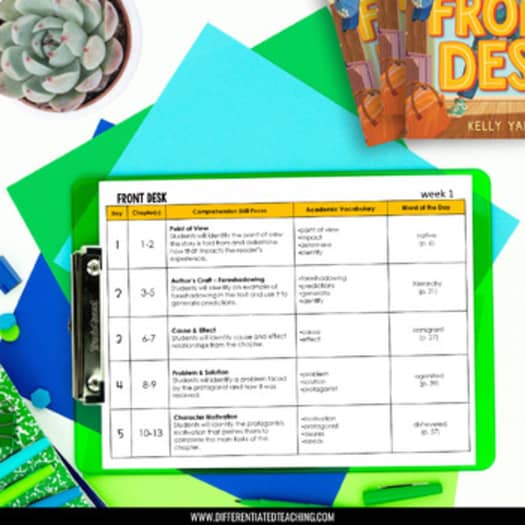
- instructional pacing guide
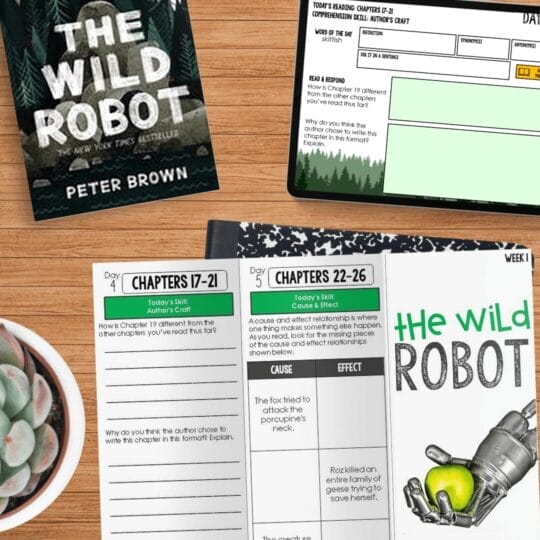
- comprehension trifolds
- reader notebook responses
- Word of the Day vocabulary flipbooks
- answer keys.

Comprehension skills students practice
These comprehension prompts were intentionally aligned with key moments in the novel where students naturally need support practicing essential reading strategies.
The skills addressed in this Charlotte’s Web novel study include:
- Point of View
- Main idea & summary
- Visualizing with sensory language
- Making inferences
- Text-to-self Connections
- Vocabulary & context clues
- Cause and effect
- Problem and solution
- Author’s craft and text structure
- Elements of fiction & the fantasy genre
- Text-dependent writing
Looking for more novel studies?
If your students loved Charlotte’s Web, Stone Fox and The Boxcar Children are two more great choices for this age group — each with a similarly strong emotional core. Shiloh is another excellent option for students who connect deeply with animal stories and moral questions.
Each day focuses on a single comprehension skill. This was done to allow you to dive deep into the skill and ensure your students truly understand and can apply their knowledge to the text.
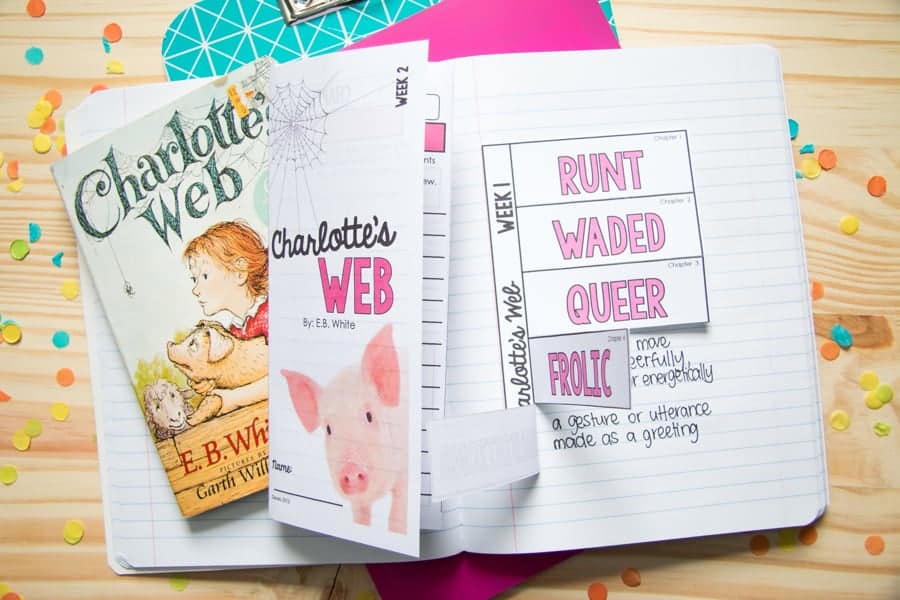
The prompts encourage higher-level thinking by asking students to apply the skill through written responses supported with text evidence.
Students are also asked to explore events from multiple character perspectives, helping them notice how Wilbur, Charlotte, and Fern change throughout the story.
👉 Learn more about teaching character development effectively.
Students build a deeper understanding of the story while developing comprehension strategies that transfer to future reading.
Flexible Response Options That Support Different Learners
Students respond to daily comprehension questions using two flexible formats designed to support different writing needs while keeping preparation manageable.
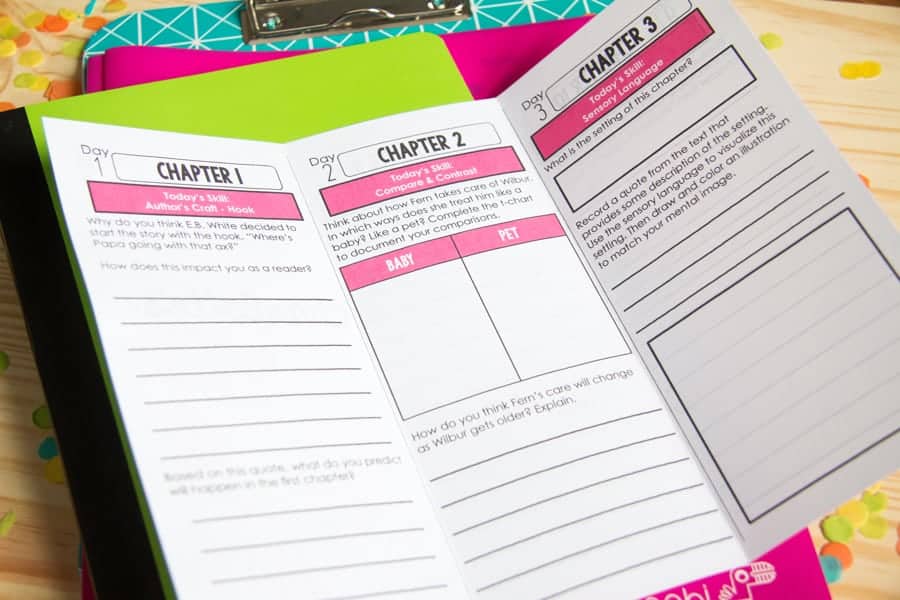
The trifold format was designed to keep writing manageable without lowering expectations.
Each foldable covers an entire week of comprehension using a single sheet of paper.
Students respond to one focused question each day, which helps reluctant writers stay engaged instead of shutting down under long assignments.
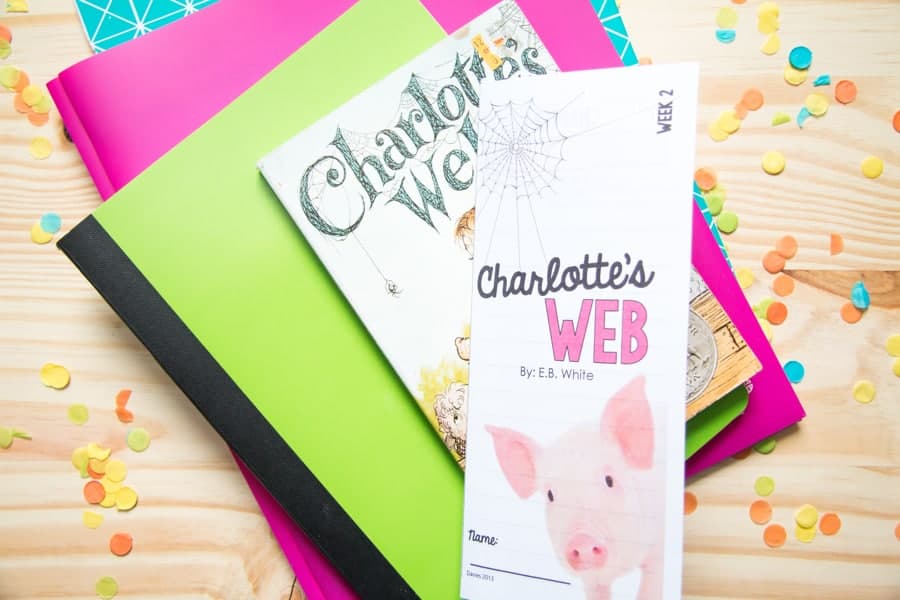
Many students use trifolds as bookmarks, which reduces lost papers and makes grading simple.
👉 Learn more about the trifold novel study format.
Reader notebook prompts provide additional space for deeper written analysis.
Advanced readers can expand their thinking and defend ideas with stronger evidence, while students with dysgraphia, fine motor challenges, or larger handwriting benefit from a more flexible writing format.
Because both response options use the same daily prompt, students can work in different ways without creating extra planning or grading.
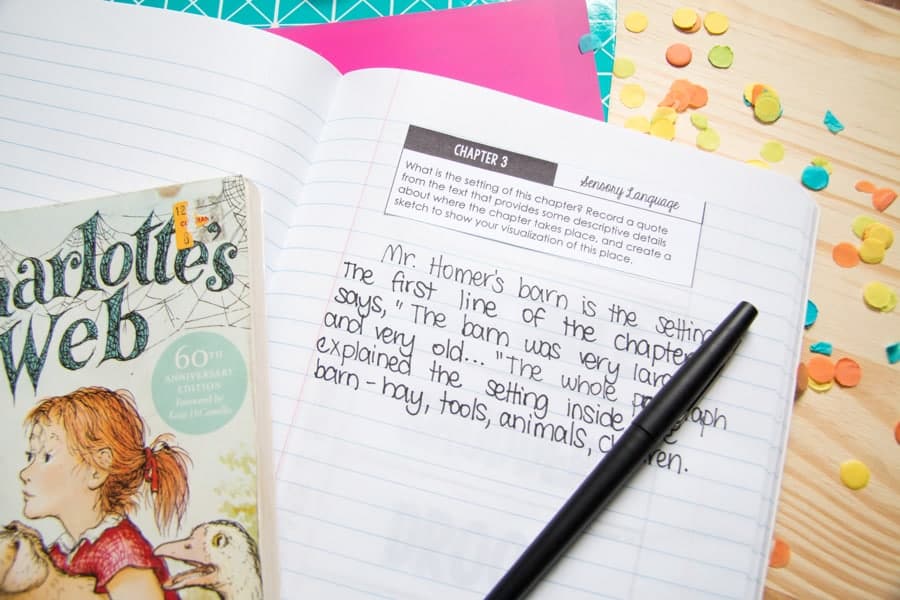
Regardless of the format selected, the prompt is the same so you can easily have some students working on the trifolds while others use the notebook prompts.
What academic vocabulary is included with the Charlotte’s Web novel study?
Academic vocabulary is one of the biggest barriers struggling readers face.
This novel study includes more than 40 Tier 2 and skill-specific vocabulary terms connected directly to comprehension instruction.
Teachers can pre-teach vocabulary or introduce it alongside reading discussions to help students begin the novel on equal footing.
General vocabulary:
- analyze
- evaluate
- synthesize
- generate
Skill specific vocabulary:
- text-to-self connection
- summary and main idea
- context clues
- inference
Teaching text-based vocabulary in Charlotte’s Web
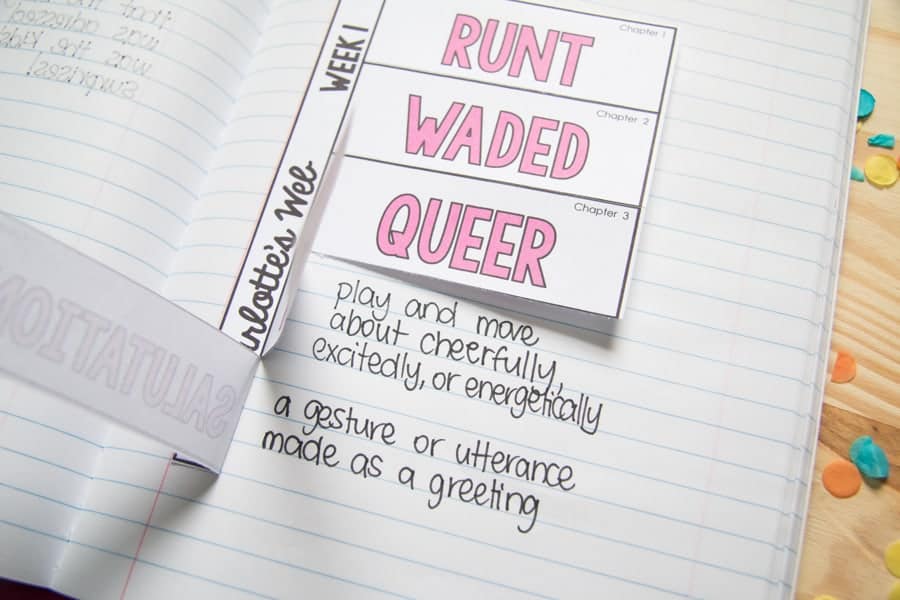
In addition to the Tier 2 vocabulary, each day also includes a text-based vocabulary word that can be found in the day’s reading.
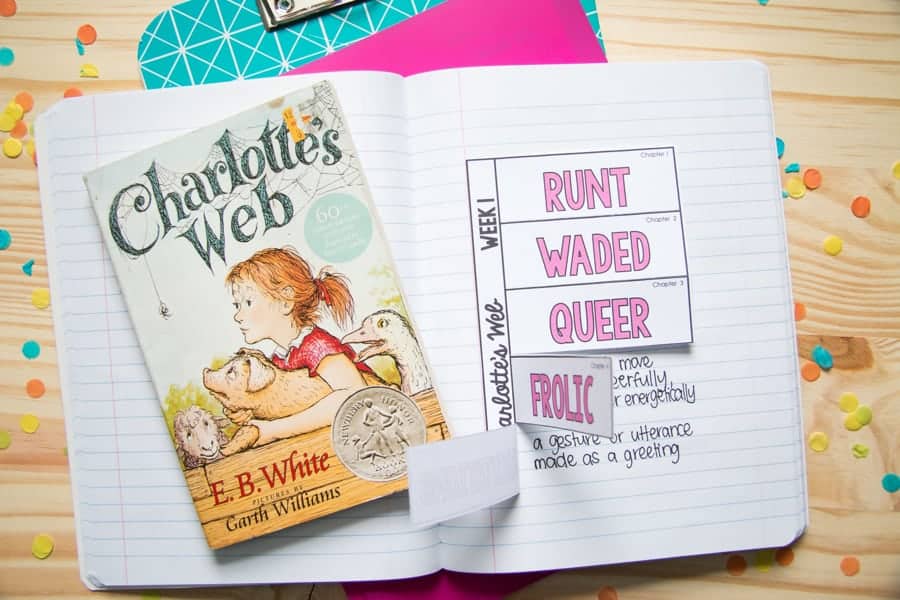
Some of the text-based vocabulary words included in this Charlotte’s Web novel study include:
- runt
- languishing
- summoned
- frolic
- salutations
These words can be taught using the flip book format. Designed with conserving copies in mind, this format uses one piece of paper per week.
Text-based vocabulary is taught using weekly Word of the Day flipbooks designed for interactive notebooks.
Students lift the tabs to record definitions, synonyms, examples, or visual representations of meaning depending on instructional goals.
Where to Find the Charlotte’s Web Novel Study
If you’re looking for a ready-to-use structure that supports meaningful discussion without hours of preparation, you can explore the complete Charlotte’s Web Novel Study below.


Both options include the same complete resource so you can choose what works best for your classroom or homeschool setting.
Frequently Asked Questions About Teaching Charlotte’s Web
What grade level is Charlotte’s Web best for?
Charlotte’s Web works especially well in grades 3–5 as a read aloud or grades 4–6 as an independent novel study.
Is Charlotte’s Web good for struggling readers?
Yes, but not as independent reading without audio support. The slower pacing and strong emotional connections support visualization and inference development.
How long does a Charlotte’s Web novel study take?
Most classrooms complete the novel in 4–5 weeks depending on reading pace and pre-reading or post-reading activities.
Can Charlotte’s Web be used for literature circles?
Yes. Character perspective differences create strong discussion opportunities.
Is Charlotte’s Web appropriate for homeschool novel studies?
Absolutely. Many families use short daily reading and discussion routines successfully.