Charlie and the Chocolate Factory Novel Study: Activities, Lesson Ideas, and Teaching Resources
Planning a Charlie and the Chocolate Factory novel study can be a lot of fun…until you start trying to pull together all the pieces.
You need meaningful comprehension questions. Vocabulary practice that actually sticks. Activities that keep students engaged without turning the unit into a giant packet of worksheets.
Roald Dahl’s Charlie and the Chocolate Factory is one of those rare books that students genuinely enjoy reading. Between the outrageous candy inventions, the unforgettable characters, and the suspense of the golden tickets, it naturally pulls students into the story.
In this post, I’ll share teaching ideas for Charlie and the Chocolate Factory, including pre-reading activities, post-reading projects, and a structured novel study that helps students build important comprehension skills while they read.
By the end, you’ll have everything you need to plan an engaging Charlie and the Chocolate Factory book unit for your classroom.

Charlie & the Chocolate Factory Summary
Charlie and the Chocolate Factory by Roald Dahl tells the story of Charlie Bucket, a kind and humble boy who lives in poverty with his family. When the mysterious Willy Wonka announces that five lucky children will find golden tickets hidden inside chocolate bars and win a tour of his magical factory, the whole world becomes obsessed with the contest.
Against all odds, Charlie finds one of the tickets and joins four other children for a tour of Wonka’s incredible chocolate factory. Inside, they discover a world filled with edible inventions, chocolate rivers, strange candies, and the hardworking Oompa Loompas who help run the factory.
As the tour unfolds, each of the children’s personalities begins to show. One by one, their greed, impatience, and selfish choices lead to unexpected consequences.
Through Charlie’s kindness, patience, and honesty, the story ultimately explores themes of character, fairness, and what truly makes someone deserving of success.
Charlie and the Chocolate Factory has remained a favorite classroom read for decades because it blends humor, imagination, and meaningful lessons in a way students immediately connect with.
Pre-Reading & Post-Reading Ideas for Your Charlie and the Chocolate Factory Novel Study
Choosing engaging activities before and after your novel study can dramatically improve student buy-in and comprehension.
The activities below help students connect with the story’s themes of choices, consequences, character traits, and imagination before and after reading.
Pre-Reading Activities for Charlie and the Chocolate Factory
Before starting the book, it helps to build curiosity about the story and introduce some of the themes students will encounter.
Here are three easy ways to spark interest before beginning your Charlie and the Chocolate Factory book study.
The Great Candy Debate (10 minutes)
Start by asking students:
If you could invent a candy with magical powers, what would it do?
Have students design their own imaginary candy with special features or surprising effects.
They can draw their candy, name it, and explain:
• what it tastes like
• what makes it special
• who would want to buy it
After sharing ideas, explain that the book they’re about to read features a chocolate factory filled with inventions that are just as imaginative.
This activity taps into the creativity that makes the novel so memorable.
Character First Impressions (10 minutes)
Introduce students to the names of the five golden ticket winners before reading the book:
• Charlie Bucket
• Augustus Gloop
• Veruca Salt
• Violet Beauregarde
• Mike Teavee
Ask students what they notice about the names.
Which ones sound kind? Which sound spoiled? Which sound unusual?
Have students predict what each character might be like.
Later, students can revisit their predictions and compare them to the characters in the story.
The Fairness Discussion (10 minutes)
Charlie and the Chocolate Factory raises interesting questions about fairness and consequences.
Start a quick class discussion:
Is life always fair?
Do people always get what they deserve?
Should good behavior be rewarded?
Have students give examples from real life or other stories they know.
These ideas become important themes throughout the book.
Post-Reading Activities for Charlie and the Chocolate Factory
Once students finish the novel, it’s fun to extend their thinking beyond basic comprehension.
These activities help students analyze characters, explore themes, and connect the story to their own ideas.
Design a New Wonka Invention
Students invent a brand-new candy that Willy Wonka might create.
Their invention should include:
• the candy name
• what it tastes like
• what unusual effect it has
• who would buy it
Students can create a poster or advertisement for their candy.
This activity connects well with the creativity found throughout the novel.
Character Consequences Chart
Students create a chart showing:
Character | Behavior | Consequence | Lesson Learned
For example:
Augustus Gloop | Greedy eating | Falls into chocolate river | Control your impulses
This activity helps students analyze how character choices drive the plot.
The Oompa Loompa Song Rewrite
Throughout the book, the Oompa Loompas sing songs that comment on the children’s behavior.
Have students write a new Oompa Loompa song about a modern problem such as:
• too much screen time
• social media
• junk food
• procrastination
Students can perform their songs or illustrate them.
Wonka’s Factory Blueprint
Students design a new room for Willy Wonka’s factory.
Their blueprint should include:
• the name of the room
• what kind of candy is made there
• how the machines work
• which Oompa Loompas run it
This activity works especially well as a creative project or bulletin board display.
Inside the Charlie and the Chocolate Factory Novel Study
If you want a novel study that keeps students thinking without drowning them in worksheets, this unit was designed for exactly that balance.
Instead of assigning a long packet at the end of the book, the study breaks comprehension work into daily skill-focused tasks that students complete as they read. Each lesson targets one specific comprehension strategy so students can practice it deeply before moving on to the next skill.

Structured 3-Week Reading Plan
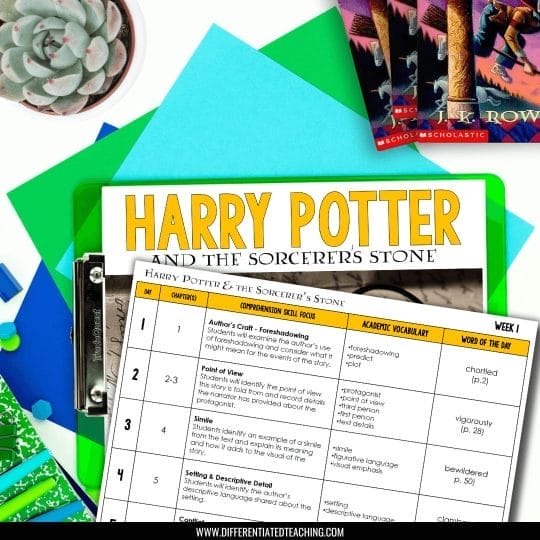
The novel study is organized into 15 reading lessons across three weeks, covering the entire book from Chapters 1–30. Each day includes:
- Assigned chapters to read
- One comprehension skill focus
- A short written response task
- A targeted vocabulary word from the text
For example, students practice skills such as:
- Supporting claims with text evidence
- Analyzing author’s craft
- Making predictions
- Identifying character traits
- Writing summaries
- Making inferences
- Understanding cause and effect
- Using context clues to determine vocabulary
By the end of the unit, students have practiced a wide range of transferable reading strategies while following the story from Charlie’s difficult life at home to the unforgettable tour of Willy Wonka’s factory.
If You Want to Run a Charlie and the Chocolate Factory Novel Study Without Reinventing Everything
Planning a novel study from scratch sounds simple…until you realize you need:
• comprehension questions
• vocabulary work
• discussion prompts
• writing responses
• pacing that fits your reading block
• and something that doesn’t turn into a giant packet of busywork

That’s exactly why I created this Charlie and the Chocolate Factory Novel Study.
It gives you a complete structure for teaching the book while keeping the focus on real comprehension skills instead of worksheets.
What Teachers Get in the Unit
This resource walks students through the entire novel with 15 structured lessons that build key reading skills as they go.
Inside the unit you’ll find:
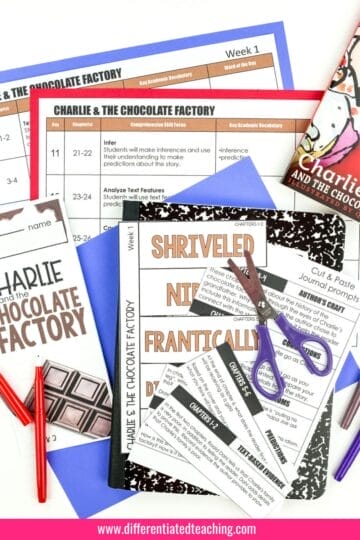
Comprehension Trifolds (15 reading lessons)
Students respond to the text as they read using skill-focused prompts like:
- citing text evidence
- making predictions
- analyzing character traits
- identifying cause and effect
- summarizing key events

Each trifold covers several chapters and keeps student thinking organized without overwhelming them with pages of questions.
Cut-and-Paste Journal Prompts
Prefer reading notebooks? The same comprehension prompts are included in a format students can glue directly into their journals.

Vocabulary Flip Books
Instead of long vocabulary lists, students interact with important words from the story by defining them, illustrating them, and using them in context.

Answer Keys
So you’re not grading blind.
The entire unit is designed to help students practice transferable reading skills while still enjoying the story.
Flexible Ways Teachers Use This Novel Study
Teachers use this unit in several different ways depending on their classroom structure:
- whole-class read-alouds
- literature circles
- small group guided reading
- independent book studies
- tutoring or intervention
- homeschool reading guides
Because the lessons are skill-focused, students aren’t just learning about this book. They’re building strategies they can apply to other texts, too.
Grab the Resource
If you’d like the ready-to-use version of this novel study, you can find it here:

And if you want a fun way to wrap up the unit, pairing it with a Book vs. Movie Compare and Contrast Project. gives students a great final writing activity.
E