Graphic Organizers for Reading: How to Build Thinking, Not Busywork
Many struggling readers aren’t just working to decode words. They’re trying to figure out what the text actually means. Reading comprehension requires students to organize ideas, track characters, and connect information across a passage. Without clear support, many learners quickly become overwhelmed.

Graphic organizers are one of the most effective tools for literacy instruction because they make thinking visible. Instead of guessing or rushing through a text, students have a clear structure for identifying important details, analyzing characters, and organizing their responses.
When used intentionally, graphic organizers help students slow down, process what they read, and apply comprehension strategies independently.
In this article, I’m sharing practical ways to use graphic organizers to strengthen reading comprehension, support struggling readers, and help students engage more deeply with any text.
What is a graphic organizer?
A graphic organizer is a visual tool that helps students organize their thinking while they read. Instead of holding everything in their heads, students map out ideas, relationships, and key details on paper.

Graphic organizers can be used with:
- fiction or nonfiction
- whole-class novels or short passages
- independent reading or guided groups
- print or digital texts
They turn abstract comprehension skills into something concrete that students can see and use.
These shapes can be filled in with text, numbers, or images, depending on the type of graphic organizer and the student’s level.
How to Choose the Right Graphic Organizer for Your Lesson
Not every reading lesson needs a graphic organizer. And not every organizer works for every skill.
The key is matching the organizer to the kind of thinking you want students to do.
Before handing one out, ask yourself:
- Are students identifying information or analyzing it?
- Are they tracking events… or explaining relationships?
- Do they need structure for thinking, or structure for writing?
For example, if students are comparing characters, a Venn diagram makes sense.
If they’re tracking plot events, a story map works better.
If they’re writing constructed responses, an organizer that scaffolds text evidence will lead to stronger answers.
I also mix up when I introduce the organizer. Sometimes students see it before reading, so they know what to watch for. Other times, I introduce it after reading as a way to process and organize their thinking.
What doesn’t change is this: I always take time to explicitly teach the organizer first. We look at the parts. We talk about what each section is asking. We clarify expectations so students know exactly what kind of thinking belongs in each box.
The organizer should simplify thinking, not create confusion. When students understand the structure, it becomes a scaffold. When they don’t, it becomes busywork.
Types of Graphic Organizers for Reading Comprehension
You probably already use some of these:
- Venn diagrams for compare and contrast
- Story maps for tracking plot and story elements
- Timelines for sequencing events
- Cause-and-effect charts
- Main idea/detail webs
- Character analysis organizers
The format matters less than the thinking behind it.

Graphic Organizers for Character Analysis
Character analysis is one of the first areas where graphic organizers make a noticeable difference.
In third grade especially, students are still learning how to move beyond simple descriptions. Instead of writing “She is nice,” they need help gathering evidence and noticing how characters change over time.
That’s where a structured organizer becomes powerful.
Early in the year, I focus heavily on helping students collect evidence for character traits. We talk about actions, dialogue, and choices. Students recorded specific moments from the text that support a trait, instead of guessing.
As the year progressed, we shifted toward tracking character growth. Students began to notice how a character changes from the beginning to the end of the story. The organizer helped them see patterns instead of isolated events.
For older students, you might extend this even further by connecting character development to theme. But even at the elementary level, giving students a visual place to gather evidence and track change strengthens both comprehension and writing.
When students organize their thinking before they write, their responses become more specific, more thoughtful, and much easier to assess.
Graphic Organizers for Teaching Main Idea and Summarizing
Main idea and summarizing are often where struggling readers begin to fall apart.
Many students either copy entire sentences from the text or focus on small details instead of identifying what truly matters. Graphic organizers slow that process down and give students a clear structure for sorting important information from extra details.
When introducing main idea, I like to give students guardrails that force prioritization.
One strategy I use is having students create 10-word main ideas for the beginning, middle, and end of a text. Limiting the number of words pushes students to think carefully about what matters most instead of retelling everything they remember.
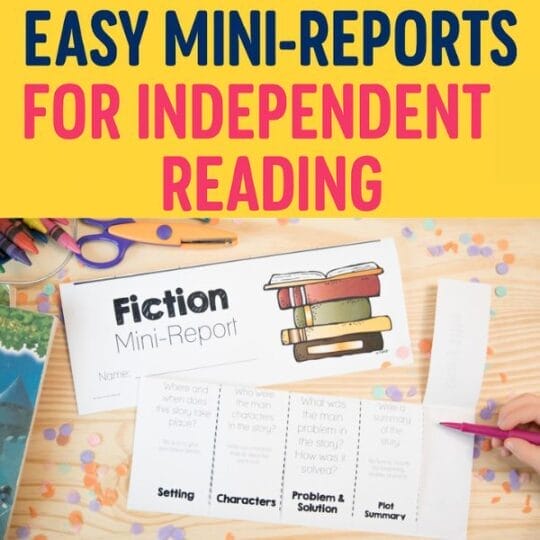
For fiction texts, organizers built around Somebody–Wanted–But–So–Then help students track problem and solution while naturally leading toward stronger summaries.
Both approaches help students move beyond copying sentences from the story. Instead, they begin identifying patterns across events and understanding how details connect to the bigger picture.
Graphic organizers are especially helpful when transitioning into written summaries. After organizing their thinking first, students already have the structure they need. Writing becomes less overwhelming because they aren’t starting from a blank page.
Over time, many students no longer need the organizer every time. But early on, it provides the support they need to build strong comprehension habits that transfer across texts.
Graphic Organizers for Teaching Text Evidence and Written Responses
One of the biggest shifts students experience in upper elementary is moving from answering questions with opinions to supporting their thinking with evidence from the text.
For many learners, this feels overwhelming at first. They may understand what happened in a story but struggle to explain how they know or where to find proof.
Graphic organizers provide the structure students need while they are developing these skills.
When introducing text evidence strategies like RACE or other constructed response formats, I rely heavily on organizers that break the thinking into clear steps. Instead of expecting students to jump straight into paragraph writing, they first practice identifying the question, locating evidence, and explaining their reasoning in smaller sections.
Early in the year, sentence stems and scaffolds make a huge difference.
Students might begin with prompts such as:
- “The text states…”
- “This shows that…”
- “I know this because…”
We often start with modeled and shared writing so students can hear the thinking process out loud before attempting responses independently. As confidence builds, the scaffolds gradually fade and students begin organizing their thinking more independently.
Graphic organizers also help prevent one of the most common struggles teachers see with written responses… students copying large chunks of text without explaining their thinking.
By separating evidence from explanation, students learn that citing the text is only one part of a strong answer. The real work happens when they explain how that evidence supports their response.
Over time, these routines help students move from short answers to thoughtful written analysis across both fiction and nonfiction texts.
Graphic Organizers for Struggling Readers and Differentiation
One of the biggest advantages of graphic organizers is how easily they can be differentiated.
In my classroom, differentiation doesn’t mean giving everyone something completely different. It means giving students the support they need to access the same comprehension skill.
Sometimes that means students are reading texts that match their instructional level while using the same organizer as the rest of the class. The skill stays consistent… the reading level adjusts.
Other times, the organizer itself is modified.
For example, I might:
- reduce the number of boxes
- provide sentence starters
- partially complete sections
- offer word banks
- or even scribe when the focus needs to stay on comprehension rather than writing stamina
If a student understands the text but cannot organize their thinking independently yet, the organizer becomes a scaffold instead of a barrier.
Graphic organizers also support students who struggle with working memory. Breaking tasks into smaller visual sections reduces overwhelm and helps students process information more efficiently.
When used thoughtfully, organizers create access points for learners without lowering expectations. Students are still analyzing, inferring, and explaining… they just have structured support while building independence.
What Graphic Organizers Look Like in a Real Classroom
Graphic organizers work best when they become part of an instructional routine instead of an occasional extra activity.
In my classroom, they are used most often during whole-class novel studies and small group instruction. Both settings allow students to practice comprehension skills with support before being asked to apply those skills independently.
During a novel study, we might complete an organizer together after reading a chapter. Students discuss ideas with partners, share evidence from the text, and revise their thinking as new information appears in the story. Over time, students begin anticipating what they should be paying attention to while they read.
Small group instruction offers another opportunity to use organizers intentionally.
When working with a guided reading group or intervention group, organizers help slow the thinking process down. Instead of rushing through a passage, students focus on one skill at a time. They might track character actions, gather evidence for a response question, or organize key details before summarizing.
This structure is especially helpful for struggling readers. The organizer creates a visible thinking process that students can return to as they build confidence.
I also use graphic organizers across content areas like science and social studies, where students gather information from informational text and organize key ideas before writing or discussion.
Over time, many students begin using these strategies without the organizer because they have internalized the process.
That’s the real goal. The organizer isn’t the end product… it’s the bridge that helps students learn how strong readers think.
How to Teach Students to Use Graphic Organizers Effectively
Like any classroom tool, graphic organizers don’t work if students are handed them without instruction.

Here’s the simple progression I use:
1. Introduce the organizer clearly.
Display it. Let students notice the parts. Ask what they think each section is for.
2. Explain the purpose.
Tell students when and why they would use this organizer. Connect it directly to the comprehension skill.
3. Model with a familiar text.
Complete it together using a think-aloud. Show your thinking.
4. Practice together.
Use a new text and let students guide the responses while you facilitate.
5. Release responsibility gradually.
Move from whole group to partners to independent work.
6. Monitor and reteach.
Some students will need extra modeling. That’s normal.
This entire process does not need to take weeks. When modeled clearly, most students can use a graphic organizer independently within a few lessons.
Why Graphic Organizers Actually Improve Reading Comprehension
At their core, graphic organizers work because they reduce cognitive overload.
Reading comprehension requires students to:
- hold information in working memory
- track relationships between ideas
- distinguish important details from minor ones
- connect evidence to conclusions
For many learners, especially struggling readers, that is a lot happening at once.
Graphic organizers break those mental tasks into visible, manageable steps.
Instead of keeping everything in their heads, students map their thinking on paper. This frees up working memory so they can focus on meaning instead of trying to remember every detail at the same time.
They also make abstract skills concrete.
It’s one thing to tell students to “analyze the character” or “identify the main idea.”
It’s another to give them a structured place to collect evidence, track patterns, and organize their thoughts.
That structure supports:
- deeper processing
- better retention
- clearer written responses
- stronger discussion participation
Over time, as students repeatedly use organizers with guidance and modeling, they begin internalizing the thinking process.
Eventually, many learners no longer need the organizer because they’ve learned how to organize their thinking independently.
That’s the real goal.
The organizer isn’t meant to be permanent. It’s meant to build thinking habits that transfer across texts, genres, and even testing situations.
Common Mistakes Teachers Make When Using Graphic Organizers
Graphic organizers can be incredibly powerful tools for building comprehension. However, simply handing one to students doesn’t guarantee better understanding.
In fact, when used incorrectly, they can actually create confusion or add unnecessary work for struggling learners.
Here are a few of the most common mistakes I see.
Treating Graphic Organizers Like Worksheets Instead of Tools
One of the biggest pitfalls is treating a graphic organizer as the assignment instead of a support for thinking.
Students quickly learn how to fill in boxes without actually processing the text. During whole-group lessons especially, it’s easy for learners to copy answers from classmates or wait for someone else to respond first.
When this happens, the organizer becomes busywork instead of a strategy that improves comprehension.
The focus should always remain on the thinking process, not simply completing every space on the page.
Teaching Test Formats Instead of Teaching Thinking
Another common issue happens when organizers are introduced only because students might see something similar on a test.
Exposure alone doesn’t build transferable skills.
Students need to understand why the organizer exists and how it helps them break down complex reading tasks. When teachers model how to use the organizer, think aloud through decisions, and gradually release responsibility, students begin applying those same strategies independently… including during testing situations.
Teaching the thinking behind the tool matters far more than practicing a specific format.
Assuming Graphic Organizers Automatically Support Struggling Learners
Graphic organizers are often recommended as an accommodation for struggling readers or writers.
But more boxes and more writing do not automatically equal better support.
Sometimes an organizer actually increases cognitive load. Students may become overwhelmed trying to figure out what belongs in each section instead of focusing on comprehension.
Effective differentiation often means simplifying.
Reducing sections, adding sentence starters, partially completing an organizer, or even scribing responses can help students focus on understanding the text instead of managing the task.
The goal is always clarity.
If the organizer adds confusion instead of removing it, it’s time to adjust the support.
Ready-to-Use Graphic Organizers for Reading Comprehension
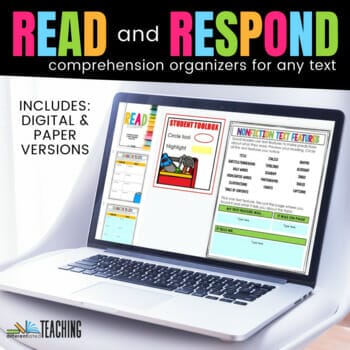
If you’re looking for graphic organizers that are structured, classroom-tested, and flexible enough to use with any text, I created a bundle designed specifically for reading comprehension skill-building.
This set includes 50 print and digital graphic organizers that support:
- character analysis
- main idea and summarizing
- text evidence
- inference
- vocabulary
- and more
They can be used in whole-class novel studies, small group instruction, or independent reading settings.
Each organizer is designed to clarify thinking rather than add unnecessary work, making them especially helpful for differentiating instruction.
You can grab the full set here: Graphic Organizers for Reading Comprehension
Frequently Asked Questions About Graphic Organizers for Reading Comprehension
Are graphic organizers good for struggling readers?
Yes…when they are used intentionally.
Graphic organizers can reduce cognitive overload by breaking comprehension tasks into manageable steps. However, they must be taught explicitly and sometimes modified. Reducing sections, adding sentence starters, or partially completing the organizer can make it more supportive rather than overwhelming.
Should every reading lesson include a graphic organizer?
No.
Graphic organizers are tools, not requirements. They are most effective when used strategically to support a specific comprehension skill. Overusing them can lead to fatigue or surface-level completion instead of deeper thinking.
Can graphic organizers be used with any text?
Absolutely.
Graphic organizers can be used with:
- whole-class novels
- small group texts
- nonfiction passages
- independent reading books
The key is matching the organizer to the skill being taught.
Are graphic organizers better for fiction or nonfiction?
They work well with both.
Story maps, character organizers, and theme charts support fiction.
Main idea charts, cause-and-effect organizers, and note-taking formats support nonfiction.
Are these graphic organizers available in digital format?
Yes.
The set includes both printable versions and digital versions in Google Slides, making them easy to use in traditional classrooms or digital learning environments.
Looking for more reading support?
This post is part of the Reading Instruction and Literacy Support resource collection. Browse all the strategies, tools, and differentiation guides in one place:
→ Reading Instruction and Literacy Support: A Complete Guide for Teachers