Teaching A Christmas Carol in Middle School
Every December, A Christmas Carol finds its way back into middle school classrooms. And every year, I hear the same thing from teachers: my students got through it, but I’m not sure they got much out of it.
They can tell you the plot. Three ghosts visit, Scrooge wakes up a changed man, Tiny Tim lives. What they often miss is everything Dickens does to make that change feel earned. The fog that creeps through the keyhole. The chain Marley built one link at a time. The ghost who never says a word.
This book is short, packed with craft, and a perfect text for teaching middle schoolers to read like writers. Here’s how I’d plan it.

Start with Dickens’ original text
It’s tempting to grab an adapted version for middle school. I get it. The sentences are long, and the vocabulary is old.
But the original is only five short chapters, which Dickens called staves, and the language is a big part of what makes it worth reading. “Solitary as an oyster.” “Misanthropic ice.” Most adaptations cut exactly those lines, and those are the lines that teach students how an author builds a character.
Middle schoolers can absolutely handle the original. They just need it in smaller pieces, with a clear reason to read each one. If your students see a stage production or you show a film version, use it as a comparison after you’ve read, not as a replacement.
Plan it as 15 short reading days
A Christmas Carol is around 28,000 words. Split across 15 days, that’s about 1,900 words a day, which most middle schoolers can read in 15 to 30 minutes. Three weeks also fits nicely between Thanksgiving and winter break.

Here’s roughly how the book breaks down:
| Week | Staves | What happens |
|---|---|---|
| Week 1 (Days 1–5) | Stave I and the first half of Stave II | Scrooge at the counting-house, Marley’s Ghost, the Ghost of Christmas Past, Fezziwig’s party |
| Week 2 (Days 6–10) | End of Stave II and all of Stave III | Belle, the Ghost of Christmas Present, the Cratchits’ dinner, Fred’s party, Ignorance and Want |
| Week 3 (Days 11–15) | Staves IV and V | The Ghost of Christmas Yet to Come, the gravestone, Scrooge’s Christmas morning |
The most important thing you can give students (and yourself) is a clear stopping point for each day. Different editions have different page numbers, so I like to describe where each reading starts and ends by what’s happening in the story and by its last line. That way it works no matter which edition of the original a student brings in.
One heads-up: the first part of Stave II, where Scrooge visits his school days and his sister Fan, runs long. If your class reads slowly, split it into two days.

Teach one skill a day
Almost every section of A Christmas Carol lines up with a reading skill your students need anyway. Dickens hands you characterization, mood, symbolism, imagery, and theme on nearly every page. So instead of a list of questions about what happened, give each day one skill and a couple of questions that make students use it.
Teach the skill in a quick mini-lesson before reading, using a picture book or a short familiar text. Then students read with that one thing in mind. It’s much easier for a 7th grader to notice mood when they know that’s what they’re looking for today.

Handle the vocabulary in two layers
The vocabulary in this book comes in two kinds, and it helps to treat them differently.
Victorian terms are words students need just to follow the story, like counting-house, workhouse, gruel, and humbug. Don’t make a big deal of them. Give a quick definition before reading that day and move on.
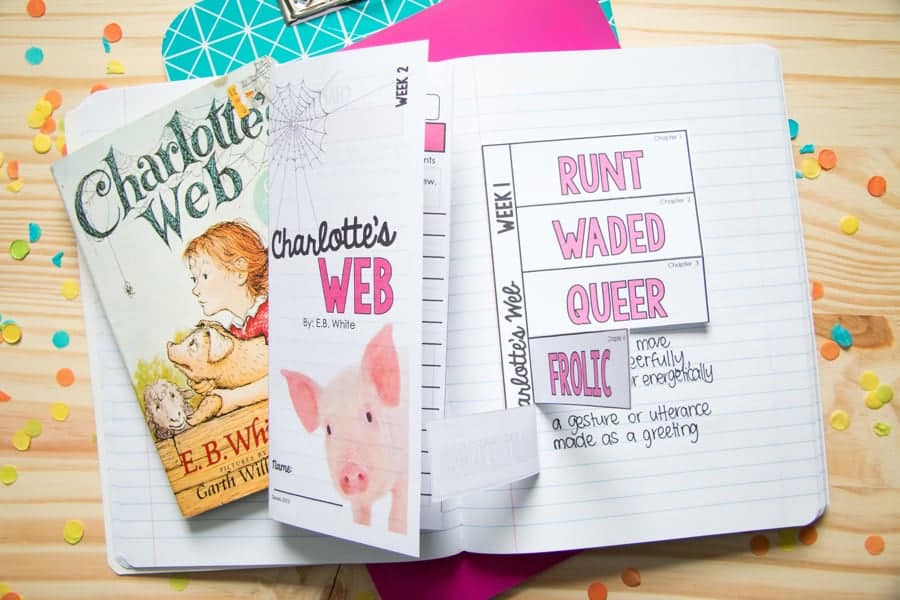
Rich words worth keeping are the ones students will see again in other books and on tests. Pick one per day from the reading. Have students listen for it while they read, then add it to a flip book or vocabulary notebook with a definition, a synonym, and a sentence of their own. Fifteen days gives you fifteen strong words without it ever feeling like a vocabulary list.

Preview the heavy scenes
It’s a Christmas story, but it isn’t all cozy. Three scenes are worth reading ahead of time with your own class in mind:
Ignorance and Want (end of Stave III). The Ghost of Christmas Present reveals two starving children hidden under his robe. It’s one of the book’s most striking images, and it can be unsettling.
Old Joe’s shop (Stave IV). People sell off a dead man’s belongings, including the curtains from around his bed. Students often find it creepy, and some find it upsetting.
Tiny Tim’s death (Stave IV). The Cratchits grieve; in the future, the last ghost shows Scrooge. For a student who has recently lost someone, this one can hit hard.
None of these are reasons to skip the book. They’re the heart of it. A quick heads-up to students the day before, or a check-in with a student you’re thinking about, goes a long way.
Pre-reading and post-reading ideas
A strong start and a strong finish make the whole unit stick. Here are a few simple ideas for each.
Before You Read
1. Take a Stand. Post a few statements around the room: “People can’t really change.” “Money makes people happy.” “We owe something to people we’ve never met.” Students stand by agree or disagree and explain why. Hold on to their answers. You’ll come back to them at the end.
2. Walk Through Victorian London. Set up a gallery walk with photos and illustrations of workhouses, crowded city streets, and children at work. Students jot down what they notice and what they wonder. Then share a little of Dickens’ own story: when he was 12, his father was sent to debtors’ prison and young Charles went to work in a factory. Students start the book understanding why he cared so much about the poor.
3. What’s a Stave? Ask students why a book would be divided into “staves” instead of chapters. Dickens called his chapters staves, like the verses of a song, because he was writing a carol. It’s a quick hook that gets students thinking about the title before page one.
4. Define a Scrooge. Ask students what it means to call someone “a Scrooge.” Most of them already know the word! Have them predict what kind of character could turn his own name into an insult, then check their predictions as they meet him.
After You Read
This is your chance to help students pull the book together, especially those who missed connections along the way.
1. Take a Stand, Again. Bring back the statements from the first day. Have students move to agree or disagree again, and this time they have to support their position with something from the book. It’s a great way to see whose thinking changed.
2. Book vs. Movie. Show one scene from a film version (The Muppet Christmas Carol is always a favorite) and have students compare it with the same scene in the book. What did the movie cut, change, or add? Why might the filmmakers have made those choices?
3. Socratic Seminar: Is Scrooge’s Change Believable? Does Scrooge change because he learns to care, or because he’s scared of dying alone? Would one night really be enough? This question gets students arguing with evidence from across the whole book. Push them to back up every point. “I think” is a great start. “I think, because on this page…” is where the real learning happens.
4. Write the Next Visit. Students choose a character from another book they’ve read (or a modern-day character they invent) who needs a visit from the spirits. They plan the three visits and write one of the scenes.
5. Stage a Scene. Small groups pick a favorite scene and turn it into a short reader’s theater script. Turning narration into dialogue makes students decide what really matters in a scene, and performing it is a fun way to celebrate finishing a classic.
Want it all done for you?
If you’d rather skip the planning, my A Christmas Carol Novel Study has all 15 days ready to print. It’s written for Dickens’ original text and built for grades 6–8. You’ll get:
- Three foldable trifolds, one for each week, with one skill and focused thinking questions for each day
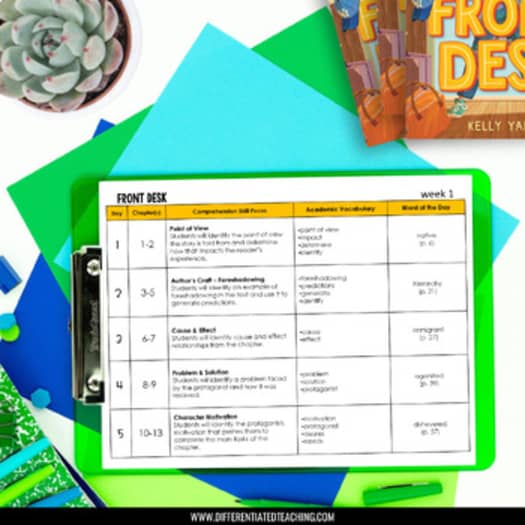
- A pacing guide with each day’s start point, stop point, and last line
- Vocabulary flip books for the 15 Words of the Day
- Cut and paste journal prompts for reading notebooks
- Answer keys with sample answers and what to look for
- A Victorian Word Help page, organized by day
Print it, fold it, and your December reading block is ready to go.