The Would You Rather Paragraph Writing Routine My Students Loved
Getting kids excited about writing can feel like a stretch… especially when it comes to opinion paragraphs.
Whether you’re teaching a classroom full of reluctant writers or juggling multiple learners at home, writing can quickly turn into a daily battle of groans, blank pages, and “I don’t know what to write.”
And honestly… most writing prompts don’t help.
Students get a random question, stare at the paper, and suddenly the entire writing process feels overwhelming.
That’s exactly why I started using a Paragraph of the Week: Would You Rather writing routine.

Instead of assigning one big writing task, students build a strong paragraph one small step at a time using silly, high-interest prompts they actually want to answer.
When kids are debating whether they’d rather sleep in a waffle fort or sweat glitter in the summer, they suddenly have a lot to say.
That’s exactly why I started using a Paragraph of the Week: Would You Rather writing routine in my classroom.
Instead of one big writing assignment, students build a strong paragraph one small step at a time using silly, high-interest prompts they actually want to answer.
And when kids are arguing about whether they’d rather sleep in a waffle fort or sweat glitter in the summer, they suddenly have a lot to say.
Fun Would You Rather Questions for Kids
Looking for fun Would You Rather questions for kids that actually get students talking and writing?
These silly prompts are perfect for opinion writing warm-ups, morning work, or quick class debates.
Here are a few examples students love:
• Would you rather sweat glitter every time it’s hot or sleep in a waffle fort?
• Would you rather eat popcorn for every meal or only eat ice cream for a week?
• Would you rather live in a giant treehouse or a castle?
• Would you rather have a pet dragon or a pet dolphin?
Questions like these spark instant debate. Once students choose a side, they suddenly have plenty to write about.
That’s exactly why I built my Paragraph of the Week: Would You Rather writing routine around prompts like these. Instead of staring at a blank page, students start with a fun decision and then learn how to turn their ideas into a structured paragraph.
You can take a closer look at the full routine here:
👉 Paragraph of the Week: Would You Rather Writing Routine
Why Would You Rather Questions Work So Well for Writing
One of the biggest challenges in teaching writing is helping students come up with ideas. When students stare at a blank page, they often feel stuck before they even begin.
That’s where Would You Rather questions make such a difference.
Instead of trying to invent an idea from scratch, students start by choosing between two interesting options. The moment they pick a side, they already have an opinion… and opinions naturally lead to reasons.
Suddenly students are explaining:
• why their choice is better
• what might happen if they picked it
• why the other option wouldn’t work as well

That kind of thinking is exactly what strong opinion writing requires.
Would You Rather questions also turn writing into a conversation. Students debate their choices, laugh about the possibilities, and build ideas before they ever start drafting.
By the time they begin writing, the hardest part is already done.
They already know what they want to say.
How the Paragraph of the Week Routine Works
Each prompt follows the same simple 5-day structure so students always know what to expect.
Monday – Brainstorm
Students pick a side and list their best reasons.
Tuesday – Build the details
They turn their reasons into supporting sentences.
Wednesday – Write the paragraph
Students add a strong topic sentence and conclusion.
Thursday – Revise and edit
Built-in checklists help students improve their writing.
Friday – Publish and reflect
Students write a final copy and evaluate their work.
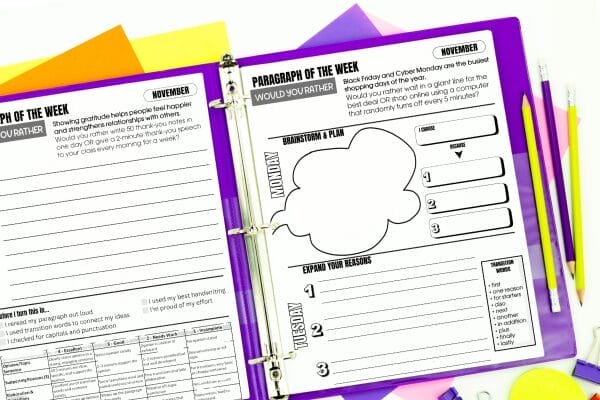
This step-by-step structure helps students internalize the writing process instead of feeling overwhelmed by it.
Over time, you’ll notice something powerful happening:
Students start planning their writing automatically.
If you’d like a ready-to-use version of this routine, I created a Paragraph of the Week: Would You Rather writing set that walks students through each step with prompts, organizers, checklists, and final paragraph pages.
You can see the full resource here:
👉 Paragraph of the Week: Would You Rather Writing Routine
Why This Writing Routine Works
The biggest difference with this routine is simple:
It doesn’t just give students a prompt.
It teaches them how to write the paragraph.
Each week follows a predictable structure that walks students through the full writing process in manageable steps. Instead of dumping everything into one assignment, students practice one piece of the process at a time.
By the end of the week, they’ve written a complete opinion paragraph… and they actually understand how they got there.
The prompts help, too.

Every week starts with a fun Would You Rather question that gets students thinking and laughing before they ever pick up their pencil.
Questions like:
Would you rather sweat glitter every time it’s hot… or sleep in a giant waffle fort?
Suddenly writing feels less like an assignment and more like a debate.
What’s Included in Each Monthly Set
Each Paragraph of the Week: Would You Rather pack is designed to give you a full month of structured writing practice without extra prep.

Each month includes:
✔️ At least 14 themed Would You Rather prompts
Seasonal topics tied to holidays and fun events throughout the year with enough options that you can choose what is best for your learners & curriculum.
✔️ Daily writing routine pages
Students follow the same clear structure each week.
✔️ Graphic organizers and planning tools
Helps students organize their ideas before writing.
✔️ Opinion writing checklists and rubrics
Supports revision while making grading easier.
✔️ Sentence stems and transition word banks
Built-in scaffolds that support struggling writers.
Everything is designed so you can simply print and teach.
Use it for morning work, bell ringers, centers, homework, or your writing block.
Easy Ways to Use This Paragraph Writing Routine
One of the best things about this writing routine is how flexible it is.
Teachers often use it for:
• morning work
• writing warm-ups
• centers
• bell ringers
• independent writing practice
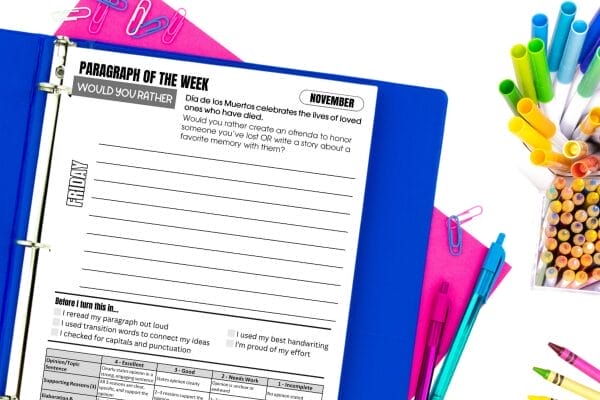
Because the routine stays consistent, students quickly learn the expectations and writing time runs much more smoothly.
Homeschool families love it for the same reason.
If you’re teaching multiple ages, it’s easy to adjust expectations. Younger writers might list two reasons, while older students expand their explanations with stronger supporting details.
And here’s a tip that works every time:
Let students vote on the week’s prompt before writing.
Instant buy-in.
Why Students Actually Enjoy This
Writing becomes much easier when students have something interesting to say.
The playful Would You Rather questions lower the pressure while still giving students real practice with opinion writing skills.
Instead of struggling to get started, students jump right into debating their choice. And once the ideas start flowing, the structured routine helps them turn those ideas into a clear paragraph.
Build a Writing Habit Without the Daily Struggle
Teaching writing doesn’t have to feel like pulling teeth every day.
When students have a predictable routine, clear steps, and prompts that make them laugh a little, writing becomes much more manageable.
That’s exactly why I created the Paragraph of the Week: Would You Rather series.

Each month gives you a fresh set of prompts so you can build a consistent writing habit across the entire year without constantly searching for new ideas.
If you want to take a closer look, you can explore the full resource here:
👉 Paragraph of the Week: Would You Rather Writing Routine
It’s a simple way to build strong paragraph writers with just 10–15 minutes of writing practice each day.
If you’re looking for more simple routines that help students build strong literacy skills, you can explore all of my ELA teaching strategies and classroom routines here.