Homework Pass: What It Is, Free Ideas, and a Better Alternative
What is a homework pass?
A homework pass is a simple classroom reward that lets a student skip an assignment or turn one in late with no penalty. Teachers typically hand them out for things like good behavior, a birthday, a classroom competition win, or just as a no-cost way to celebrate effort. Most homework passes are small printable cards or tickets that a student “cashes in” when they want to use it, often with a teacher signature or a spot to fill in the date and assignment.
A few common types you’ll see:
- No Homework Pass: skip an entire night’s assignment, no penalty
- Late Homework Pass: turn something in a day late without a grade deduction
- Birthday Pass: a no-homework night specifically tied to a student’s birthday
- Competition or Incentive Pass: earned through a class-wide game, challenge, or behavior goal
Most teachers put some limits on them. A pass might only cover regular nightly assignments, not a major project, essay, or test. If you hand them out, it’s worth explaining the boundaries upfront so a student doesn’t try to use one on the wrong thing.
Free Homework Pass Ideas
If you just want something simple to print and hand out, a basic pass can be as easy as a card with “No Homework Tonight!” and a line for the student’s name and date, or “Late Homework Pass, good for one extra day.” You can make your own in a few minutes with any word processor, or find free printable templates through a quick search if you’d rather skip the design step entirely.
Why I Stopped Giving Out Homework Passes
Here’s where I want to be honest with you about something I didn’t expect when I started using passes myself: after about seven years of handing them out for birthdays, good behavior, basically any reason I could think of, I realized they were quietly working against what I actually wanted for my students.
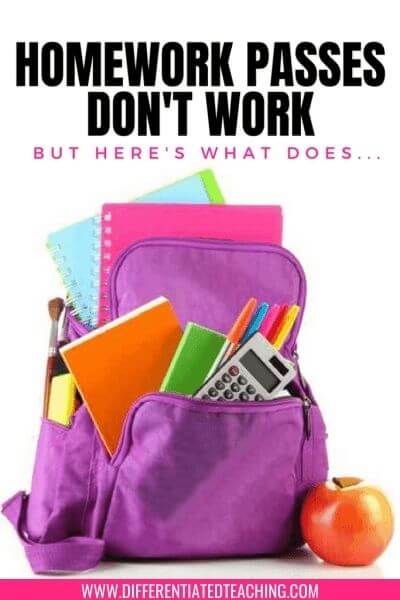
A homework pass sends a specific, if unintentional, message: homework doesn’t really matter, since I’m willing to let you skip it entirely for a ticket. Some students used their passes exactly the way I’d hoped, on a night when they genuinely needed the break. But most students treated the pass as confirmation of something I didn’t want them believing: that homework itself was more of a punishment than something worth doing.
I wanted my students getting real value from their assignments, maybe even (I know, a wild idea) enjoying them a little. Passes were undermining that every time I handed one out.
What I Started Doing Instead: Homework Choice Boards
Homework wasn’t optional at my school, starting in first grade, so eliminating it outright was never on the table. Instead, I turned to something I already believed in deeply as a teacher: choice.
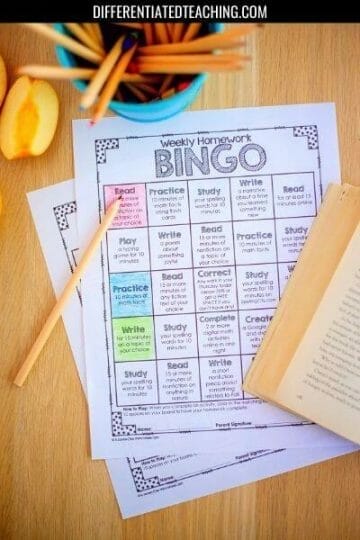
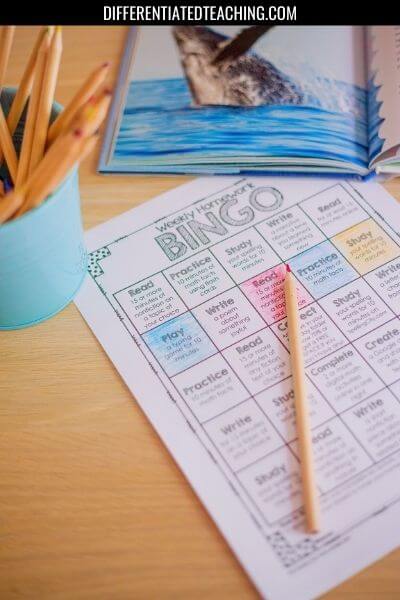
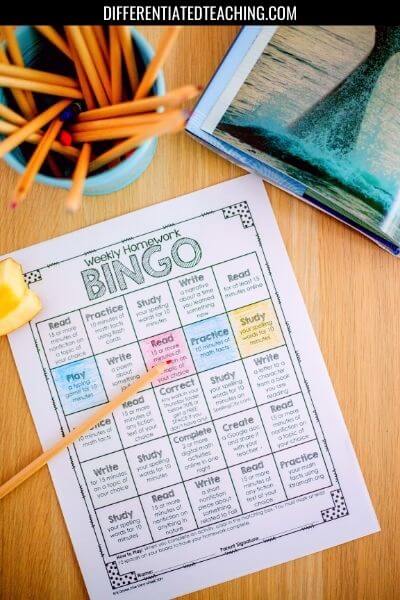
I built what we called Homework BINGO, a weekly choice board where every square was a different homework option, but every option still practiced the skills my students actually needed: reading, writing, math facts, spelling. Students choose which squares to complete rather than being handed one fixed assignment every night.
How the choice boards work
Every square on the board is something a student should already be able to do independently. That’s deliberate. Homework should reinforce skills already taught, not introduce new ones a student might need help with at home, especially since not every student has a parent available to help on a given night.
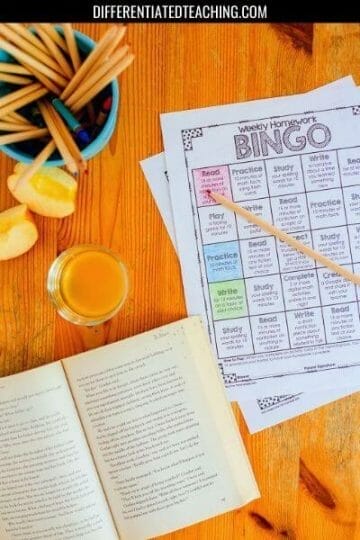
About half the board is built around reading and writing, but no two squares ask for the exact same thing. One square might be fifteen minutes of reading about a person they admire. Another might just be reading a book of their own choosing. Both are reading. Both count. But now the student, and frankly the parent, has some real say in which version fits their evening.
The actual rules
Students aim for BINGO each week by completing a variety of squares, though it’s not a strict requirement; I ask for at least 10 of the 25 squares finished. Hitting BINGO earns a small in-class incentive (line leader for the week is a surprisingly hot commodity). Whether or not a student gets BINGO, the board comes back signed by an adult on Friday, and a new one goes out Monday.
What changed for my students and their families
Students started describing homework as fun, which is not a sentence I expected to hear regularly as a teacher. And parent communication around homework dropped sharply. Instead of “you’re giving too much homework” or “can we get more, please,” I started hearing that families liked having some control over how much their child took on each night, and noticing their kids choosing to stretch themselves with something new on the board.
I Still Use Rewards, Just Different Ones
Giving up homework passes didn’t mean giving up rewards altogether. I just shifted toward things that don’t quietly undercut the value of the assignment itself:
- Shoes-off math (a tradition I borrowed from my own second grade teacher, genuinely ahead of his time)
- Markers or crayons instead of pencils for one assignment
- Flashlight reading, which somehow makes any book feel like an event
None of these tell a student that the work itself isn’t worth doing. They just make an ordinary night feel a little more fun.

Want to Try Choice-Based Homework in Your Classroom?
If this approach sounds like something your students would respond to, Homework BINGO gives you a full year of weekly choice boards, themed to match the months and holidays from September through May. It’s fully editable, so you can swap in exactly the skills and tasks your own students need to practice.