How to Write a Meet the Teacher Letter Parents Actually Want to Read
Starting a new school year comes with a lot of moving parts. You’re setting up your classroom, labeling supplies, prepping first-week activities, and trying to remember where you put that one stack of copies you definitely made yesterday.
Somewhere in the middle of all that back-to-school chaos, you also need to introduce yourself to families.
That’s where a Meet the Teacher letter comes in.

A strong teacher introduction letter does more than share your name, grade level, and favorite coffee order. It gives families a first glimpse of who you are, what you value, and how you plan to support their child during the year ahead.
And the good news? It doesn’t have to be complicated.
Let’s walk through what to include in your Meet the Teacher letter, how to make it feel warm without getting too wordy, and a simple template you can adapt for your own classroom.
What is the Meet the Teacher Letter, anyway?
The “Meet the Teacher” letter is more than just a piece of paper with your name and a few fun facts about your love for coffee or your rescue pup. It is a short introduction you send to students and families at the beginning of the school year in August. Some teachers hand it out during Meet the Teacher Night or Open House. Others send it home in a first-day folder or email it before school starts.
No matter how you share it, the purpose is the same: to help families feel connected before the year begins. In that way, you can consider it your initial handshake, welcoming smile, and promise of a supportive and engaging learning environment.
Your letter can include information like:
- Your name and teaching role
- A little about your background or experience
- A few personal details that help students relate to you
- Your teaching philosophy or classroom values
- What families can expect this year
- How parents or caregivers can contact you
Think of it as the first small bridge between home and school.
Why Your Teacher Introduction Letter Matters
The first few weeks of school are full of new routines, new expectations, and new relationships. Students are trying to figure out whether they belong in your classroom. Parents are wondering whether their child will be seen, supported, and challenged.
Your Meet the Teacher letter can help answer some of those quiet questions.
It tells families:
- You’re glad their child is in your class.
- You care about creating a positive classroom community.
- You value communication.
- You have a plan for the year.
- You’re a real person, not just the name on the class list.
That doesn’t mean your letter needs to be fancy. In fact, the best Meet the Teacher letters are usually clear, friendly, and easy to skim.
Parents are busy. Give them the information they need, add a little personality, and keep it focused.
What to Include in a Meet the Teacher Letter
There’s no single perfect format, but most strong teacher introduction letters include a few key pieces.

1. Start With a Warm Welcome
Begin with a friendly greeting that makes students and families feel invited into your classroom community.
You might write:
“Welcome to 4th grade! I’m so excited to have your child in my class this year.”
or
“Hello, families! My name is Mrs. Carter, and I’m thrilled to be your child’s teacher this year.”
This is not the place for a stiff, formal opening. You’re setting the tone for the relationship, so let your voice sound like you.
2. Introduce Yourself
Next, share a little about who you are.
You can include:
- Your name
- Your grade level or subject area
- How long you’ve been teaching
- Where you went to school, if relevant
- Why you love teaching
- A few personal details students might enjoy
You don’t need your entire life story. A short paragraph is enough.
For example:
“This will be my seventh year teaching, and my favorite part of the job is helping students discover that they are capable of more than they realize. Outside of school, I love reading mystery novels, baking cookies, and spending time with my rescue dog, Max.”
That kind of detail helps students see you as a person, which can make the first day feel a little less intimidating.
3. Share Your Classroom Values
Families want to know what kind of classroom their child is walking into. This is your chance to share what matters most to you as a teacher.
You might mention values like:
- Respect
- Curiosity
- Growth mindset
- Kindness
- Responsibility
- Collaboration
- Independence
- Effort
Try to keep this section grounded and specific. Instead of saying, “I believe all students can learn,” explain what that looks like in your classroom.
For example:
“In our classroom, mistakes are part of learning. I work hard to create a space where students feel safe asking questions, trying new strategies, and learning from one another.”
That gives families a much clearer picture of your classroom culture.
4. Give Families a Quick Preview of the Year
Your Meet the Teacher letter doesn’t need to include your entire pacing guide. However, it can be helpful to give families a quick look at what students will be learning or experiencing.
Depending on your grade level, you might mention:
- Major units or themes
- Reading goals
- Writing projects
- Math skills
- Science or social studies topics
- Special classroom routines
- Homework expectations
Keep this section brief. The goal is to build excitement, not overwhelm families with curriculum details.
5. Explain How Communication Will Work
This is one of the most important parts of your letter.
Families need to know how to reach you and what to expect when they do.
Include:
- Your email address
- School phone number, if appropriate
- Preferred communication method
- Best times to contact you
- How often you send updates
- Where families can find classroom reminders
You can also set a positive tone by inviting families to share information with you.
For example:
“If there is anything you’d like me to know about your child, please feel free to reach out. I know families are the experts on their children, and I value your insight.”
That one sentence can go a long way.
6. End With Encouragement
Close your letter with a positive, confident message about the year ahead.
You might say:
“I’m looking forward to a year full of growth, learning, and memorable moments together.”
or
“I can’t wait to get to know your child and partner with you this school year.”
Simple. Warm. Done.
Meet the Teacher Letter Template
Use this template as a starting point, then adjust it to match your grade level, school expectations, and personality.
Dear Students and Families,
Welcome to [grade level or class name]! My name is [your name], and I am so excited to be your teacher this year. I’m looking forward to getting to know each student and building a classroom community where everyone feels safe, supported, and ready to learn.
This will be my [number] year teaching. I graduated from [college/university, if you want to include it] with a degree in [degree or certification area]. I became a teacher because [brief reason you teach]. Outside of school, I enjoy [2–3 personal details or hobbies].
In our classroom, I believe in [classroom value or teaching philosophy]. Students will be encouraged to ask questions, learn from mistakes, work hard, and support one another. My goal is to help every student grow academically while also building confidence and independence.
This year, we will be learning about [brief overview of major subjects, units, or skills]. I’m excited for the projects, discussions, and learning experiences we’ll share together.
Communication is important to me. The best way to reach me is [email or preferred communication method]. I will also share classroom updates through [newsletter, folder, app, website, email, etc.]. Please don’t hesitate to contact me if you have questions, concerns, or anything you’d like me to know about your child.
I’m looking forward to a wonderful school year together!
Warmly,
[Your Name]
Sample Meet the Teacher Letter
Dear Students and Families,
Welcome to 3rd grade! My name is Mrs. Davies, and I’m so excited to be your teacher this year. I can’t wait to meet each of you and begin building a classroom community where everyone feels valued, supported, and ready to grow.
This will be my seventh year teaching, and I truly love working with upper elementary students. I earned my masters degree in education from Concordia University, and I became a teacher because I believe students are capable of amazing things when they feel encouraged and understood. Outside of school, I love reading and spending time with my family.
In our classroom, we will focus on respect, responsibility, curiosity, and effort. I want students to feel comfortable asking questions, sharing ideas, and learning from mistakes. We will celebrate progress, work through challenges, and support one another along the way.
This year, we’ll grow as readers, writers, mathematicians, scientists, and problem solvers. We’ll read a variety of texts, strengthen our writing skills, dig into math concepts, and explore science and social studies topics through discussions, projects, and hands-on learning.
Communication is an important part of a successful school year. You can reach me by email at rdavies123@school.com. I’ll also send home regular updates so you know what we’re working on in class. If there is anything you’d like me to know about your child, please don’t hesitate to reach out.
I’m looking forward to a wonderful year of learning, growth, and community. See you soon!
Warmly,
Rebecca Davies
Remember, this is just a template! Feel free to infuse it with your personality and teaching style. This letter is the first step towards creating a warm, welcoming, and effective classroom community, so let your passion for teaching shine through!
Tips for Making Your Meet the Teacher Letter Feel Personal
Once you have the basic structure, add a few details that make the letter feel like it came from you.
Keep It Conversational
Your letter should sound professional, but it doesn’t need to sound formal. Write the way you would speak to a parent at Open House: friendly, clear, and approachable.
Add a Few Student-Friendly Details
Students love learning little things about their teacher. Add a few fun facts, such as:
- Favorite book
- Favorite snack
- Favorite color
- Pets
- Hobbies
- Favorite school subject
- A fun summer memory
These details give students an easy connection point.
Don’t Overload Families With Rules
You can mention classroom expectations, but save the full procedures and policy details for your handbook, syllabus, or Back-to-School Night presentation.
A Meet the Teacher letter should feel welcoming first.
Make It Easy to Skim
Many families will read your letter quickly. Use short paragraphs, simple headings, or a one-page format if possible.
If you’re creating a printable version, consider adding:
- A photo of yourself
- Contact information box
- A few fun facts
- A short “About Me” section
- A QR code to your classroom website or newsletter sign-up, if applicable
Remember All Family Structures
Not every student lives with two parents, and not every caregiver is a parent. When possible, use inclusive language like “families,” “caregivers,” or “grown-ups at home.”
You can still write warmly without assuming every household looks the same.
Meet the Teacher Letter vs. Teacher Introduction Letter to Parents
These terms are often used interchangeably, but there can be a slight difference.
A Meet the Teacher letter is usually written for both students and families. It tends to include student-friendly details, a warm welcome, and basic classroom information.
A teacher introduction letter to parents may be written more directly to caregivers. It often focuses more on communication, classroom expectations, curriculum, and partnership.
For most elementary classrooms, one well-written letter can do both jobs. Just make sure it includes enough warmth for students and enough practical information for families.
What Not to Include in Your Meet the Teacher Letter
A good introduction letter is short and helpful. Try not to pack in every detail about the school year.
Avoid including:
- A long list of classroom rules
- Detailed grading policies
- Too much personal information
- Negative warnings about behavior or homework
- A full curriculum map
- Anything that makes the year feel overwhelming before it begins
Those things may have a place later. Your introduction letter should make students and families feel welcomed, informed, and ready to start.
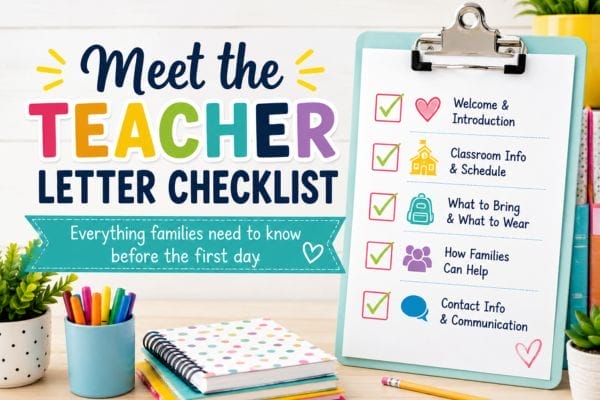
Quick Meet the Teacher Letter Checklist
Before sending your letter, make sure it includes:
- A warm greeting
- Your name and teaching role
- A short introduction
- A few personal details
- Your classroom values or teaching philosophy
- A quick preview of the year
- Communication information
- A positive closing
If you’ve covered those pieces, you’re in good shape.
Bonus Idea: Student Post Cards
While Meet the Teacher letters are often directed to parents or caregivers, they can do a lot to build your relationship with students if you spend a few minutes writing a quick postcard directly to them. It doesn’t have to be long or fancy.
A simple “I’m so excited to have you in my class this year” can help students feel seen before they even walk through the door. If you’re able to personalize it with one small detail, even better.
You might mention that you can’t wait to hear about their favorite books, see their creativity, or learn what they love most about school. For nervous students, that little note can make the first day feel a lot less intimidating. And for you, it’s an easy way to start the year by saying, “You belong here.”
Pair your introduction with the ready-to-use parent contact questionnaire and communication tools in my TPT store to start strong, stay organized, and keep families in the loop from day one.

Final Thoughts
Your Meet the Teacher letter is one of the first chances you have to build trust with students and families. It doesn’t need to be perfect, fancy, or overdone. It just needs to sound like you and help families feel confident about the year ahead.
Start with a warm welcome. Share who you are. Let families know what matters in your classroom. Then invite them into the partnership.

That’s it.
A thoughtful introduction now can make those first few days feel a little smoother for everyone.