The Ultimate Guide to Teach Academic Vocabulary (What Works for Struggling Learners)
Students can read every word on the page… and still not understand what they are being asked to do.
They hesitate during writing prompts, misinterpret math word problems, or complete only part of an assignment because the academic language feels unfamiliar. Over time, these small misunderstandings grow into frustration, avoidance, and lost confidence.
Academic vocabulary is often the hidden barrier behind struggling learners. When teachers intentionally build the language of school into daily instruction, students gain clarity, independence, and the confidence to show what they truly know.

Academic language quietly influences nearly every part of the school day.
It affects how students interpret directions, participate in discussions, understand assessments, and communicate their thinking across subjects. When students do not fully understand academic language, even strong learners can appear disengaged or confused.
Over the years, I have noticed the same pattern again and again. Students who struggle academically are often working twice as hard simply to understand what is being asked of them.
The encouraging news is that academic vocabulary is one of the most teachable barriers students face.
With intentional routines and meaningful exposure, students begin to recognize language patterns, understand expectations more quickly, and approach learning with greater confidence.
In this guide, we will explore why academic vocabulary matters, the challenges teachers commonly see, and the instructional routines that actually help students succeed.
Why Academic Language Matters More Than Teachers Realize
Academic vocabulary is often associated with reading instruction, but its impact reaches far beyond language arts.
Students rely on academic language to understand directions, participate in discussions, interpret assessments, and explain their thinking across every subject area.
In math, students may understand computation perfectly but struggle to interpret words such as estimate, compare, or justify in a word problem.
In writing, students may have strong ideas but feel stuck when prompts ask them to analyze, evaluate, or support a claim with evidence.
Even classroom routines depend heavily on academic language. Instructions such as summarize your thinking, explain your reasoning, or identify the main idea require students to understand process words that are rarely used in everyday conversation.
When students misunderstand these terms, teachers often see the same patterns appear.
Students rush through assignments.
They answer only part of a question.
They choose incorrect strategies even when they know the skill.
Or they disengage entirely because the task feels confusing before they even begin.
Academic vocabulary is not simply about learning bigger words.
It is about access.
Students who understand the language of school can focus their energy on thinking and problem-solving instead of decoding expectations.
This becomes especially important during assessments, where unfamiliar wording can make familiar skills suddenly feel impossible.
Strong academic language supports reading comprehension, writing clarity, mathematical reasoning, and confidence across subjects. When teachers intentionally build vocabulary into daily routines, students begin recognizing patterns in directions and expectations long before high-stakes testing or complex assignments appear.
What Is Academic Vocabulary? (Quick Overview)
Academic vocabulary refers to the words students encounter regularly in school but rarely use in everyday conversation.
These words help students understand directions, interpret questions, participate in discussions, and communicate their thinking clearly across subjects.
Researchers often describe vocabulary using three tiers.
Tier 1 words include everyday language that students acquire naturally through conversation and experience.
Tier 2 words appear across multiple subjects and academic settings. Words such as analyze, compare, justify, and evaluate frequently appear in classroom discussions, writing prompts, and standardized assessments. Because these terms transfer across content areas, they have one of the strongest impacts on reading comprehension and academic success.
Tier 3 vocabulary includes discipline-specific terminology connected to particular subjects. Words like numerator, ecosystem, or metaphor support content understanding and background knowledge within specific lessons.
While all three tiers matter, Tier 2 vocabulary often creates the greatest barrier for struggling learners because expectations are rarely explained explicitly.
Many students can decode the words on a page but still misunderstand what they are being asked to do.
If you would like a deeper breakdown of Tier 2 and Tier 3 vocabulary, including examples and instructional considerations, you can explore this guide:
👉 What Is Daily Academic Vocabulary? Understanding Tier 2 and Tier 3 Words
Rather than memorizing definitions, successful vocabulary instruction helps students recognize how academic language functions across contexts. The goal is not simply knowing a word.
It is understanding what that word asks students to do.
The Academic Language Gap (Why Some Students Struggle)
Academic vocabulary challenges rarely appear overnight.
In many cases, students experience small misunderstandings over time that gradually widen into larger gaps in comprehension and confidence.
Students who do not fully understand academic language may follow classroom instruction successfully during guided practice but struggle to apply skills independently. Directions, assessment questions, and content-area texts often rely on precise terminology that assumes background familiarity with academic phrasing.

Research consistently shows that vocabulary knowledge strongly influences reading comprehension and long-term academic success. When students lack access to academic language, they may struggle to make connections across subjects even when they understand underlying concepts.
This gap is especially significant for English Language Learners, students receiving special education services, and learners who have experienced interrupted or inconsistent instruction. Students from economically disadvantaged backgrounds may also encounter fewer opportunities to engage with academic language outside of school settings.
Without intentional instruction, these challenges compound across time.
A student who misunderstands words such as analyze or justify in elementary school may continue encountering those same terms in increasingly complex contexts throughout middle and high school. Over time, missed opportunities to build vocabulary can affect reading comprehension, written communication, and performance on assessments that rely heavily on academic phrasing.
Academic vocabulary gaps also appear differently from student to student.
Some learners participate actively in discussion but struggle to interpret written prompts.
Others complete assignments accurately during modeling but become unsure when wording changes.
Teachers may notice students answering only part of a question, misinterpreting directions, or avoiding complex tasks altogether.
These patterns are often mistaken for lack of effort or motivation.
In reality, many students are working to decode expectations before they can begin thinking about content.
Understanding how vocabulary gaps develop helps teachers move beyond reteaching skills toward addressing the underlying barrier.
If you are looking for classroom routines designed specifically to build consistent vocabulary exposure, you can explore:
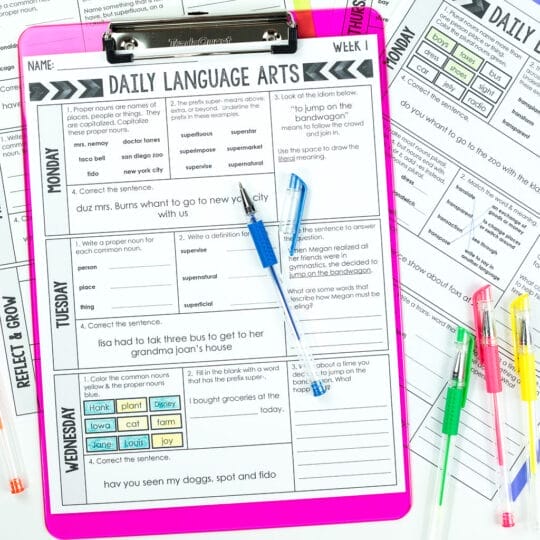
👉 The 10-Minute Academic Vocabulary Routine That Actually Works
Targeted routines help students encounter academic language regularly without adding significant instructional time, allowing vocabulary growth to occur alongside daily learning.
Why Vocabulary Lists Don’t Work (And What Teachers Notice Instead)
For decades, vocabulary instruction often meant handing students a list of words on Monday and testing them on Friday.
Students copied definitions.
They completed matching exercises.
They memorized.
…And then they forgot.
The problem is not effort. It is transfer.

When vocabulary is taught in isolation, students may remember a definition temporarily, but they rarely develop the flexibility needed to recognize and use that word across different contexts. Academic language is not meant to live on a worksheet. It functions inside reading passages, writing prompts, math problems, science explanations, and classroom discussions.
Teachers often notice the same pattern.
Students can define a word accurately during review.
But when that same word appears inside a test question or writing assignment, confusion returns.
Memorization does not automatically lead to application.
Effective vocabulary instruction moves beyond lists and toward repeated exposure in meaningful contexts. Students need to hear, read, speak, and write academic language consistently so that words become tools rather than trivia.
If you would like a deeper breakdown of why traditional vocabulary lists fall short — and what research-based alternatives look like in practice — you can read more here:
👉 Why Vocabulary Lists Don’t Work (And What To Do Instead)
When vocabulary becomes part of daily instruction instead of a weekly task, students begin recognizing patterns in language and using academic words more naturally across subjects.
Academic Vocabulary in Real Classrooms
Academic vocabulary gaps rarely appear as obvious reading difficulties.
Most students can read the words on a page.
The challenge is understanding what those words require them to do.
Teachers often notice this during independent work or assessments. Students who performed well during guided practice suddenly struggle when directions change slightly or unfamiliar phrasing appears.
A student may understand how to solve a math problem but hesitate when asked to compare quantities or justify a solution.
Another may write strong sentences but struggle to respond when a prompt asks them to analyze or evaluate a text.
Others complete only part of an assignment because they misunderstood what identify or explain required.
These misunderstandings are not always immediately visible.
Students may appear distracted or disengaged.
They may rush through tasks or avoid participation altogether.
In many cases, they are attempting to interpret expectations before they can begin thinking about content.
Academic vocabulary influences nearly every subject area.

Reading and Writing
Students rely on academic language to interpret prompts, discuss texts, and organize written responses. Words such as summarize, infer, support, or cite evidence guide how students demonstrate comprehension.
When these expectations are unclear, writing quality and reading responses often suffer even when understanding is present.
👉 Differentiating for Struggling Readers
Mathematics
Vocabulary challenges frequently appear during problem solving.
Students may recognize numbers and operations but misunderstand words such as estimate, difference, or represent. Multi-step word problems become especially challenging when academic language obscures what the question is asking.
If you are noticing students who understand math skills but struggle to apply them during word problems, this guide explores the classroom patterns teachers commonly observe:
👉 When Students Understand Math… But Still Get Word Problems Wrong
Science and Content Areas
Content-area instruction introduces discipline-specific vocabulary alongside academic process words. Students must interpret instructions, analyze information, and explain reasoning using unfamiliar terminology.
Explicit support helps students connect new content vocabulary to broader academic language expectations.
You can explore subject-specific strategies for supporting vocabulary development here:
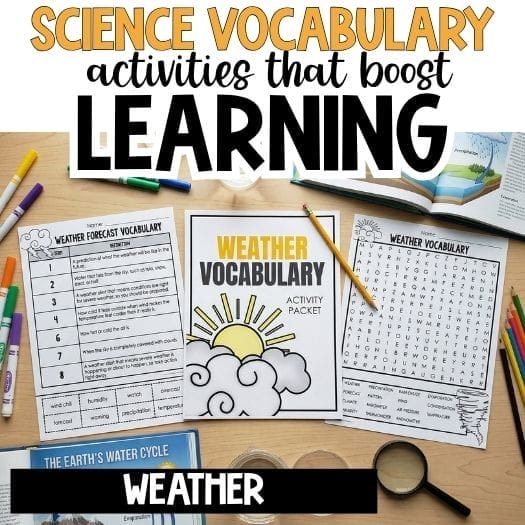
👉 Building Science Vocabulary During Language Arts
Academic vocabulary is not confined to one subject or lesson.
It shapes how students access learning across the entire school day.
When teachers recognize how language influences performance, they can begin addressing misunderstandings before students lose confidence in their abilities.
Instructional Routines That Actually Build Academic Vocabulary
Once teachers recognize how academic language influences performance, the next question becomes clear:
What actually works?
Effective vocabulary instruction is not built on occasional activities or isolated word lists. It develops through consistent routines that allow students to encounter, use, and revisit academic language across time.
Research and classroom experience point to several principles that make vocabulary instruction more effective.
1. Teach Academic Vocabulary in Context
Academic words should appear inside meaningful reading, writing, discussion, and problem-solving tasks.
When students encounter vocabulary within authentic lessons, they begin connecting language to thinking rather than memorizing isolated definitions.
Context builds transfer.
2. Provide Repeated, Varied Exposure
Students benefit from interacting with vocabulary through reading, writing, speaking, and listening.
Hearing a word during discussion, using it in a sentence, identifying it in a passage, and applying it in a written response all strengthen retention.
Exposure must be intentional and ongoing.
If you are looking for structured ways to incorporate daily repetition without overwhelming your schedule, this routine outlines a simple approach:
👉 The 10-Minute Academic Vocabulary Routine That Actually Works
3. Focus on High-Impact Tier 2 Words
Because Tier 2 vocabulary transfers across subjects, prioritizing these terms yields the greatest long-term impact.
Words such as analyze, compare, justify, evaluate, and represent appear repeatedly in academic tasks.
Targeting these words helps students access expectations across reading, math, science, and writing.
For activity ideas that move beyond worksheets and encourage deeper engagement, you can explore:
👉 Academic Vocabulary Activities That Work
4. Encourage Active Use
Students retain vocabulary when they use it.
Discussion, sentence construction, peer explanation, and written responses provide opportunities for students to internalize academic language.
The goal is not simply recognition.
It is application.
Consistent routines help students view vocabulary as part of daily learning rather than an isolated subject.
When vocabulary instruction becomes predictable and embedded, students gain familiarity with academic language patterns. Over time, that familiarity reduces confusion and increases independence across subjects.
How to Identify Students Who Need Academic Language Support
Academic vocabulary gaps are not always obvious.
Many students can read grade-level texts fluently and participate in classroom discussions, yet still struggle to interpret directions or communicate their thinking clearly. Because academic language challenges often appear alongside other learning difficulties, they are sometimes mistaken for motivation or effort concerns.
Recognizing early signs allows teachers to provide support before frustration or disengagement develops.
Teachers may notice several common patterns.

Difficulty Understanding Directions
Students may frequently ask for clarification after instructions are given or begin assignments incorrectly despite listening attentively during explanations.
Words such as explain, compare, summarize, or justify require students to understand both vocabulary and task expectations. When those terms are unfamiliar, students may appear confused before work even begins.
Incomplete or Off-Target Responses
Academic vocabulary gaps often appear in written work.
Students may answer only part of a question or provide responses that do not fully address what was asked. For example, a student asked to analyze a passage may summarize instead because the distinction between those tasks is unclear.
These responses are often mistaken for lack of effort when they reflect misunderstanding of academic language.
Strong Skills During Modeling but Difficulty Working Independently
Many students perform successfully during guided instruction but struggle when working alone.
When teachers model thinking aloud, vocabulary expectations become clearer through context. Without that support, unfamiliar phrasing can create uncertainty about where to begin.
Avoidance or Slow Task Initiation
Students with vocabulary gaps sometimes delay starting assignments or appear disengaged during complex tasks.
In many cases, they are attempting to interpret expectations before applying content knowledge. Academic language creates an invisible barrier that increases cognitive load before learning even begins.
Subject-Specific Confusion
Vocabulary challenges may appear differently across subjects.
A student may write confidently during creative assignments but struggle with analytical writing prompts. Another may complete computation accurately but hesitate during word problems because process words change the meaning of the task.
When vocabulary misunderstandings appear repeatedly, it can be tempting to increase memorization or assign additional word lists. However, traditional vocabulary approaches often fail to address how students actually use academic language during learning tasks.
For a deeper look at why memorization alone rarely leads to transfer, you can explore:
👉 Why Vocabulary Lists Don’t Work (And What To Do Instead)
Barriers Teachers Face When They Teach Academic Vocabulary
Teaching academic vocabulary is widely acknowledged as important, yet many teachers struggle to implement it consistently.
Time is one of the most common barriers. With packed curriculum guides, pacing pressures, and assessment deadlines, vocabulary instruction can feel like an additional task rather than an integrated part of daily learning.
Training is another factor. Many teacher preparation programs focus heavily on content delivery but provide limited guidance on explicitly teaching academic language. As a result, teachers are often expected to address vocabulary gaps without clear frameworks or models.
Curriculum design can also complicate instruction. When vocabulary is embedded within textbooks or digital programs, it is sometimes assumed that students will absorb language naturally through exposure. For many learners, especially those already experiencing gaps, exposure alone is not sufficient.
Assessment pressure adds another layer. Standardized tests frequently rely on academic process words that shape how questions are interpreted. When students misunderstand analyze, evaluate, or justify, performance may reflect vocabulary confusion rather than content mastery.
If you are noticing that vocabulary misunderstandings are impacting assessment outcomes, this article explores how academic language influences testing more deeply:
👉 Academic Vocabulary Is Destroying Your Test Scores
Recognizing these barriers helps shift the focus from frustration to strategy. Academic vocabulary instruction does not require additional hours in the day, but it does require intentional integration.
When language support becomes embedded into routines rather than treated as an add-on, teachers can address vocabulary without sacrificing content instruction.
Academic Vocabulary Resources That Support Daily Instruction
Building academic vocabulary does not require complicated systems, but teachers often benefit from having structured materials that make implementation consistent and manageable.
Resources that include clear routines, repeated exposure opportunities, and meaningful student interaction help vocabulary instruction become part of daily learning rather than an additional task.
If you are looking for ready-to-use supports, these academic vocabulary resources were designed to help teachers build language development into existing lessons while supporting struggling learners.

You can explore:
- Daily academic vocabulary routines designed for consistent exposure.
- Activities that encourage discussion and written application.
- Structured supports that help students interpret directions and assessments more confidently.
👉 Explore Academic Vocabulary Resources Here
Frequently Asked Questions About Academic Vocabulary
What is academic vocabulary?
Academic vocabulary includes the words students use to understand directions, interpret questions, and communicate their thinking in school settings. These words often appear across subjects and assessments but are not commonly used in everyday conversation.
Examples include terms such as analyze, compare, justify, evaluate, and summarize.
If you would like a deeper explanation of Tier 2 and Tier 3 vocabulary and how they function in classrooms, you can explore:
👉 What Is Daily Academic Vocabulary? Understanding Tier 2 and Tier 3 Words in the Classroom
Why is academic language important?
Academic vocabulary helps students understand expectations.
Students may know content or skills but struggle to demonstrate understanding when they misunderstand task language. Directions, writing prompts, and assessment questions often rely on academic process words that guide how students respond.
Strengthening academic language improves reading comprehension, written communication, and problem solving across subjects.
How many vocabulary words should teachers teach each week?
Quality matters more than quantity.
Students benefit more from repeated exposure to a small number of high-impact words than from memorizing long weekly lists. Focusing on transferable Tier 2 vocabulary allows students to apply language across reading, writing, math, and science.
Consistent routines that revisit words over time tend to produce stronger results than isolated weekly instruction.
Should students memorize vocabulary definitions?
Memorization alone rarely leads to long-term understanding.
Students may recall definitions temporarily but struggle to apply vocabulary during authentic tasks. Academic language develops through discussion, writing, reading, and repeated use in meaningful contexts.
If you are reconsidering traditional memorization approaches, this article explores why vocabulary lists often fail to support transfer:
👉 Why Vocabulary Lists Don’t Work (And What To Do Instead)
How can teachers support struggling learners with academic vocabulary?
Struggling learners benefit from predictable routines and multiple opportunities to interact with language.
Pre-teaching vocabulary, modeling how words function within directions or prompts, and encouraging students to explain their thinking aloud can reduce confusion and increase confidence.
Short daily exposure often produces stronger results than occasional intensive lessons.
You can explore one structured approach here:
👉 The 10-Minute Academic Vocabulary Routine That Actually Works
Is academic vocabulary only important in reading and writing?
No.
Academic vocabulary influences every subject area.
Students rely on academic language to interpret math word problems, explain scientific reasoning, participate in discussions, and respond to assessments.
When vocabulary instruction is integrated across subjects, students develop stronger independence and confidence throughout the school day.
Building Confident Learners Through Academic Language
Academic vocabulary is not simply about teaching bigger words.
It is about helping students understand what learning asks of them.
When students recognize the language used in directions, discussions, and assessments, they spend less energy trying to interpret expectations and more energy thinking deeply about content. Reading comprehension improves. Writing becomes clearer. Problem solving feels more manageable.
Many of the students who appear disengaged or uncertain are not lacking ability.
They are navigating unfamiliar language while trying to learn new skills at the same time.
Small misunderstandings compound quickly when academic vocabulary is left to chance. Over time, students may begin to avoid participation or lose confidence simply because they are unsure what tasks require.
The encouraging news is that vocabulary growth does not require complicated programs or additional hours in the school day.
Consistent exposure, intentional modeling, and predictable routines help students recognize patterns in academic language across subjects. When vocabulary becomes part of daily learning rather than an occasional focus, students begin approaching assignments with greater independence.
Teachers often notice the shift quietly.
Students reread directions before asking for help.
They explain their thinking more clearly.
They recognize what a question is asking before they begin solving.
Confidence grows when expectations feel familiar.
If you are looking for structured ways to build academic language into daily instruction, you can explore the routines and strategies shared throughout this guide, including daily vocabulary routines, classroom activities, and cross-subject supports designed to help students apply language in meaningful ways.
Because when students understand the language of school, they gain access to the learning opportunities waiting behind it.
Looking for more upper elementary literacy strategies? Visit my Guide for Teaching Language Arts.