Teaching Holes: Novel Study Activities, Lesson Plans, Discussion Questions & STEM Ideas
Getting ready to start a Holes novel study?
Holes works brilliantly as a whole-class novel study — the layered timelines and mystery elements give the whole class something to unpack together chapter by chapter.
If you’ve taught upper elementary or middle school for any length of time, you already know this book pulls kids in fast. The mystery, the humor, the desert setting… As with all of Louis Sachar’s books, students are hooked almost immediately. If you’re still working out how to structure your unit, my complete guide to planning a novel study walks through the whole process step by step.
But teaching Holes well can feel trickier than it looks.
The shifting timelines, layered backstories, and bigger themes about justice and consequences mean students sometimes follow the story without fully understanding it. And let’s be honest… long packets of chapter questions or multiple-choice quizzes might keep kids busy, but they rarely lead to the kind of thinking we actually want to see.
Most teachers (and homeschool parents) end up asking the same questions:
- How do I keep students engaged without overwhelming them?
- How much writing is enough?
- How do I support struggling readers to keep track of everything that’s happening?
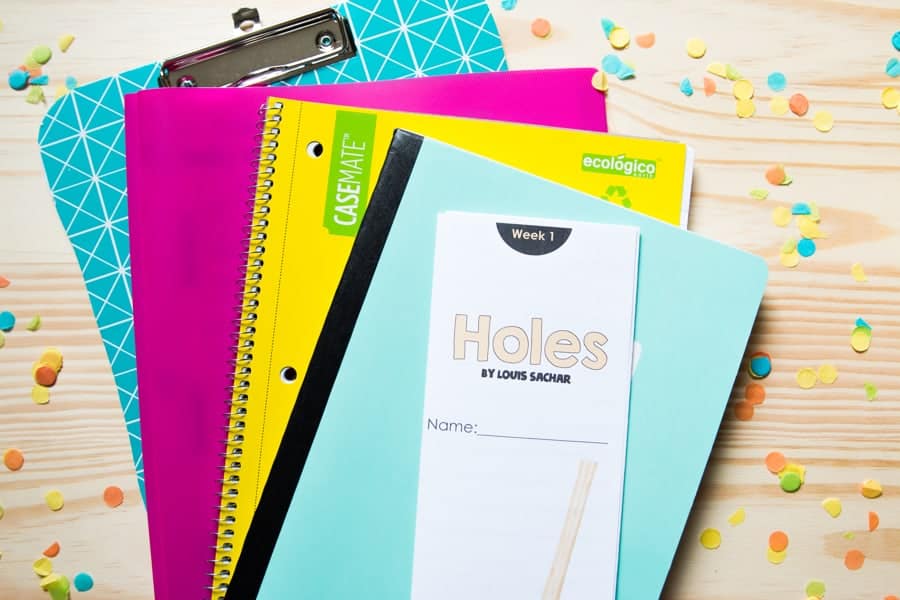
The good news is that Holes naturally lends itself to deeper thinking when students have the right structure in place.
Whether you’re planning a whole-class novel study, literature circles, or a homeschool read-aloud, this guide shares practical pacing ideas, discussion strategies, and extension activities that help students move beyond retelling the story and start really thinking about it.
Why Holes Is Such a Powerful Novel Study Choice
If your students have already seen the movie version of Holes, you might be wondering if the book is even worth revisiting.
Honestly? That familiarity can be a huge advantage.
When students already know the big picture, they’re less focused on figuring out who everyone is or what happens next. Instead, they start noticing the details…how the flashbacks connect across generations, how small choices shape bigger consequences, and why Camp Green Lake works the way it does.
Suddenly, the conversation shifts.
Instead of “What happened?” students start asking:
“Was that fair?”
“Why did he make that choice?”
“Was Stanley really unlucky… or something else?”

Holes opens the door to conversations about:
- justice and fairness
- friendship and loyalty
- generational consequences
- how environment shapes behavior
For reluctant readers or students just beginning to tackle more complex novels, that balance of humor, mystery, and deeper meaning makes Holes an incredible bridge into real literary analysis.
Planning a Skill-Based Holes Novel Study
One of the biggest mistakes teachers make with Holes isn’t choosing the wrong activities.
It’s trying to do too much at once.
Because the novel moves between past and present timelines, students can easily lose track of how events connect. Adding long packets of comprehension questions or heavy writing assignments often creates frustration instead of deeper thinking.
A simple, predictable structure makes all the difference.
During our own study of Holes, we followed a rhythm that worked surprisingly well for building both comprehension and confidence:
- Read one or two chapters together.
- Respond to a single focused comprehension question.
- Discuss ideas informally throughout the day.
The entire routine took less than thirty minutes, but the conversations lasted much longer.
Students knew exactly what to expect each day, which removed anxiety and allowed them to focus on understanding the story instead of worrying about assignments.
A Sample Weekly Rhythm
While every classroom looks different, many teachers find success using a consistent pattern throughout the week.

For example:
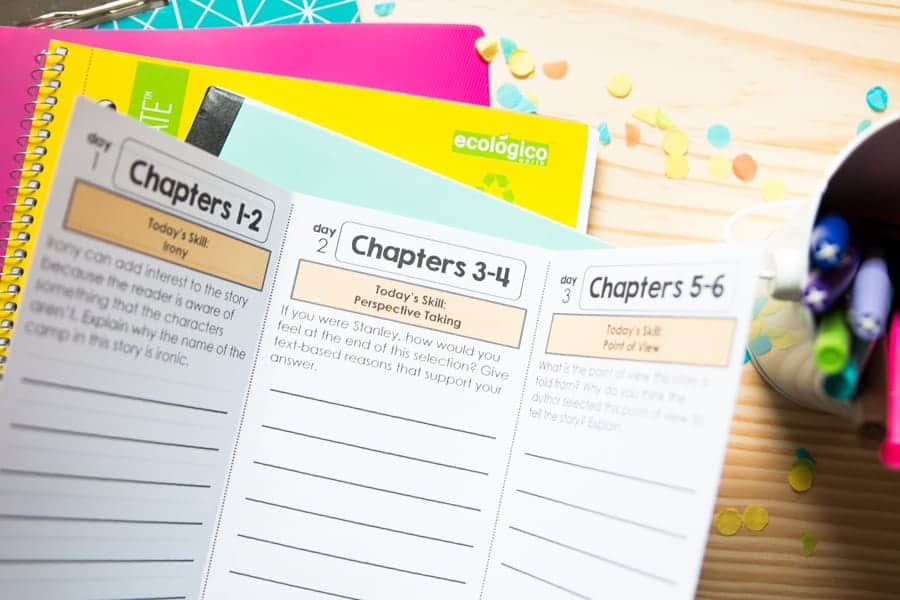
Monday might focus on irony and setting details as students begin noticing the contradictions of Camp Green Lake.
Midweek discussions often shift toward character perspective or point of view as Stanley begins adjusting to camp life.
Later in the week, students make personal connections or practice visualizing scenes using descriptive language pulled directly from the text.
These small shifts in focus help students revisit skills multiple times without feeling repetitive.
Why One Skill Per Day Works
Instead of assigning multiple questions at once, focusing on a single comprehension skill each day encourages students to slow down and think more deeply.
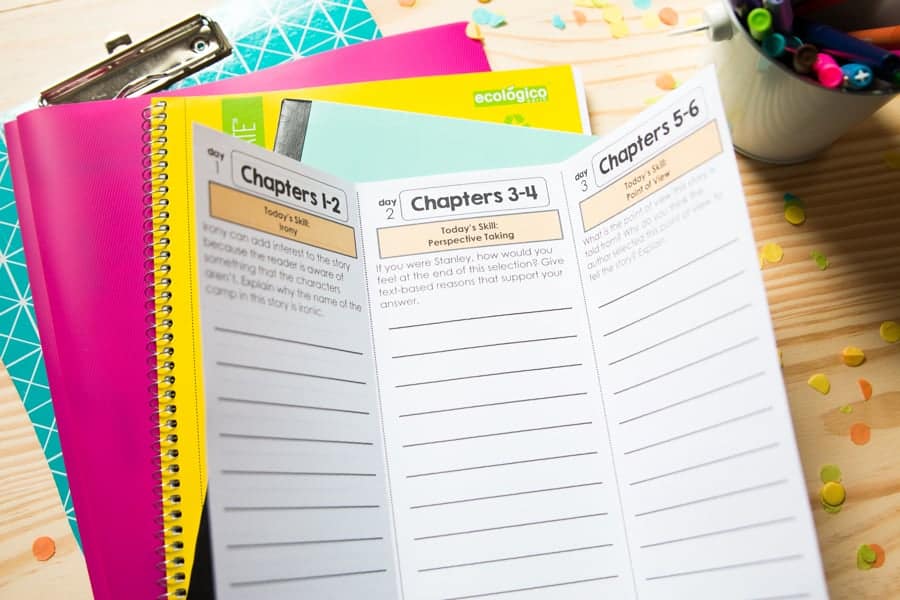
Students practice skills such as:
- identifying main idea
- summarizing key events
- analyzing character change
- drawing inferences
- understanding cause and effect
- identifying themes
Because students must support their thinking with text evidence, discussions naturally move beyond plot retelling and into analysis.
And perhaps most importantly?
Reluctant writers don’t shut down.
Short, structured responses feel approachable, especially for students who struggle with handwriting, dysgraphia, or writing stamina.
Building Academic Vocabulary During a Holes Novel Study
One of the biggest barriers students face when moving into upper elementary and middle school reading isn’t comprehension.
It’s language.
Students may understand what happened in a chapter but struggle to explain their thinking because they don’t yet have the academic vocabulary to do it.
Words like analyze, infer, or summarize show up constantly in classroom directions and standardized assessments, but they rarely appear in everyday conversation.
That’s why intentionally teaching Tier 2 academic vocabulary alongside a novel study can make such a difference.

Instead of introducing vocabulary as a separate lesson or weekly list, many teachers find it more effective to connect vocabulary directly to the reading students are already doing.
For example:
When students analyze irony in the opening chapters of Holes, they also learn how to explain what irony means and recognize it in other texts.
When they discuss character motivation or cause and effect, they begin using those academic terms naturally during discussion.
Vocabulary stops feeling like memorization and starts becoming a tool.
Teaching Text-Based Vocabulary Without Overwhelming Students
In addition to academic language, Holes offers rich opportunities to explore challenging words pulled directly from the text.
Words like:
- inexplicable
- feeble
- suppress
- forlorn
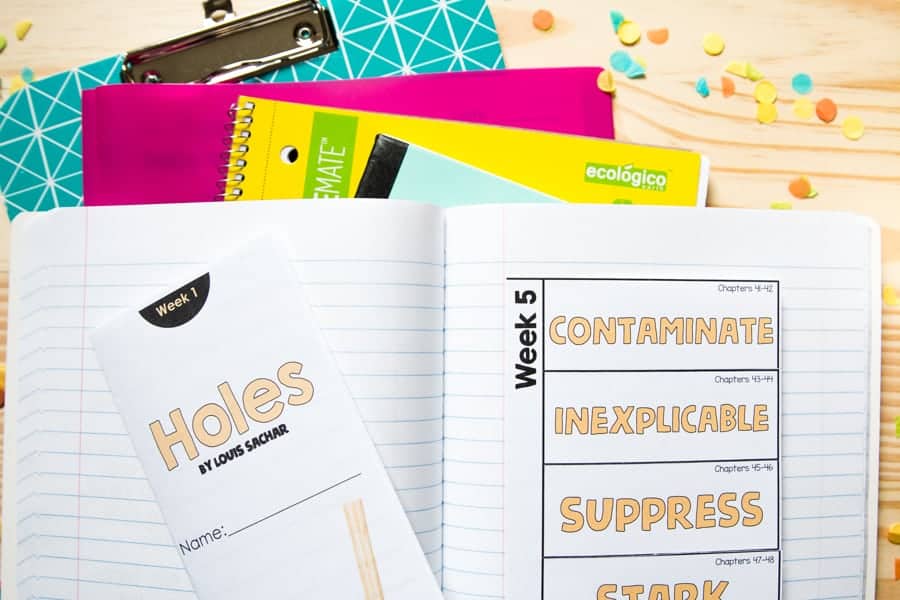
help students better understand character emotions and setting details.
Introducing one word each day keeps vocabulary manageable while allowing students to revisit meaning through discussion, writing, or even quick sketches in reading journals.
Some classrooms focus on synonyms and antonyms.
Others encourage students to visualize meaning through drawing or personal connections.
The goal isn’t perfection.
It’s exposure and confidence.
Differentiation That Actually Works
One of the reasons Holes works so well across classrooms is that it adapts easily to different learners when the format stays flexible.
Some students thrive using shorter, structured responses that reduce writing fatigue.
Others need more space to explain their thinking in depth.
Offering multiple response options allows students to focus on comprehension instead of mechanics.

Digital responses can be especially helpful for students who struggle with handwriting or dysgraphia, while paper-based formats often support organization and independence for younger learners.
During our Holes unit, keeping expectations predictable made the biggest difference.
Students knew the routine:
Read.
Respond.
Discuss.
That consistency built confidence quickly, especially for reluctant readers who might otherwise shut down during longer assignments. If you’re working with students who struggle with reading stamina or written responses, small structural adjustments can make a huge difference in participation and confidence.
Extending Learning Beyond the Novel: STEM and Cross-Curricular Ideas for Holes
One of the reasons Holes stays memorable for students long after the final chapter is that the story naturally connects to real-world questions.
Survival.
Environment.
Justice.
Human endurance.
When students move beyond simply discussing the plot and begin applying ideas from the novel through hands-on learning, comprehension deepens almost automatically.

STEM and enrichment activities don’t need to feel complicated or time-consuming. Even simple projects can help students explore the challenges Stanley and the other campers faced while strengthening problem-solving and collaboration skills.
Here are a few ways teachers and homeschool families often extend learning during a Holes novel study.
Engineering and Design Challenges
Camp Green Lake presents harsh environmental conditions that invite students to think like engineers.
Students might design and build a shelter capable of withstanding extreme desert heat or simulated wind conditions using simple classroom materials like cardboard, craft sticks, or foil.
Another favorite challenge is recreating the infamous detention “death trap” described in the novel. Students can experiment with structure, stability, and design while discussing why the camp’s system of punishment raises important ethical questions.
These types of challenges encourage creativity while reinforcing how environment shapes character decisions throughout the story.
Math Connections: Just How Big Is a Hole?
Students are often surprised when they stop to calculate what digging a five-foot-deep hole every day would actually involve.
Using measurement and geometry skills, students can calculate volume and surface area to determine how much dirt Stanley would have needed to move.
Questions naturally emerge:
- How long would digging realistically take?
- How much energy would it require?
- Could someone actually keep up that pace day after day?
Math suddenly feels purposeful instead of abstract.
Science Connections: Surviving the Desert
Extreme heat plays a major role in the novel’s tension.
Students can investigate how dehydration affects the human body or explore how temperature impacts endurance and decision-making.
Simple research projects or small experiments allow students to analyze real physiological responses while connecting science concepts directly back to the text.
Social Studies and Ethics Connections
Camp Green Lake also opens the door to powerful historical conversations.
Students can research real penal labor camps in United States history and compare them to the fictional camp described in the novel.
These discussions often lead to thoughtful debates about fairness, punishment, and how societies decide consequences.
It’s a natural way to introduce critical thinking while helping students recognize that fiction often reflects real-world issues.
Using Holes in Whole Group, Small Group, or Independent Novel Studies
One of the reasons Holes continues to work so well in upper elementary and middle school classrooms is its flexibility.
The novel can easily anchor a whole-class unit, support small group book clubs, or guide independent reading without losing depth or engagement.
The key is choosing a structure that supports your students rather than trying to force every learner into the same format.
Whole Group Novel Study
Teaching Holes as a whole-class novel allows you to lean into discussion, especially when you’re using intentional routines that support conversation and accountability across the group.
Because the story moves between timelines and perspectives, students benefit from hearing how others interpret events and connect clues across chapters.

Many teachers find success using a structured whole-class novel study approach that balances read-aloud discussion with independent reading time.
Daily skill-focused prompts help keep conversations grounded in comprehension strategies instead of drifting into simple plot retelling.
Short written responses also make it easier to quickly assess understanding without creating stacks of grading.
Small Group Book Clubs or Literature Circles
Holes also works beautifully in literature circles, particularly when students have opportunities to compare theories and discuss character motivations as the mystery unfolds.
Students often enjoy comparing theories about the mystery elements of the story or debating character motivations as the flashbacks unfold.

In small groups, comprehension prompts can guide discussion without dominating it.
Students respond individually and then use their answers as conversation starters.
If you’re new to running small groups, structured literature circles or book clubs can help students take ownership of discussion without losing academic focus.
Independent or Homeschool Novel Studies
Independent readers and homeschool families often benefit from predictable routines, especially when students are learning how to manage longer texts on their own.
A structured approach to independent novel studies helps students build stamina while still providing accountability.
Digital responses can support students who struggle with handwriting or executive functioning challenges, while printable options allow flexibility depending on learning style.

Many families find that informal conversations during meals or walks lead to some of the most meaningful insights about the story.
The goal isn’t rushing through chapters.
It’s helping students slow down enough to notice connections.
Making a Holes Novel Study Easy to Implement
Planning a novel study can feel exciting at first… until you realize how many moving pieces there are.
Pacing.
Discussion questions.
Vocabulary support.
Differentiation.
Assessment.
It adds up quickly.
Many teachers and homeschool parents find themselves spending hours pulling together activities from multiple places just to create a structure that works for their students.
If you’d rather spend your time actually teaching (and enjoying the conversations that come with a great book), having a ready-to-use framework can make a huge difference.
That’s exactly why I created the Holes Novel Study.
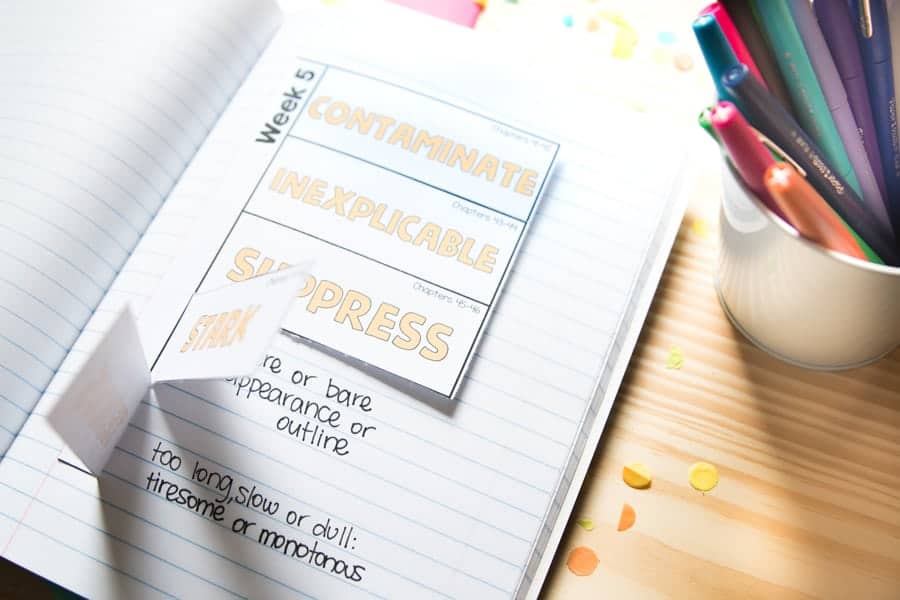
Instead of long packets of chapter questions, each day focuses on a single comprehension skill paired with meaningful discussion and text-based vocabulary.
Students read.
Respond.
Discuss.
And move on feeling successful instead of overwhelmed.
The study includes:
- five weeks of skill-based comprehension prompts
- printable trifolds and reader notebook options for differentiation
- digital slides for students who benefit from typing responses
- daily academic vocabulary connected directly to the reading

Whether you’re teaching a whole-class unit, running book clubs, or guiding an independent study at home, the structure makes it easy to support different learners without creating extra prep work.
Where to Find the Holes Novel Study
If you’re ready to start your own Holes novel study, you can explore the full resource here:


Final Thoughts on Teaching Holes
Holes is one of those rare novels that meets students exactly where they are.
It’s funny enough to hook reluctant readers, complex enough to challenge strong ones, and layered enough to spark conversations that continue long after the final chapter.
With the right structure in place, it becomes more than a novel study.
It becomes an opportunity for students to think deeply, ask better questions, and see how stories connect to the world around them.
And honestly… those are the lessons that tend to stick.
Looking for more novel studies?
If your students are hooked on Holes, Hatchet and Maniac Magee hit that same vein — adventure and survival stories with strong protagonists your students will root for. How to Eat Fried Worms is a great lighter option for the same age group.