Summer & End of Year Teaching Ideas: A Planning Guide for Elementary Teachers
The last weeks of school are some of the most emotionally complex of the year — for teachers and students both. Students are excited, nostalgic, and sometimes anxious about change. The schedule is fragmented by field day, field trips, award ceremonies, and classroom clean-out. And underneath all of it is the real work of giving the year a meaningful ending rather than just letting it trail off.
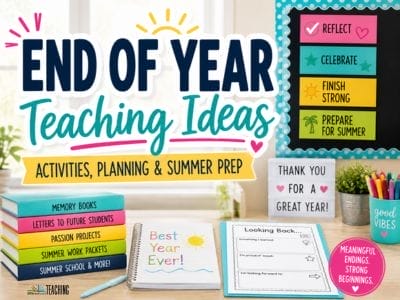
This guide covers every key date worth planning around from late May through summer, end-of-year activities that honor the moment while keeping instruction intact, and resources for the summer months — both for students going home and for summer school.
Key Dates to Plan for at End of Year
- Memorial Day — Last Monday in May
- Father’s Day — Third Sunday in June
- Last day of school — Varies by district
- Field day — Typically late May or early June
- Award ceremonies & moving-up celebrations — Final week of school
- Summer school begins — Varies
Father’s Day — Third Sunday in June
Father’s Day falls after school ends in many districts, but the classroom work happens the week before. Like Mother’s Day writing, the best Father’s Day activities use the same writing process as any strong unit — brainstorm, draft, revise, publish — with a real audience (dad) giving students genuine motivation to write well.
- Make Father’s Day Extra Special with a Meaningful Writing Craft — Full breakdown of the Father’s Day writing activity and how to run it
- Father’s Day Writing Craft — Best Dad Writing Activity & June Bulletin Board
- All About My Dad — Father’s Day Questionnaire & Writing Prompts
End-of-Year Reflection — Giving the Year a Real Ending
The best end-of-year activities help students process the transition — not just celebrate it. Memory books, reflection sheets, and letters to future students all give students a structured way to look back at the year and look forward to the next one. These aren’t filler activities. Done well, they’re some of the most meaningful writing students do all year.
Memory Books
End-of-year memory books work beautifully as student-led conference companions — students walk parents through their academic growth, favorite memories, and goals using the book as a guide. The result is a conference that feels student-owned rather than teacher-reported.
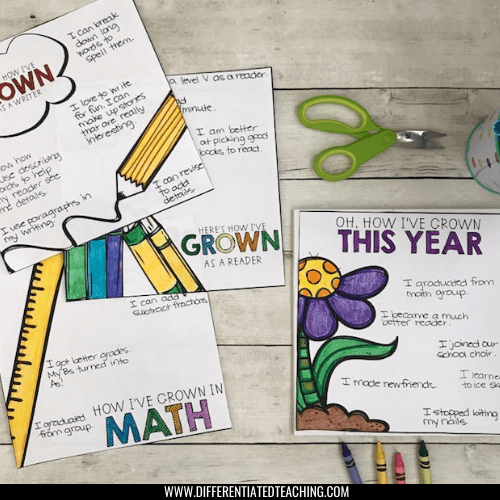
- A Look Back on My Year: End of Year Memory Book — Full guide to running memory books alongside student-led conferences
Letters to Future Students
Having students write letters of advice to next year’s class is one of the most genuinely purposeful writing activities of the end of year. Students have a real audience they care about, specific things to say, and a reason to revise. The finished letters make a natural first-week-of-school bulletin board display in August.

- Advice to Help You Shine — End of Year Writing Craftivity — Full breakdown of how to run the letter-writing process from brainstorm to display
Passion Projects & Genius Hour
Once testing wraps up, the last weeks of school are actually some of the best teaching weeks of the year. Students are motivated, pressure is off, and independent passion projects give students ownership at a time when they need it most. The research, writing, and presentation skills are the same regardless of topic.
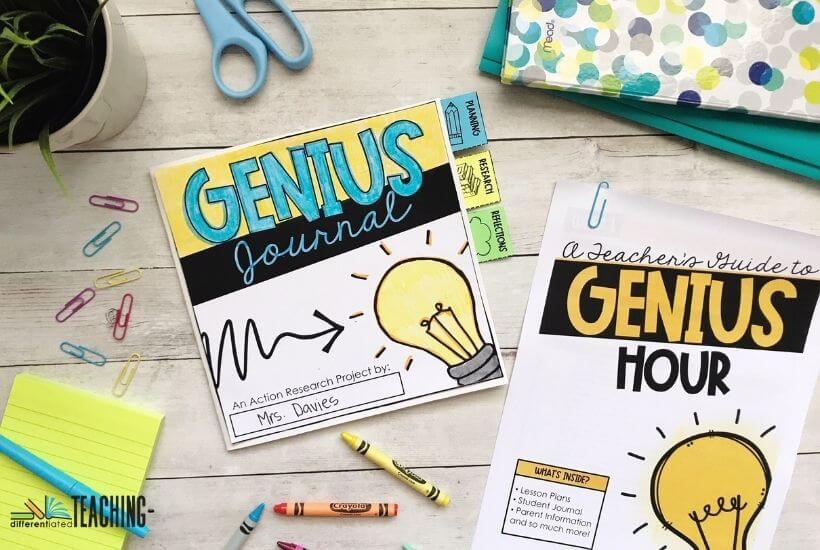
- Simplify Genius Hour Planning & Implementation — Everything you need to run a successful end-of-year Genius Hour unit
Ocean & Rainforest Research — Summer Science Anchors
Ocean animals and rainforest animals are two of the most engaging end-of-year research topics — students find them genuinely interesting, the science content is rich, and the informational writing skills are the same ones you’ve been building all year. These make natural June units for the post-testing stretch.
- Ocean Animal Research Project — Sea Animals Graphic Organizer & Report
- Rainforest Animal Research Project — Jungle Animal Report & Bulletin Board
Summer Work Packets — Bridging the Gap
Summer work packets sent home with students give families a low-stakes way to maintain skills over break. The best packets are engaging enough that students actually open them — not so heavy that families resent them.
Two blog posts worth bookmarking before you send anything home:
- What to Send Home for Summer: A Teacher’s Guide to Packets That Actually Work — full guide to choosing packets students will actually use
- How to Prevent the Summer Slide — what the research actually says about summer learning loss and how to address it

Or grab a summer packet for your learners:
- 2nd Grade Summer Work Packet — Summer Break Practice Activities
- 3rd Grade Summer Work Packet — End of Year Summer Break Practice
- 4th–5th Grade Summer Work Packet — End of Year Summer Break Practice
- Special Education & Intervention Summer Work Packet — End of Year Practice Review
Summer Math — Word Problems to Keep Skills Sharp
Summer math word problems work both as end-of-year morning work for the final weeks of school and as summer school warm-ups. Pick the grade transition that matches your class:
- 2nd–3rd Grade Summer Math Word Problem of the Day
- 2nd–3rd Grade Summer Challenge Math Word Problems
- 3rd–4th Grade Summer Math Word Problem of the Day
- 3rd–4th Grade Summer Two-Step Word Problems
- 4th–5th Grade Summer Math Word Problem of the Day
- 5th Grade Summer School Math — Multistep Word Problems
- 6th Grade Summer School Math Word Problems
- 6th–7th Grade Summer Math Word Problems — Bell Ringers
- 7th Grade Summer School Math — Multistep Word Problems
- 8th Grade Summer School Math — Multistep Word Problems
Summer School ELA Curriculum
For teachers running summer school programs, a full ELA curriculum saves enormous planning time. These cover grammar, vocabulary, writing, and reading across elementary and middle school levels.
- Elementary ELA Summer School Curriculum — Language Arts, Grammar & Vocabulary
- Middle School ELA Summer School Curriculum — Writing, Grammar & Vocabulary
End-of-Year Sub Plans
The last weeks of school are actually the highest-use sub plan weeks of the year. Teacher check-out days, end-of-year meetings, field trip chaperone situations, and June’s general chaos all create unexpected coverage needs. Ocean-themed sub plans are perfect for June — self-contained, engaging, and seasonally appropriate.
- 1st Grade Ocean Sub Plans — Clark the Shark Read Aloud Activities
- 1st Grade June Emergency Sub Plans
- 2nd Grade June Sub Plans — Caps for Sale Read Aloud Activities
Tips for Finishing the Year Well
Plan your last day deliberately. The last day of school is one students will remember for years. A memory book share, a class letter exchange, or a simple discussion about summer goals gives the year a real ending rather than just a trailing off. Spend five minutes planning it — it makes an outsized difference.
Keep structure as long as possible. The temptation is to loosen routines in the final weeks, but students behave better and feel more secure when the structure stays predictable. Hold the morning warm-up, the read aloud block, and the writing routine through the last week. The fun stuff can live within the routine.
Come back to August goals in June. If your students set goals in August or January, the last week of school is the natural moment to return to them. Even a brief discussion about what they accomplished and what they’re still working on completes a circle that students feel.
Leave school ready for September. Before you walk out on the last day, have your first week of school planned and your sub folder ready. Coming back in August to a blank plan book makes the start of year harder. Coming back to a ready first week makes it feel manageable.
Looking for ideas across the whole school year? Head back to the Elementary Teacher Planning Calendar for monthly planning guides from August through summer.