States of Matter Activities for Upper Elementary (Plus Changes in Matter Lab Ideas)
Teaching states of matter and changes in matter can feel deceptively simple.
Students have heard the words solid, liquid, and gas since kindergarten… but when you ask them to explain what is actually happening to the particles, things start getting fuzzy fast.
Even upper elementary students will confidently tell you that:
- melting is a chemical change
- steam is smoke
- dissolving means something disappeared
If you’ve ever gotten those answers, you know exactly what I mean.
The good news? With the right mix of hands-on exploration and clear vocabulary practice, students can quickly build a much stronger understanding of matter.
Here’s a simple way to structure a states of matter mini-unit for grades 4–6.

Step 1: Start with Real Examples of Matter
Before jumping into definitions, I like to start with things students already recognize.
Ask questions like:
- Is air matter?
- Is steam matter?
- Is a balloon solid, liquid, or gas?
Let students debate a little. This helps surface misconceptions early.
Then introduce the core idea:
Matter is anything that has mass and takes up space.

From there, students can begin exploring the three basic states:
- Solid – keeps its shape and volume
- Liquid – takes the shape of its container
- Gas – spreads out and fills the space around it
A visual activity works really well here because students can see examples in everyday situations.
One of my favorite activities is a simple Find and Color states of matter page where students identify solids, liquids, and gases in a kitchen scene. It’s quick, engaging, and helps them connect science vocabulary to the real world.
Step 2: Show What Particles Are Doing
Once students understand the three states, the next step is helping them understand why they behave differently.
This is where particle models help.
Students can visualize that:
- Solids have particles packed closely together
- Liquids have particles that can move past each other
- Gases have particles that spread out
Simple diagrams or coloring pages showing particles in each state help make this idea much more concrete for students.

Step 3: Explore Changes in Matter
After students understand the three states of matter, it’s time to introduce changes in matter.
This is where things get interesting.
Students learn that matter can change from one state to another through processes like:
- melting
- freezing
- evaporation
- condensation

A hands-on investigation makes these concepts much easier to understand.
One activity my students always enjoy is a changes in matter lab using simple heating and cooling recipes. Students observe what happens when ingredients heat, cool, melt, or solidify and record their observations along the way.
It’s a great way for students to actually see matter changing states instead of just reading about it.
You can check out the lab here if you want to try it with your class:
👉 Changes in Matter Lab with Easy Recipes

Step 4: Practice Vocabulary and Concepts
Once students have explored matter through examples and experiments, they need time to practice the vocabulary and concepts.
This is where structured activities really help reinforce understanding.
Some of my favorite review activities include:
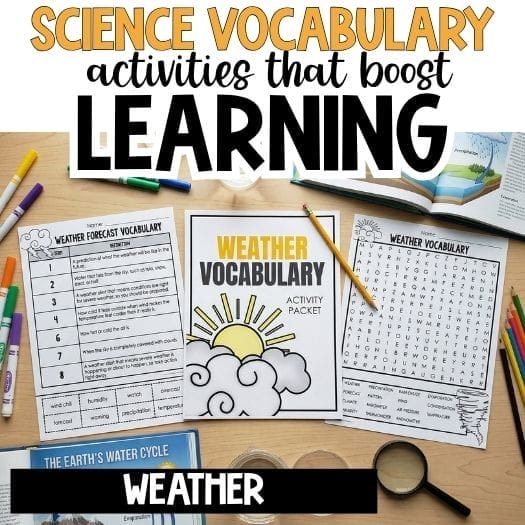
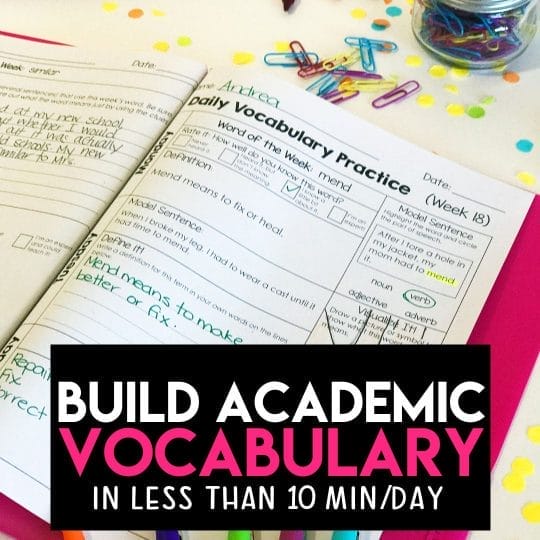
- States of Matter Vocabulary Practice
- Physical vs. Chemical Changes Sorts
- Evidence of Chemical Change Activities
- Science Word Searches
- Color-and-Label Science Pages

These activities give students multiple ways to process the content while also supporting science vocabulary development.
If you want a ready-to-go set of activities for this topic, I created a Matter Vocabulary Activity Pack that includes vocabulary work, sorting activities, word work, and review pages that pair nicely with a states of matter unit.
Step 5: Connect Science to Everyday Life
The best way to wrap up a unit on matter is to bring it back to everyday examples.
Ask students to identify examples of matter and changes in matter in their daily lives:
- ice melting in a drink
- water boiling on the stove
- balloons filled with air
- bread toasting
- leaves changing color
Once students start noticing these examples around them, the science concepts suddenly feel much more real.

Final Thoughts
States of matter is one of those science topics that students encounter year after year, but deeper understanding doesn’t happen automatically.
When students can:
- observe real examples
- model particle behavior
- investigate changes in matter
- practice science vocabulary
they start to build a much clearer picture of how matter works.
And honestly… those “steam is smoke” answers start disappearing pretty quickly.
If you want to explore the resources mentioned in this post:
👉 Changes in Matter Lab (Heating & Cooling Recipes)
👉 Matter Vocabulary Activities for Grades 4–6