Classroom Library Organization: A Practical Guide for Upper Elementary and Middle School Teachers
Every teacher has had that classroom library moment.
A student wanders over to the book bins, stares for about 30 seconds, grabs something at random, and heads back to their seat.
Two days later, you find that same book shoved in a desk, bookmark nowhere to be found, pages looking like they have lived a harder life than any paperback deserves.
And the frustrating part?
It usually isn’t because the student doesn’t want to read.
It’s because they didn’t really know how to find a book worth reading.
That’s where classroom library organization matters more than we sometimes give it credit for. A well-organized classroom library does more than make your shelves look nice. It helps students find books they actually want to read, return them without asking you 47 questions, and start seeing the library as something they can use independently.

When students can navigate the books on their own, the reading culture in your classroom starts to shift.
They browse longer.
They recommend books to each other.
They take more ownership.
And, with the right system, your library has a much better chance of surviving past October without turning into a mysterious pile of loose books and missing labels.
In this guide, I’ll walk you through how to set up a classroom library that actually works for grades 3-8. We’ll look at how to organize your books, label bins so students can use them independently, create a simple checkout routine, build student ownership, and keep the whole system from falling apart halfway through the year.
Why Classroom Library Organization Matters (Especially for Struggling Readers)
If you’ve ever worked with a reluctant or struggling reader, you know that the last thing they need is more friction between themselves and a book. When a library is disorganized, it’s the students who lack confidence or dislike reading who give up first. They scan the bins, feel overwhelmed, and default to whatever’s on top.
A clear, logical organization system is actually a support strategy. When students know where to look, they spend less mental energy navigating the space and more energy actually choosing a book they’re excited about.
If you’re looking for more strategies to support your readers, the Supporting Struggling Readers hub is a good place to start alongside this guide.
Step 1: Decide How to Organize Your Books
This is the decision most teachers agonize over, and honestly, there’s no single right answer. The best system is one that your specific students can use independently.
Here are the most common approaches, along with when each one works well.

Organize by Genre
This is one of the most popular systems for upper elementary and middle school, and it makes a lot of intuitive sense. Students who love mysteries can find mysteries. Students who are going through a historical fiction phase know exactly where to look.
Common genre bins include: realistic fiction, historical fiction, fantasy, mystery, science fiction, biography, and nonfiction. You can subdivide larger genres by series or author as your collection grows.
One practical note: Genre labeling is a great teaching opportunity in conjunction with a genre study unit. When you introduce the system at the start of the year, have students help sort new books. They’ll internalize the categories in a way they never would from a mini-lesson alone.
Organize by Fiction & Nonfiction
If genre feels too complex for your group (or if you’re starting fresh and don’t have time to sort 500 books by Thanksgiving), a simple fiction/nonfiction split is a solid foundation. Use different colored bins or place each type on separate shelves so the distinction is immediately visible without reading a single label.
This mirrors how a public library is organized, which is a helpful real-world connection for students.
Organize by Series or Character
This one is gold for reluctant readers, especially in grades 3-5. When a student falls in love with Dog Man or gets obsessed with Diary of a Wimpy Kid, a series bin makes it incredibly easy to find the next book. There’s nothing more motivating for a developing reader than finishing one book and knowing exactly where the next one lives.
You can combine this with a genre system by running series bins alongside broader genre bins. Put all the Magic Tree House books together, all the I Survived books together, and let everything else live in genre bins.
Organize by Color Code
Some teachers swear by a colored dot system: place a colored sticker on the spine and match it to a corresponding colored bin. This is especially visual and easy for younger students or students who struggle with abstract categories.
The downside at upper elementary is that it can feel a little arbitrary to older students who want to know, “Why is this book in the red bin?”
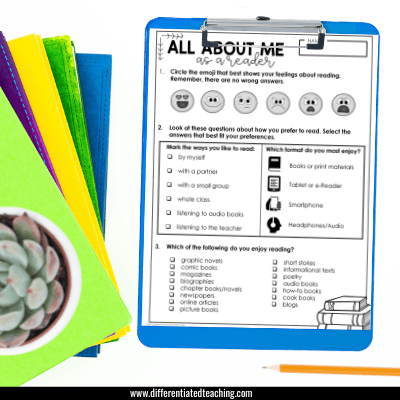
If you use color-coding, pair it with a clear explanation of your categories so it doesn’t just feel random. It can also be an easy way to guide students toward books they might like if you start your year with a reading interest inventory.
A Note on Leveling
Leveling books by reading level is a topic teachers feel strongly about in both directions. The research on leveling classroom libraries is genuinely mixed. When students can only access their “level,” it can limit choice and send an unspoken message about who they are as readers.
If you want to provide some leveled support, consider reserving it for a small section of the library dedicated to specific purposes, such as take-home reading or fluency practice.
For the main collection, organizing by genre or interest tends to build more reading engagement over the long haul.
Step 2: Set Up the Physical Space
Before you start labeling bins, think about how students will physically move through the space.
Traffic flow: Can multiple students browse at the same time without crowding? Bins that can be accessed from both sides help. If your library is a single corner, consider whether students can stand in front of a shelf without blocking everyone else.
Visibility: Books displayed face-out get chosen more. A few forward-facing displays for new arrivals, read-alouds, or seasonal picks can dramatically increase circulation. Think of it like a bookstore endcap.
Don’t put everything out at once. This is a tip I’ve seen work really well in practice. When you start the school year with every single book out, students get overwhelmed, and the novelty wears off fast. Introduce sections of the library over the first few weeks. Save a box of books for mid-winter when reading engagement tends to dip. New books showing up in February feel exciting in a way they wouldn’t in August.
Separate featured reads. Give your current read-alouds and teacher recommendations a dedicated spot that’s visually distinct from the rest of the collection. A small rack or a few book display easels work well. Students often gravitate toward whatever you’ve been reading aloud because they already have a relationship with the text.
Step 3: Label Your Bins (and Your Books)
Labels do two things: they tell students where to find books, and more importantly, they tell students where to put them back.
The putting-back part is what most systems break down on.

Bin Labels
Keep labels simple and specific. “Fiction” is less useful than “Realistic Fiction” or “Mystery.” For younger students or visual learners, adding a small image alongside the text helps.
Print labels on cardstock and laminate them if you can. Bin labels take a beating.
Book Labels
To help books get back to the right bin, label the books themselves, not just the bins. A few options:
- Color dots on the spine: A quick colored sticker matches the bin. Easy to apply, easy to read.
- Bin numbers: Assign each bin a number, write or sticker that number on each book spine. This works especially well if your bins sometimes move around.
- Category stickers: Small printed stickers with the genre name can go on the inside cover or the spine.
None of these is perfect. Some will fall off. Some students will ignore them. The goal isn’t a perfectly maintained system for your whole class – it’s a system that makes it easy for the majority of students to put books back in approximately the right place most of the time.
A Simple Book Stamp
If you have a large collection, stamping books with your name or classroom number is worth doing (or asking a volunteer to do it over the summer). Books disappear into backpacks, go home, circulate through other classrooms. A stamp helps them find their way back.
Step 4: Create a Checkout System
Do you need a checkout system? Not necessarily. Some teachers manage fine without one.
But if books are regularly going home or if you need to track what students are reading, a simple system pays off. Here are a few options:
Index card pockets: Old-school but effective. Tape a small pocket to the inside back cover of each book. Students write their name and date on an index card and leave it in a class box when they take the book home. When they return it, they pull the card.
Sign-out binder or clipboard: A simple sheet with columns for student name, book title, date taken, and date returned. This version requires basically no prep and works well for chapter books going home.
Digital checkout: Apps like BookBuddy let you scan barcodes and track inventory. If you have a large library and want to keep tabs on your collection, this is worth the setup time. It also makes it easy to spot gaps when you run an inventory.
Whatever system you use, teach it explicitly the first week of school. Walk through it, practice it, and then assign a classroom librarian job to help keep it running.

Step 5: Build a Diverse Collection
Organization only matters if the books themselves are worth reading.
If you’re auditing your collection, look for gaps in representation. Students engage more deeply with books that reflect their lives and identities, and they also grow as readers when they encounter experiences different from their own.
Are there characters who look like your students?
Who speaks languages other than English at home?
Who navigates different family structures?
Also, look for currency. A classroom library full of books from 2003 will not excite a 2026 fifth grader.
Pull books that are outdated in their facts (especially nonfiction), damaged, or just not getting chosen. A smaller, curated collection is better than 600 books nobody touches.
When you find gaps, a few ways to fill your class library without spending a lot out of pocket:
- Book fairs and Scholastic points add up over the year
- Grants like DonorsChoose can fund a significant collection refresh
- Library sales and used book stores are great for filling in series
- Student requests deserve a sticky note list somewhere visible
Also, keep a wish list handy. When you’re in a used bookstore or have five minutes on DonorsChoose, knowing you need books 4-7 of a popular series or more biographies of women scientists saves decision-making energy.
Step 6: Teach Students to Use the Library
This is the step that makes everything else work.
Spend real time in the first two weeks of school introducing the classroom library as a space students are responsible for. Walk through where things live. Practice choosing books. Practice putting them back. Talk about why the system exists.
Some ideas for building genuine student ownership:
Classroom Librarian job: Assign a student (or a pair) each week whose job is to face books correctly, return misplaced books, and do a quick tidy at the end of each day. This is one of those classroom jobs that actually makes a visible difference.
Book talks: A once-a-week two-minute book talk from a student or from you keeps circulation moving. Students reliably choose books their classmates have recommended.
New arrivals spotlight: When new books come in, make a small ceremony of it. Show the cover, read the first paragraph, drop it in the new arrivals display. The excitement of something new carries over.
Student recommendations shelf: A small section (or just a sticky note system on a shelf) where students leave recommendations for each other. “If you liked this, try…” notes are surprisingly effective.
Organizing a Classroom Library When You’re Starting from Scratch
If you’re walking into a new classroom with a pile of donated books and approximately zero time, here’s a practical starting point:
- Sort everything into two piles: fiction and nonfiction
- Within fiction, pull any obvious series books and put them together
- Label two or three bins and put books in them
- Add more categories as you go
The goal isn’t a perfect system on day one. It’s a functional system that you can build on. A library you’re proud of in November is better than a library you burned out trying to organize in August.
Classroom Library Ideas That Connect to Your Reading Curriculum
The most effective classroom libraries aren’t just a nice corner – they’re actively connected to what you’re teaching.
A few ways to make that connection:
- Pull books that connect to your current novel study and display them alongside it. If you’re reading a book set during WWII, what else in your collection fits? Students who finish early have somewhere to go.
- Keep a small bin of mentor texts from your writing units nearby or labeled clearly so students can access them for reference.
- Genre studies come alive when students can browse actual examples of the genre they’re studying. Don’t just describe a memoir – show them a shelf of them.
Looking for great books to stock your shelves? The book lists by grade level on this site are sorted to help you find the right fit for your readers, including options for students who need both challenge and accessibility.
Keeping It Organized All Year
The reality is that no classroom library stays perfectly organized. Books migrate. Labels fall off. The mystery bin slowly accumulates graphic novels.
A few habits that help:
- 10-minute Friday tidy: Build 10 minutes at the end of Friday for a whole-class library reset. Everyone pulls one book that’s misplaced and returns it. It becomes routine fast.
- Monthly check-in: Once a month, quickly scan for books that need to be pulled (damaged, never getting chosen, no longer appropriate for the class).
- End of year audit: Before summer, do a full inventory. Note what went missing, what needs to be replaced, what new gaps appeared. That list is invaluable in August.

Final Thoughts
A classroom library is one of the most powerful tools you have for building a reading culture in your classroom. And getting the organization right is genuinely worth the effort – not because a tidy library looks good in photos, but because students who can navigate a library independently are students who actually read.
Start with a system that makes sense for your students and your space, teach it explicitly, and expect to refine it. The libraries teachers talk about are never the ones they set up perfectly in August. They’re the ones that evolved based on what worked for their actual students.
If you’re working on building reading engagement alongside your library setup, you might also find the Supporting Struggling Readers resources here helpful – especially for the students who look at a full shelf and still can’t find something they want to read.