The Hunger Games Novel Study for Teaching Dystopian Fiction in Middle School
The Hunger Games is a novel students often find gripping, but that doesn’t always mean it’s easy to teach. Between shifting perspectives, symbolism, and complex themes, some students need a clear structure to stay engaged and confident.
This Hunger Games Novel Study provides that structure. Daily prompts, targeted vocabulary, and student-friendly formats help students focus on meaning and analysis without feeling overwhelmed.

What’s included in this Hunger Games novel study?
This novel study guide balances comprehension, literary analysis, and vocabulary in a format that is student-friendly and teacher-manageable. It is a 5-week unit with up to 27 instructional days, aligned to state standards and designed to support short written responses similar to those used in many current state assessments.
Your download includes:
- Daily comprehension activities in print and digital formats
- Student-friendly response options:
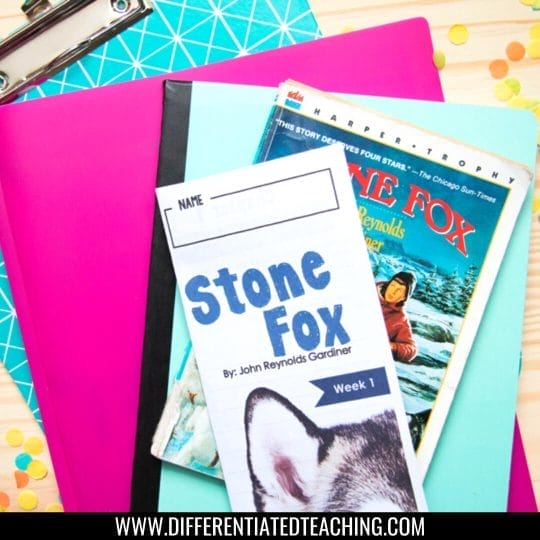
- Foldable trifold brochures
- Cut-and-paste Reader’s Notebook prompts
- Google Slides for digital completion
- Text-based daily vocabulary
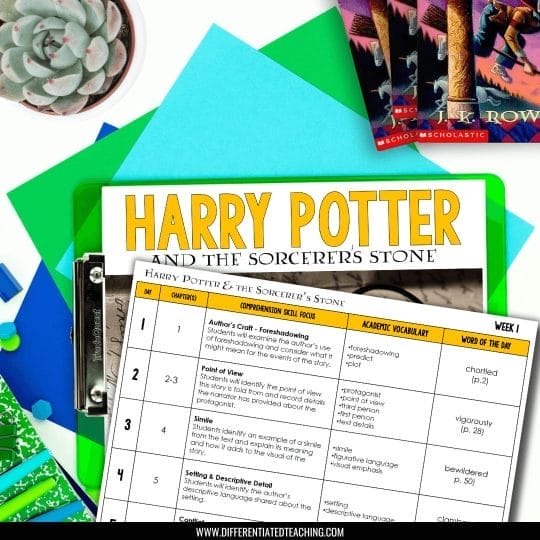
- Instructional planning guide with daily skill and vocabulary focus
- Easy-to-use answer keys
Comprehension skills addressed in this dystopian fiction novel study
The skills in this Hunger Games novel study were intentionally selected to align with the demands of dystopian fiction and the literary analysis students are expected to do in middle school.
Students practice skills such as:
- Analyzing first-person point of view through Katniss’s narration
- Identifying and examining conflict, including internal conflict and character vs. society
- Interpreting symbolism, including recurring symbols like the Mockingjay and the arena
- Analyzing irony and author’s craft
- Exploring character motivation and character development over time
- Making inferences and drawing conclusions using text evidence
- Interpreting theme, including power, survival, loyalty, and control
Each day focuses on one clearly defined comprehension skill, allowing students to slow down and apply the skill directly to the text instead of juggling multiple objectives at once.
How do students practice the comprehension skills?
Students complete one focused task per day, which keeps the workload approachable while still requiring deep analysis.
The trifold format covers a full week of reading on a single foldable. Each day’s prompt aligns with a specific chapter and skill, such as analyzing symbolism in the dandelion scene or examining irony during the reaping. This format is especially effective for students who feel overwhelmed by long writing assignments.
The Reader’s Notebook prompts use the same questions but provide more space for students who need or prefer longer written responses. These work well in interactive notebooks or journals.
The Google Slides version mirrors the same daily prompts and allows students to complete responses digitally, making this unit easy to use in 1:1 classrooms or blended learning settings.
Because the questions stay consistent across all formats, you can differentiate without creating separate assignments.

Built-in differentiation for a wide range of learners
One of the strengths of this Hunger Games novel study is that the prompts themselves are flexible. Each question targets a single skill, making it easy to adjust expectations without changing the task.
For advanced learners, you might ask students to:
- Write longer or multi-paragraph responses
- Use a structured response format such as RACE
- Support their thinking with multiple pieces of text evidence
- Explain why their evidence supports their analysis of the text
For struggling learners or English Language Learners, the same prompts can be adjusted by:
- Writing shorter responses focused on the core idea
- Citing one strong piece of text evidence instead of several
- Using the built-in graphic organizers for added structure
All students are working toward the same comprehension goal, which keeps discussions cohesive while allowing you to support a wide range of learners.
What vocabulary is included with the Hunger Games novel study?
Each day includes one vocabulary word pulled directly from the assigned chapter. These words are carefully selected because they are either essential to understanding the plot or valuable for students’ long-term academic vocabulary.
Vocabulary support includes:
- A daily word tied to the text
- A digital slide with an embedded link to an online thesaurus
- Opportunities for students to generate definitions and use words in context
- Practice connecting words through synonyms and antonyms
This helps students build vocabulary in context rather than memorizing isolated lists.

Teacher support materials
To make implementation simple, this novel study includes:
- A clear unit scope and sequence outlining daily skills and vocabulary
- Answer keys for all comprehension activities
- Tips for preparation and classroom use
The unit also includes post-reading reflection and literary analysis tasks, asking students to examine how the themes of The Hunger Games connect to real-world issues related to power, corruption, and survival.
How novel studies from Differentiated Teaching work
- Teachers introduce the day’s vocabulary word before reading
- Students complete just one section of the trifold or a single slide per day
- Daily work emphasizes reading strategies and analysis, not plot recall
- The low-pressure format encourages engagement and discussion
- Activities are accessible for reluctant readers while still requiring deep thinking
How to use and purchase the Hunger Games novel study
This dystopian fiction novel study provides a structured, low-prep way to guide students through a complex text while building transferable comprehension skills.

You can find this resource in my Teachers Pay Teachers store, along with nearly 200 additional novel studies designed to support deep reading and thoughtful discussion without unnecessary overwhelm.
The Hunger Games is a defining example of dystopian literature for middle school readers — themes of government control, surveillance, and resistance run throughout the entire series. If you’re building a dystopian literature unit, our guide to dystopian literature covers key characteristics, discussion questions, and recommendations by grade level.
If your students are hooked, Among the Hidden and The Giver are excellent companion reads. All three explore dystopian societies where young people are forced to confront systems of control and injustice. The Giver works especially well as a bridge for younger readers stepping toward The Hunger Games for the first time.