March Teaching Ideas: A Planning Guide for Elementary Teachers
March is spring’s opening act — and one of the most instructionally dense months of the year. Women’s History Month, St. Patrick’s Day, Read Across America, and the ramp-up to state testing all land here simultaneously. The teachers who handle March well are the ones who plan the content calendar before the month starts rather than reacting to it week by week.
This guide covers every key date worth planning around in March, classroom activity ideas that keep rigor high even as spring energy builds, and ready-to-use resources for every week of the month.
Key Dates to Plan for in March
- Women’s History Month — All month
- Read Across America Week — First week of March (Dr. Seuss’s birthday is March 2)
- St. Patrick’s Day — March 17
- Spring begins — Around March 20
- Spring Break — Varies by district
- State testing season — Begins in many states in March
- Easter / Peeps season — Varies (late March or April)
Women’s History Month — All Month
Women’s History Month is one of the strongest biography research opportunities of the year — and one of the most powerful when students choose their own subject. A woman in a field the student already cares about (sports, science, art, politics, music) produces better research writing than an assigned topic almost every time.
Plan Women’s History Month for the first two weeks of March before St. Patrick’s Day and spring break energy take over. A two-week biography project — research, graphic organizer, draft, publish, display — fits cleanly into that window and produces bulletin board work you’ll be proud of.
- Women’s History Month Biography Report, Craft & Bulletin Board Template
- Women’s History Month Biography Research Report, Poster Template & STEM
- Women’s History Month Research Report, Bulletin Board Craft & Activities
Read Across America Week — Early March
Read Across America Week kicks off the first week of March and is one of the best low-prep, high-engagement weeks of the year. The Dr. Seuss birthday hook gives you a natural read-aloud anchor, and the Read Across America 50 States challenge extends the literacy focus across the whole month.
- Read Across America: Mastering Setting Through Geography — A full breakdown of how to run the 50 States reading challenge with your class
- Who Was Dr. Seuss? Biography Unit — Theodore Geisel Comprehension & Book Study
- Read Across the USA — 50 States Picture Book or Novel Reading Challenge
St. Patrick’s Day — March 17
St. Patrick’s Day activities can be surprisingly rigorous when you design them at the right level. Narrative writing with a leprechaun craft, story elements activities, editing and proofreading task cards, and STEM building challenges all connect to real instructional goals. Students love the holiday hook; you keep the rigor intact.
- 17 Awesome St. Patrick’s Day Read Alouds for Your March Lesson Plans — A curated list of picture books and chapter books for March read-aloud planning
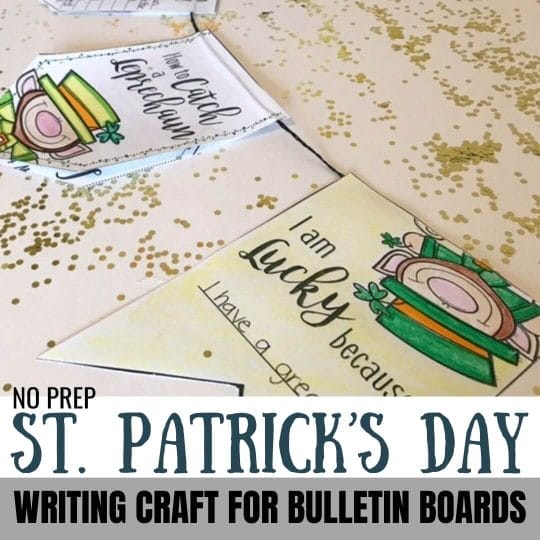
- St. Patrick’s Day Bulletin Board Writing Craft — Leprechaun ELA Activities
- 3rd & 4th Grade St. Patrick’s Day ELA — Reading Comprehension & Writing Prompt
- St. Patrick’s Day STEM Challenge — 4th & 5th Grade Leprechaun Math & Building
- St. Patrick’s Day Shamrock Craft — Bulletin Board & Student Led Conferences
- St. Patrick’s Day Fix the Sentence — 3rd & 4th Grade Proofreading Task Cards
- St. Patrick’s Day Story Elements — 3rd & 4th Grade Narrative Writing & Craft
Pi Day & The Iditarod — March Bonus Hooks
Pi Day (March 14) and the Iditarod sled dog race are two March events that make surprisingly strong instructional anchors. Pi Day is a natural math-meets-literacy hook — Pie by Sarah Weeks is an engaging chapter book that gives you a Pi Day ELA connection without forcing it. The Iditarod runs in early March and connects naturally to Stone Fox, polar habitats research from January, and informational writing about Alaska and sled dog racing.
- Pie by Sarah Weeks — Novel Study, Book Club & Comprehension Activities (Pi Day ELA)
- Stone Fox Novel Study — Comprehension, Questions & Vocabulary (Iditarod tie-in)
Spring & Easter
Easter falls in late March or early April depending on the year. The Peeps STEM challenge is one of the most reliably engaging science activities of the spring — students are motivated by the candy context, and the engineering and measurement skills are completely real.
State Testing Prep — Without the Grind
March is when state testing season begins in many states — and the worst thing you can do is spend the whole month on soul-crushing test prep worksheets. The goal is building stamina, confidence, and fluency with test-style questions in a context that doesn’t feel punishing. Basketball-themed math task cards and spring word problem warm-ups both accomplish this while keeping student engagement alive.
- Math Test Prep Task Cards — Basketball Themed March State Test Prep Review
- Academic Testing Vocabulary — Editable Test Prep ELA Flash Cards (3rd–5th Grade)
March Math Warm-Ups
- 1st Grade March Daily Math Story Problems
- 3rd Grade March Math Worksheets — Spring Fractions, St. Patrick’s Day & Basketball
- 3rd Grade Spring STAAR Word Problems — Daily State Test Prep Review
- 4th Grade March Math Story Problems — Daily Problem of the Day
- 6th Grade Math Word Problem of the Day — Multistep Bell Ringer
- 7th Grade Spring Math Word Problems — Daily Test Prep Bell Ringers
- 8th Grade Spring Math Test Prep — Multistep Word Problems
Spring Science — Weather
March is the natural time to launch weather science — students can observe real seasonal change happening outside the window. Weather vocabulary activities, word sorts, and science worksheets give you a low-prep way to cover earth science content while spring is actively unfolding.
March Writing & ELA
March Sub Plans
Spring break transitions make March one of the trickiest months for coverage. Have sub plans ready for both the week before break and any unexpected absences during testing season.
- 1st Grade March Emergency Sub Plans — Mossy by Jan Brett
- 2nd Grade March Sub Plans — Spring Emergency Substitute Activities
- 3rd & 4th Grade March Sub Plans — Catching the Moon Activities
- 5th Grade March Emergency Sub Plans — The Paper Bag Princess Activities
- 5th Grade March Sub Plans — Women’s History Month Reading
Tips for March
Front-load Women’s History Month. Plan it for weeks one and two. By St. Patrick’s Day, spring fever is setting in and the biography project momentum is hard to sustain. Get it done early when students are still in second-semester focus mode.
Test prep doesn’t have to feel like test prep. Basketball task cards, spring word problems, and vocabulary flash cards all build the same skills as a test prep packet — but students engage with them differently. Stamina and confidence matter more than repetition at this stage.
Plan around spring break, not just before it. The week before spring break is notoriously hard to teach. The week after break is almost as bad. Having a plan for both ends of the break — sub plans or re-entry activities — means you’re not scrambling twice.
St. Patrick’s Day is one day, not one week. The leprechaun craft, a writing prompt, and a STEM challenge can all fit into a single engaging March 17 schedule. Then the rest of the week stays focused on testing prep and the Women’s History Month final project.
Looking for ideas across the whole school year? Head back to the Elementary Teacher Planning Calendar for monthly planning guides from August through summer.