Tier 2 Math Intervention That Actually Works (Without More Worksheets)
If a student is failing math, the first instinct is usually the same.
More practice.
More worksheets.
More repetition.
But here’s the truth most of us learn the hard way:
More of the same rarely fixes the problem.
Tier 2 math intervention isn’t about increasing volume. It’s about targeted instruction supported by clear data and consistent feedback. Tier 2 works best when instruction, feedback, and progress monitoring are intentionally connected.
Let’s talk about what actually works.
Why Students Struggle in Math (It’s Not Always What You Think)
When students fall behind in math, we tend to assume they just need more practice.
Sometimes that’s true.
But many Tier 2 math challenges fall into three predictable categories.
Understanding which one you’re seeing makes intervention dramatically more effective.
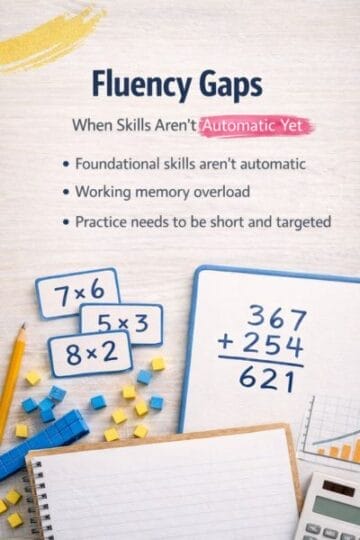
1. Fluency Gaps: When Skills Aren’t Automatic Yet
Some students understand the math conceptually but lack automaticity with foundational skills.
They may:
- count on fingers during multi-step problems,
- struggle recalling basic facts,
- or lose track of steps because working memory is overloaded.
In these cases, intervention should focus on short, repeated practice with immediate feedback instead of long worksheets.
Short daily routines often build fluency faster than extended remediation blocks. Students build automaticity through repeated success, not exhaustion.
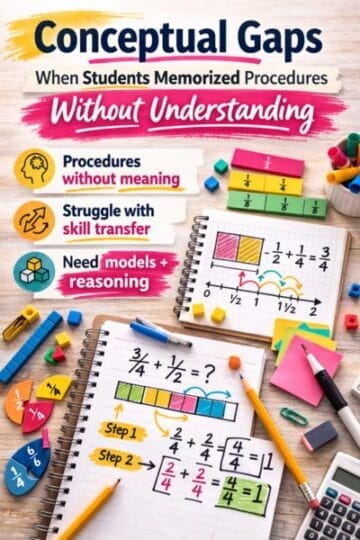
2. Conceptual Gaps: When Students Memorized Procedures Without Understanding
Other students appear fluent until the problem changes slightly.
They may:
- add fractions across numerators and denominators,
- struggle transferring skills into word problems,
- or freeze when asked to explain reasoning.
These students don’t need more repetition.
They need models, visuals, and structured reasoning practice. Many of these challenges become especially visible during fraction instruction or multi-step problem solving, where understanding matters more than memorization.
3. Language Gaps: When Math Becomes a Reading or Writing Task
Some students understand math verbally but struggle once reading or writing enters the equation.
You might notice:
- difficulty interpreting word problems,
- incomplete written explanations,
- or avoidance when asked to justify thinking.
Sentence stems, structured discussion, and modeling academic vocabulary can dramatically improve confidence.
👉 Learn practical strategies for helping students explain their math thinking.
Where Tier 2 Math Intervention Fits Within MTSS
Tier 2 math intervention is part of a larger MTSS framework.
- Tier 1 is strong core instruction for all students.
- Tier 2 is targeted, small-group support for students who need additional structure and practice.
- Tier 3 is intensive, individualized intervention.
The goal of Tier 2 is not to replace classroom instruction. It’s to reinforce it and fill gaps. Tier 2 support should feel like an extension of strong Tier 1 instruction, not a completely separate experience.
When Tier 2 math support strengthens what students are already learning rather than introducing something completely different, growth happens faster, and frustration decreases.
Effective Tier 2 support also depends on communication between classroom teachers, interventionists, and support teams. When everyone understands the specific skill being targeted and the data being collected, instruction becomes more consistent for students.
Instead of starting over in every setting, students experience the same language, expectations, and strategies throughout the day. Consistency across adults often matters just as much as consistency across lessons.
Tier 2 Math Intervention Strategies That Actually Work
Once you’ve identified whether a student’s challenge is fluency, conceptual understanding, or language, the next step is choosing strategies that build clarity, not confusion.

Here are research-aligned Tier 2 math intervention strategies that are both practical and sustainable.
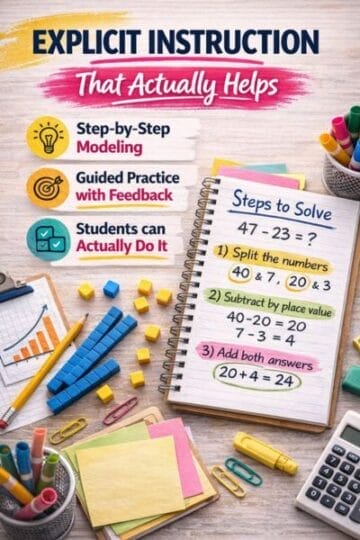
Explicit Instruction: Model the Thinking, Not Just the Steps
Students receiving Tier 2 support benefit from clear, direct modeling.
That means:
- Think aloud while solving.
- Explain why you chose a strategy.
- Show how to check the answer.
- Gradually release responsibility.
Instead of assuming students can infer reasoning, make your thinking visible.
Explicit instruction reduces cognitive overload and gives struggling learners a clear entry point. Explicit instruction is not scripted teaching. It’s intentional clarity.
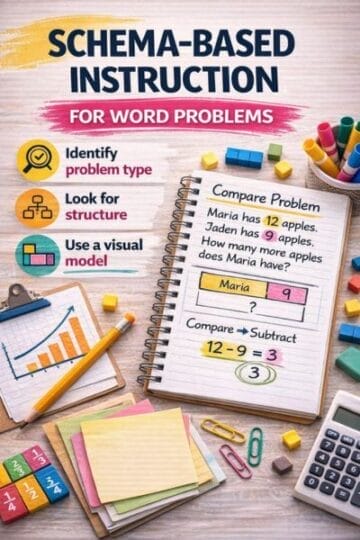
Schema-Based Instruction for Word Problems
Many students struggle not because they can’t compute, but because they don’t recognize problem structure.
Schema-based instruction teaches students to categorize problems by type, such as:
- Compare problems
- Change problems
- Equal groups problems
When students learn to identify structure first, they become less overwhelmed and more strategic.
This approach is especially powerful during Tier 2 math support because it gives students a predictable framework for approaching word problems. Many teachers build schema understanding through daily structured problem solving routines.
Visual Representations Strengthen Understanding
Students with conceptual gaps often need to see the math before they can manipulate it abstractly.
Visual representations might include:
- number lines
- area models
- bar models
- fraction strips
- diagrams
These tools help students make sense of relationships between numbers. Visual models are especially important when addressing fraction misunderstandings or place value reasoning.
When students can visualize the math, explanations become clearer and more confident.
Using the Concrete Representational Abstract (CRA) Approach
The CRA approach provides a structured pathway from hands-on learning to abstract reasoning.
- Concrete: Students use manipulatives to explore concepts.
- Representational: Students draw models or diagrams.
- Abstract: Students use numbers and symbols.

Tier 2 math intervention often stalls when instruction jumps straight to abstract procedures.
Moving intentionally through the CRA stages builds deeper understanding and reduces future confusion. Students who move through these stages are far more likely to transfer skills into new situations.
What Tier 2 Math Intervention Is NOT
It’s not:
- packets of isolated worksheets,
- silent seat work,
- test prep,
- or remediation that feels like punishment.
Tier 2 support should feel structured, supportive, and manageable.
Not overwhelming.
If intervention adds stress for teachers or students, it won’t be sustainable.
Supporting Tier 2 Students Without Burning Out Teachers
Let’s be honest. Time is limited.
You can’t design a separate curriculum for every small group.
The goal is to build a system that:
- reinforces foundational skills,
- strengthens reasoning,
- and provides consistent feedback.
That might mean adapting what you already use instead of reinventing everything.
Short daily routines. Focused skills. Clear language supports.
When intervention becomes predictable and structured, growth follows.
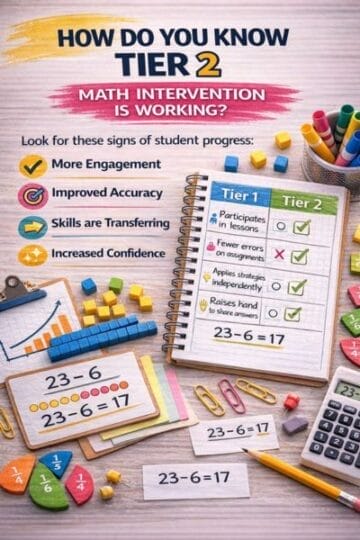
How Do You Know Tier 2 Math Intervention Is Working?
Tier 2 math intervention should always be connected to a clearly defined area of need.
If a student struggles with fluency, progress monitoring should measure fluency.
If the gap is conceptual understanding, monitoring should focus on reasoning and transfer.
And when language or explanation skills are the barrier, written or verbal explanations become the most meaningful data point.
In other words, progress monitoring works best when it matches the problem you’re trying to solve. Tier 2 support should never feel like guesswork. Data helps teams adjust instruction early instead of waiting for frustration to build.
Simple data points can tell you a lot.
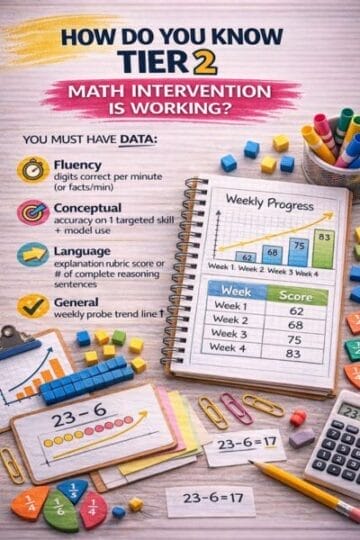
You might track:
- accuracy on one targeted skill,
- number of independent problem-solving attempts,
- quality of written explanations,
- or reduction in avoidance behaviors during math tasks.
Short, consistent checks often provide clearer insight than large assessments given weeks apart.
The goal isn’t collecting more data.
It’s collecting the right data.
When progress monitoring is connected directly to the skill being taught, intervention decisions become clearer for both teachers and support teams.
Final Thoughts
Tier 2 math intervention doesn’t have to mean more work.
It means better structure.
When we identify the real gap, shorten the practice window, and build consistent feedback into our routine, students begin to rebuild confidence.
And that confidence changes everything.
Need more support teaching math this year? Find it in the Teaching Math hub.
For more math differentiation strategies, tools, and intervention resources, see the complete math differentiation guide.