Teaching Hatchet by Gary Paulsen: A Survival Story That Builds Real Reading Skills
If you’re planning a Hatchet novel study, you already know why students gravitate toward this book.
From the opening chapters, Gary Paulsen pulls readers into Brian’s fight for survival. The wilderness setting, realistic challenges, and emotional growth keep students turning pages…even readers who normally struggle to stay engaged with longer novels. If you’re still working out how to structure your unit, my complete guide to planning a novel study walks through the whole process step by step.

But Hatchet offers more than adventure.
It provides powerful opportunities to teach inference, author’s craft, character development, and problem-solving in ways students actually understand.
Whether you’re planning a whole-class unit, literature circles, or a homeschool novel study, Hatchet works beautifully because the reading challenges feel authentic instead of forced.
Many teachers also extend engagement through hands-on enrichment or cross-curricular projects once students begin connecting deeply with Brian’s survival challenges.
👉 Explore Hatchet STEM challenges and enrichment ideas.
Students aren’t just answering questions.
They are figuring things out alongside Brian.
In this post, you’ll find planning ideas, differentiation strategies, and a closer look at the instructional structure behind this Hatchet novel study.
What Makes Hatchet Especially Powerful for Upper Elementary and Middle School?
Some novels rely heavily on dialogue or fast pacing.
Hatchet slows readers down.
Students must visualize unfamiliar environments, track internal thinking, and interpret how Brian changes across time.
That makes it an excellent choice for teaching deeper comprehension skills such as:
- Making inferences from descriptive language
- Analyzing character change
- Understanding cause and effect
- Evaluating problem-solving decisions
- Recognizing the author’s use of flashbacks
Because Brian spends much of the story alone, readers must rely on narration and description rather than conversation cues.
Struggling readers often benefit from this structure because each survival decision becomes clear and concrete.
Strong readers, on the other hand, can dig into symbolism, author’s craft, and emotional growth.
In other words…
The same novel supports very different learners.
If you’re supporting mixed-ability readers, intentional differentiation strategies can make discussions more accessible without increasing prep time.
👉 Learn more about differentiating novel studies here.
Using Hatchet in Whole Group, Book Clubs, or Independent Study
One of the reasons teachers return to Hatchet year after year is flexibility.
Whole Group Novel Study
As a whole-class novel study, Hatchet encourages rich discussion about perseverance and decision-making.
Many teachers choose to read portions aloud together while assigning additional chapters independently. This allows struggling readers to access challenging passages while still building reading stamina.
Daily comprehension prompts help keep discussions focused on reading strategies instead of simple plot retelling.
Literature Circles or Book Clubs
Hatchet works especially well in book clubs or as a small-group novel unit because students often disagree about Brian’s choices.
Should he have taken certain risks?
What would they have done differently?
Short written responses can act as discussion starters, allowing students to prepare ideas before the conversation begins.
Independent or Homeschool Novel Studies
Independent readers often benefit from clear expectations and predictable routines.
During an independent novel study, the simple rhythm of reading, responding, and discussing allows students to build confidence without overwhelm.
Digital response options support students who prefer typing or need accommodations for dysgraphia or executive functioning challenges.
Printable formats work well for interactive notebooks or hands-on learners.
What’s Included in the Hatchet Novel Study
This four-week novel study focuses on building transferable comprehension skills while keeping preparation manageable.
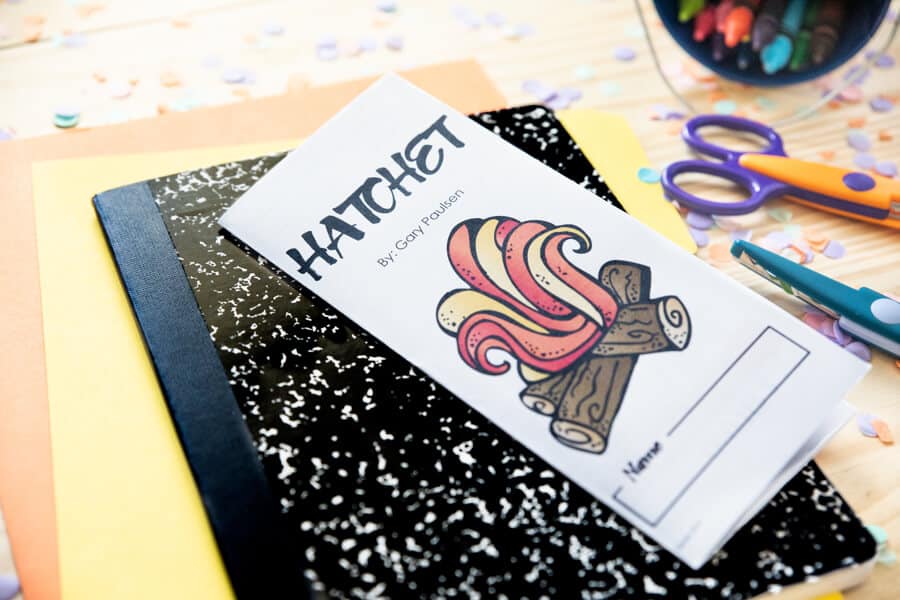
Your PDF download includes:
- Instructional pacing guide with daily comprehension focus and vocabulary
- Foldable comprehension trifolds (color and black-and-white options)
- Reader notebook response prompts for differentiation
- Weekly Word of the Day vocabulary flipbooks
- Complete answer keys for easy grading
Each day pairs the assigned reading with a single comprehension skill so students can practice applying strategies rather than memorizing plot details.

Skills Students Practice
The comprehension prompts were intentionally designed to align with moments in the story where students naturally need support.
Skills include:
- Character analysis and character change
- Cause and effect relationships
- Problem and solution
- Point of view
- Making inferences
- Summarizing key events
- Vocabulary and context clues
- Author’s craft, including flashback structure
- Text-based written responses

Students defend their thinking using evidence from the text, helping them build strategies that transfer to other novels and informational reading.
These prompts encourage higher-level thinking. Students must apply the skill to generate a written response and defend their answers with text evidence.
This analysis of the Hatchet plot enhances understanding and develops applicable comprehension strategies for other texts.
Differentiated Response Formats
Comprehension prompts are provided in two flexible formats so you can support diverse learners without increasing prep time.
Trifold Format
Each foldable covers an entire week of comprehension using only one sheet of paper.
Students respond to one focused question each day, which keeps writing manageable for reluctant learners.
Many students use trifolds as bookmarks, reducing lost papers and simplifying grading.
👉 Learn more about the trifold novel study format.

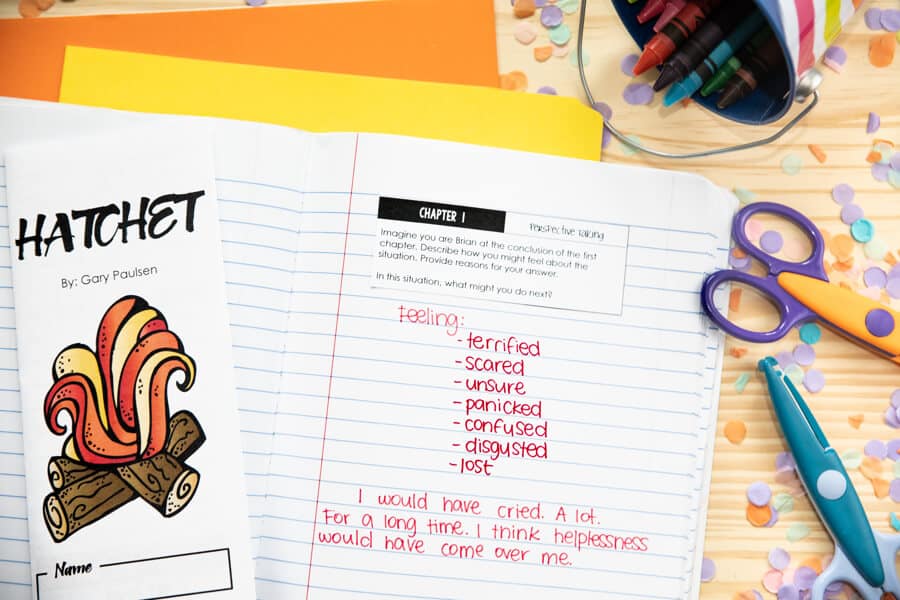
Reader Notebook Prompts
Notebook responses allow advanced readers to develop deeper analysis while also supporting students who need additional writing space.
They work especially well for students with dyslexia, dysgraphia, or fine motor challenges because prompts can be glued into notebooks or specialized paper formats.
Because both formats use the same daily prompt, students can work differently without creating extra planning.
Academic Vocabulary Built Into Daily Instruction
Academic vocabulary is one of the biggest barriers struggling readers face.
This novel study includes more than 50 Tier 2 and skill-specific vocabulary terms aligned directly with comprehension instruction.
General vocabulary:
- analyze
- evaluate
- interpret
- generate
- concise
- composition
Skill specific vocabulary:
- context clue
- summary and main idea
- inference
- protagonist
- point of view
- synopsis
Teachers often pre-teach vocabulary to help students begin reading on equal footing.

Text-Based Vocabulary From the Novel
Each lesson also includes a vocabulary word drawn directly from the day’s reading.
Examples include:
- remnants
- embedded
- crude
- exasperation
- rectify
Weekly flipbooks fit easily into reading journals and require only one sheet of paper per week.
Students may define words, generate synonyms, or illustrate meaning depending on instructional goals.

Where to Find the Hatchet Novel Study
If you are ready to begin your Hatchet unit, you can explore the complete resource below:


Looking for more novel studies?
If your students are hooked on Hatchet, Holes and Maniac Magee hit that same vein — adventure-driven stories with strong, resourceful protagonists that keep even reluctant readers turning pages. How to Eat Fried Worms is a great lighter option for the same age group.
Both options include the same full download so you can choose the purchasing method that works best for your classroom or homeschool.
For strategies on using this novel study to build specific comprehension skills, see: Novel Studies for Comprehension →