Fall Classroom Activities for Grades 3-6
Fall gives you plenty of built-in ways to capture students’ attention. The challenge is choosing activities that do more than add pumpkins and leaves to another worksheet.
The best fall classroom activities use seasonal topics to strengthen the reading, writing, science, and math skills students are already learning. Students get the interest of a fall theme without losing the academic focus.
These ideas are designed for grades 3-6 and can be used for a single lesson, a week of seasonal learning, or short activities throughout the fall.

Use Fall Themes Without Losing the Learning
You do not need to create an entirely separate fall unit.
Choose a seasonal topic that supports your current goals. Students can determine the central idea of an article about changing leaves, write an opinion paragraph about fall traditions, compare apple cider and apple juice, or solve multistep problems based on seasonal situations.
The topic adds interest. The skill remains the priority.
Explore the Science Behind Fall
Students see leaves changing, daylight shortening, and temperatures dropping, but they may not understand why these changes happen.
Use the beginning of fall to explore questions such as:
- Why do leaves change color?
- What is the autumn equinox?
- How do plants and animals respond to seasonal changes?
- What happens during the harvest season?

The Fall Activity Packet combines science and literacy through two levels of informational reading, comprehension questions, vocabulary work, sequencing, cause and effect, a crossword puzzle, and a word search. It works well for a focused fall lesson, literacy centers, early finishers, or a substitute packet.
Explore the Fall Reading and Vocabulary Packet
Follow the Monarch Migration
Monarch migration is one of the strongest fall topics for connecting science and informational reading.
Students can explore migration, life cycles, animal adaptations, habitat, weather, and conservation while practicing comprehension, academic vocabulary, and evidence-based writing.

The Differentiated Monarch Butterfly Reading Bundle includes three versions written for grades 3-8. The topic stays consistent while the reading complexity, vocabulary, and response expectations increase across the levels. This makes it especially useful for mixed-ability classrooms, intervention groups, and teachers working across more than one grade level.
For grades 3-6, you can use the grades 3-4 and grades 5-6 versions while keeping the class discussion centered on the same larger questions.
View the Differentiated Monarch Migration Passages
Compare Apple Cider and Apple Juice
Apples are an easy fall topic, but the activity does not have to stop with a craft or taste test.
Ask students what makes apple cider different from apple juice. Let them make predictions, then use paired texts to investigate the question.
The Apple Cider vs. Apple Juice activity includes one fiction passage and one informational passage, comprehension questions, planning pages, and a compare-and-contrast writing task. Students move from reading and annotating to citing evidence and writing a multiparagraph explanatory response.

This works well when you need:
- Paired-text practice
- Compare-and-contrast writing
- An evidence-based response
- A seasonal reading assessment
- Meaningful work for a substitute or early finishers
Explore the Apple Cider vs. Apple Juice Activity
Make Fall Opinion Writing More Manageable
Fall provides plenty of topics students already have opinions about:
- Would you rather carve a pumpkin or jump in a leaf pile?
- Would you rather visit an apple orchard or a pumpkin patch?
- Would you rather spend a chilly day outside or stay indoors with a book?
The question gets students talking, but the real learning comes from teaching them to state a clear opinion, develop relevant reasons, and organize those ideas into a complete paragraph.

The Fall Would You Rather Morning Work Bundle uses a predictable five-day routine. Students brainstorm, develop supporting details, write topic and closing sentences, revise, edit, and publish one paragraph at a time. It includes four months of seasonal prompts for grades 3-6.
Because the prompt changes while the structure stays consistent, students can focus more of their attention on improving their writing.
View the Fall Would You Rather Writing Bundle
Add Fall Context to Math Practice
Fall math does not need to mean replacing your curriculum with seasonal worksheets. A short word problem or math station can add interest while students continue practicing grade-level skills.
Fall Word Problems for Grades 3-5
Each grade-level set includes 15 fall-themed word problems, recording options, and answer keys. The problems use familiar situations, real-world contexts, and fall facts to encourage students to discuss strategies and explain their thinking.

Use the cards for math talks, partner work, centers, morning work, or a problem-solving station.
Fall Math Stations
For students in grades 3-4, the Fall Math Station Bundle includes differentiated practice with addition, subtraction, multiplication, estimation, place value, even and odd numbers, and comparing numbers. The stations can be used for independent practice, small groups, review, intervention, or extension.

Explore the Fall Math Station Bundle
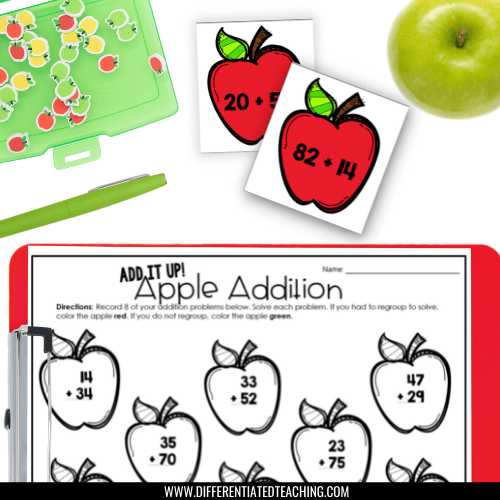
Students who need more support may benefit from the 2nd Grade Fall Story Problems or the Apple Addition Math Centers for focused practice with addition and regrouping.
Try This Simple Week of Fall Activities
You do not need to use every idea at once. A manageable fall week might look like this:
Monday: Read about the science of fall and practice vocabulary.
Tuesday: Explore monarch migration through differentiated informational texts.
Wednesday: Compare apple cider and apple juice using paired passages.
Thursday: Develop an opinion paragraph from a fall Would You Rather prompt.
Friday: Finish with fall word problems, partner math, or differentiated stations.
This gives students a cohesive seasonal experience without abandoning your academic goals or spending the week on disconnected crafts.
Keep Fall Activities Purposeful
Seasonal activities work best when they give students a fresh reason to practice an important skill.
Choose one strong topic, connect it to what students are already learning, and keep the task manageable. A meaningful passage, writing prompt, or problem-solving activity can add seasonal interest without adding hours of planning.
The goal is not to cover every part of fall. It is to use the season to make the learning you already need to teach more relevant and engaging.