A Simple Week of Text Structure Activities & Lessons That Actually Stick
Text structure is one of those reading skills that sounds straightforward… but can be surprisingly tricky for students. These text structure activities help students recognize how nonfiction texts are organized and apply that understanding to real reading.
While they might memorize definitions like cause and effect or compare and contrast, when it’s time to apply that knowledge to an actual passage, things often fall apart quickly for students.
And honestly, that’s not a student problem. It’s usually an instruction problem.
Research on comprehension instruction consistently shows that students need explicit modeling, repeated exposure, and opportunities to explain their thinking in order for skills like text structure to stick. One quick lesson or worksheet just isn’t enough.
The good news? You don’t need an elaborate unit to make this work.
A simple, structured routine across a few days can make a huge difference.
Here’s what that can look like in a real classroom.
Day 1: Introduce the Structures (Keep It Simple)
Start with the core nonfiction text structures students are most likely to encounter:
- Cause and effect
- Compare and contrast
- Problem and solution
- Description
- Sequence
This first day is all about clarity. Students need simple explanations, clear examples, and a chance to start noticing how authors organize information.
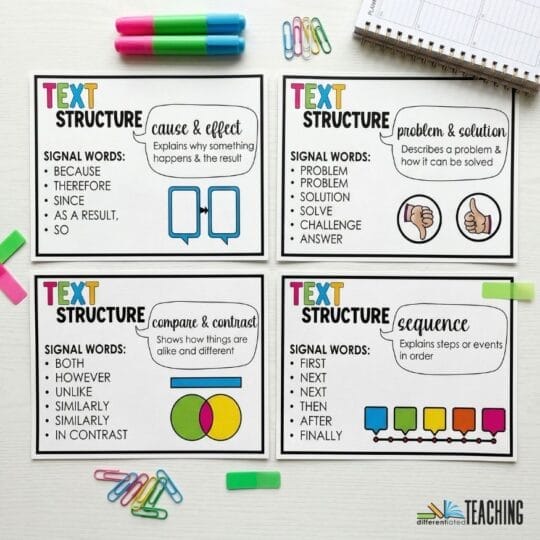
Anchor charts work well here, especially when they include:
- A short definition
- Common signal words
- A quick example
One thing I’ve learned over the years is that less is more on Day 1. If we overload students with too many examples right away, the structures blur together.
Focus on helping them recognize that authors organize information in predictable ways… and that noticing those patterns helps readers understand nonfiction more easily.
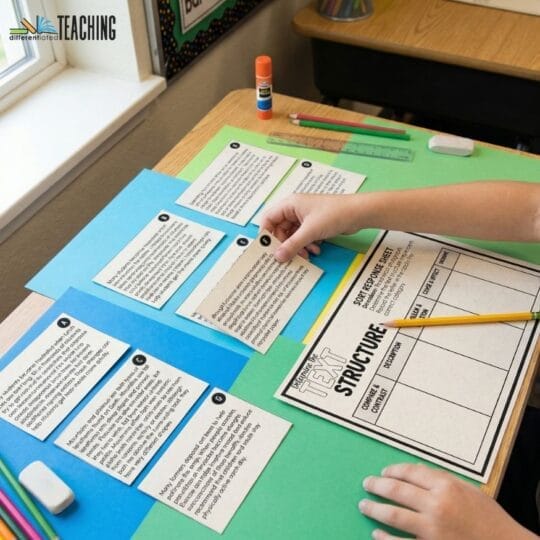
Day 2: Sort and Compare
This is where learning really starts to click.
Instead of jumping straight into long passages, give students short examples they can sort and compare.
Sorting activities are powerful because they force students to look closely at the structure of a passage. They start asking questions like:
- Is this explaining a problem?
- Is the author describing something?
- Are two ideas being compared?
When students see multiple structures side-by-side, they begin to notice the differences between them. That comparison builds much deeper understanding than simply labeling passages one at a time.
Day 3: Apply to Short Passages
Once students have some familiarity with the structures, it’s time to apply the skill independently.
Short passages work best here. Students can focus on the organization of the text without getting overwhelmed by too much information.
Ask them to:
- Identify the text structure
- Highlight signal words
- Explain how they know
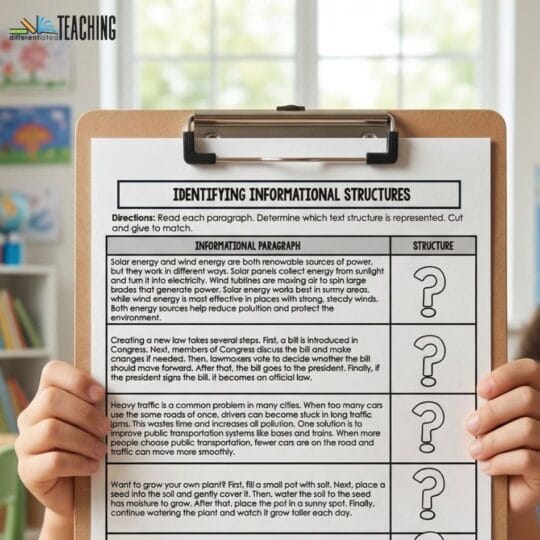
That last step is important. When students explain their reasoning, they move from guessing to actually understanding the structure of the text.
Day 4: Mix It Up (This Is the Step Most People Skip)
Here’s the step that often gets skipped.
A lot of lessons teach text structures one at a time. Students might practice cause and effect one day, compare and contrast the next, and so on.
But in real reading, structures aren’t neatly separated.
That’s why students need practice with mixed examples. When passages include different structures in random order, students have to slow down and think about what the author is actually doing.
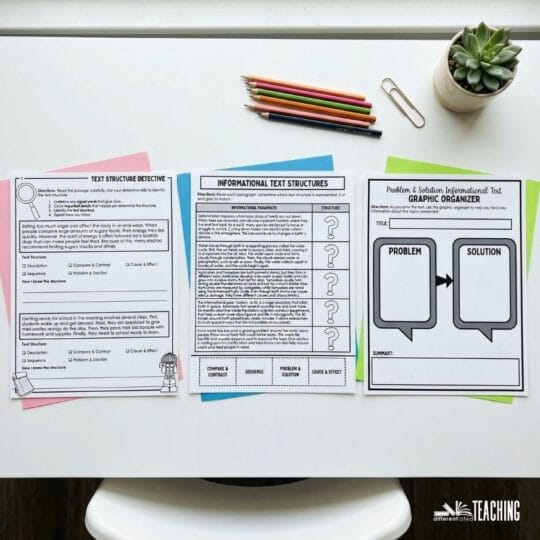
This kind of practice strengthens their ability to analyze informational texts in science, social studies, and beyond.
This forces them to:
- Slow down
- Think more carefully
- Compare across structures
This is where you’ll really see who understands it and who is still guessing.
Day 5: Quick Check + Real Application
By the end of the week, students should have a solid foundation.
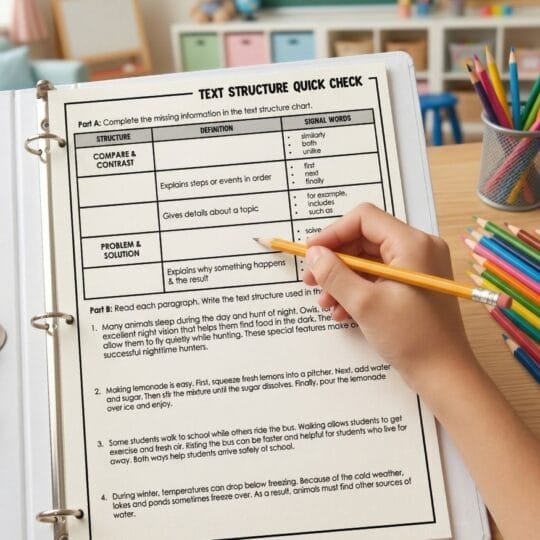
A quick check with mixed passages helps you see who’s ready to move forward and who might need a little more support.
If possible, connect this skill to authentic reading. Science articles, social studies texts, and informational books all give students opportunities to see text structure in action.
The more students practice noticing how information is organized, the easier it becomes for them to understand complex nonfiction texts.
Why This Routine Works
Teaching text structure effectively isn’t about doing more activities. It’s about giving students the right kinds of practice.
Strong comprehension instruction includes:
- Explicit teaching of the skill
- Repeated exposure across several days
- Opportunities to compare structures
- Practice explaining reasoning
When those pieces are in place, students start to recognize patterns in nonfiction text. And once they notice those patterns, comprehension becomes much easier.
Want This Already Done for You?
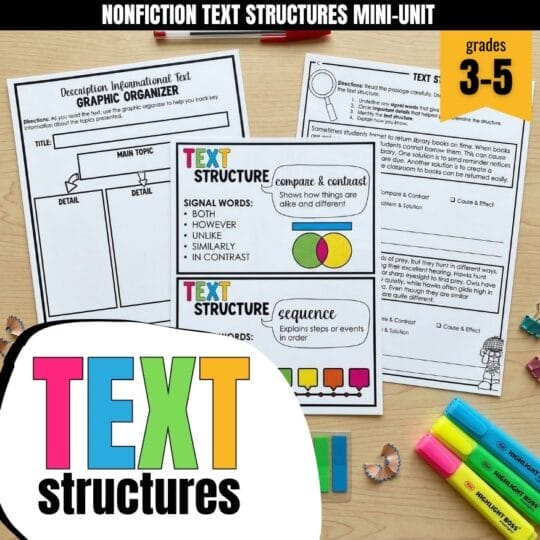
If you’d like this routine already built out for you, I created a set of text structure activities and worksheets designed to make teaching this skill straightforward and engaging.
The resource includes:
- Text structure anchor charts
- Sorting activities
- Graphic organizers
- Task cards
- Short nonfiction passages (including cause and effect, problem and solution, compare and contrast, and descriptive structures)
- A quick check assessment
Everything is designed to give students the repeated practice they need while keeping preparation simple for teachers.
👉 Grab the Text Structure Activities here
Supporting Students With Informational Text
Helping students understand how nonfiction texts are organized is one of the most effective ways to strengthen reading comprehension.
If you’re looking for more comprehension ideas, you might also enjoy reading:
- 125+ Reading Comprehension Question Stems to Support Readers
- Why Academic Vocabulary Matters for Understanding Informational Text
Both posts share practical ways to support students as they tackle more complex nonfiction reading.